In 1886, a father and son team of Czech glass artisans were asked to make botanical models for Harvard University. Over nearly half a century, Leopold and Rudolf Blaschka worked to create one of the most “scientifically and breathtakingly beautiful collections ever created”. Popularly, the collection created by the Blaschka’s and Harvard are called the glass flowers and it includes life-sized and enlarged models of 780 plant species.
More about these artisans. Leopold Blaschka was born in 1822 in the Czech Republic. Like his father and grandfather before him, he worked as a glass artisan and produced jewelry, lab equipment, and even eye-glasses. In fact, he was the only one of his three brother that displayed the skill necessary to continue the family trade (“Leopold and Rudolf Blaschka” 2020). In 1846, Leopold married Caroline Zimmerman and they had a child, Joseph (“Leopold and Rudolf Blaschka” 2020). Tragically, Caroline and Josef both died of cholera in 1850 (“Leopold and Rudolf Blaschka” 2020). It was while processing his grief that Leopold first began to study marine invertebrates, “intrigued by the glass-like transparency of their bodies” (“Leopold and Rudolf Blaschka” 2020).
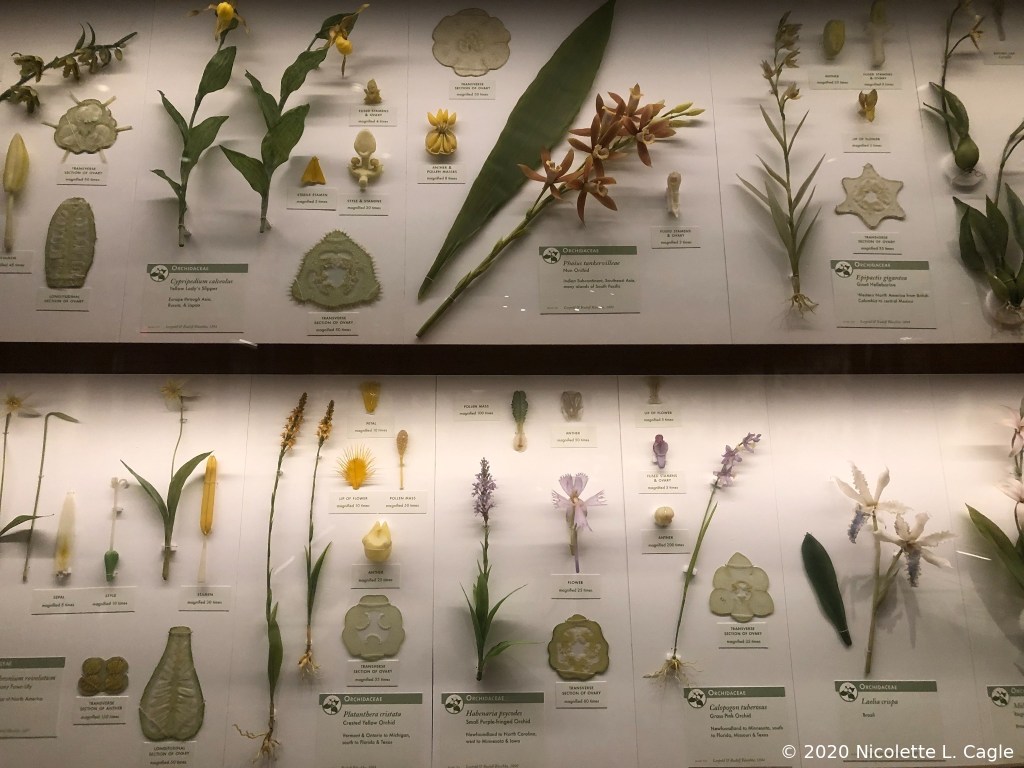
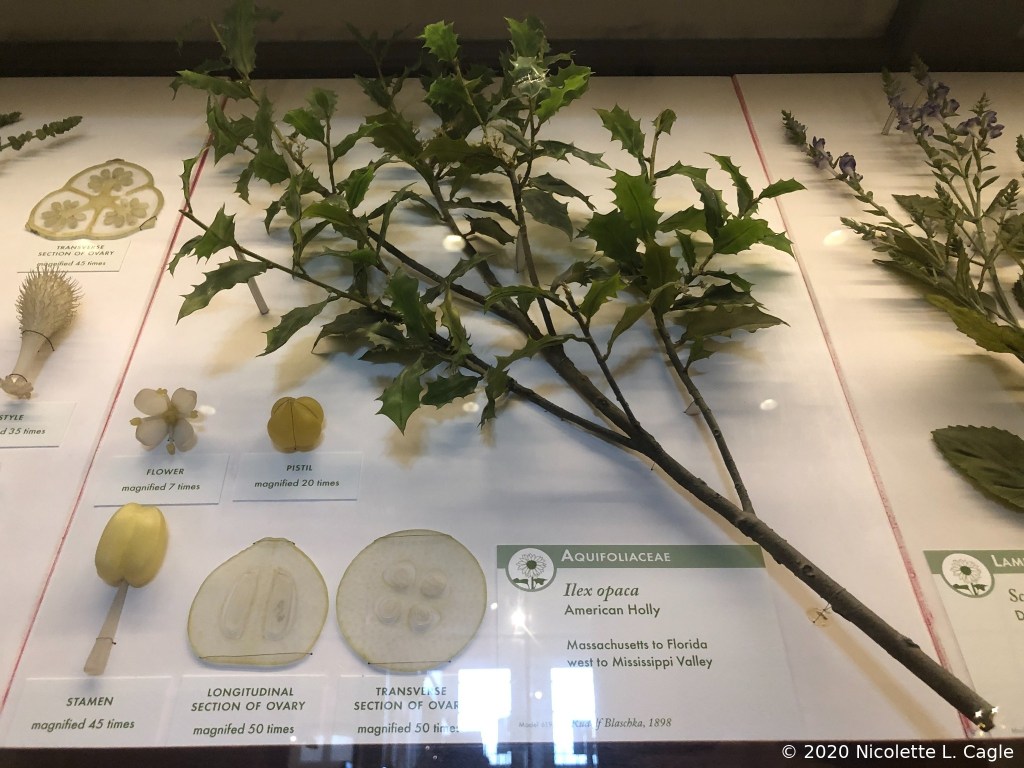
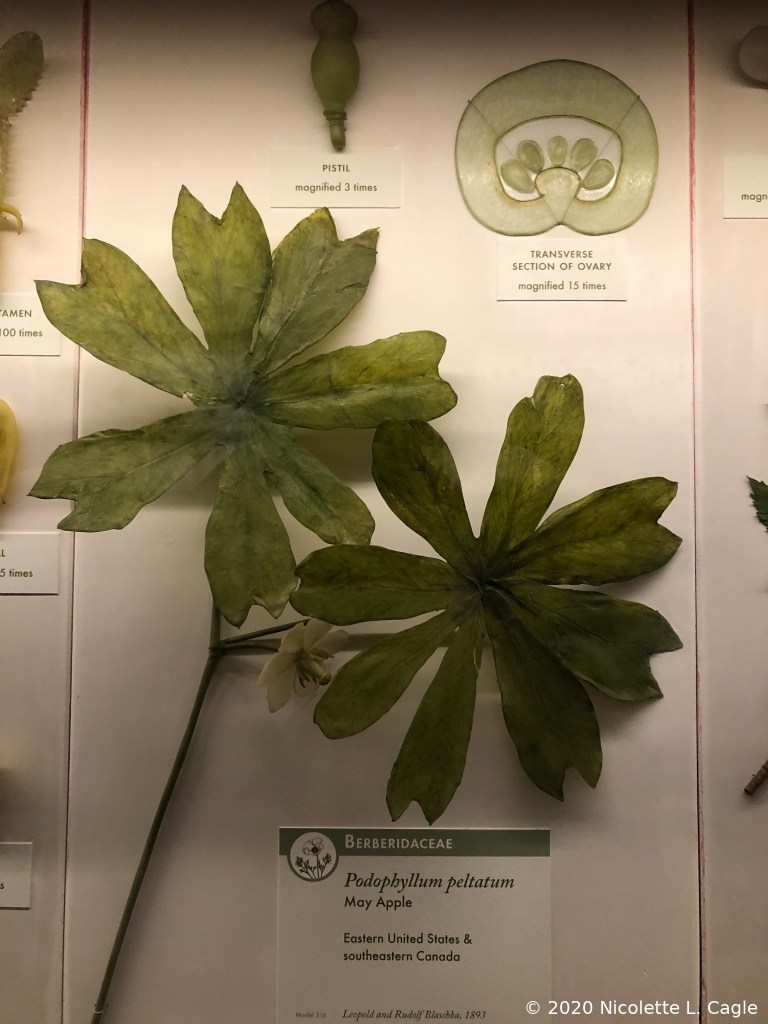
Eventually, Leopold remarried and in the same year (1857) that Leopold’s glass sea creature models caught the eye of a Prince (Prince Camille de Rohan, Sychrov Castle), Leopold’s son Rudolph was born (“Leopold and Rudolf Blaschka” 2020). Leopold was commissioned to craft 100 glass orchids and other plants during this time.
In 1863, Leopold was commissioned to make a collection of glass sea anemone replicas for the museum of natural history in Dresden. This was when the family began to focus on scientific model making. Thirteen years later, Leopold’s 19 year old son, Rudolf, joined the new family business and they began to supply invertebrate marine models to collectors and museums around the world.
Their exquisite work cause the attention of Harvard’s first botanical museum director, George Lincoln Goodale and he was the one who, in 1886, convinced the Blaschkas to make scientific models of plant species in glass. This work was funded by Boston residents, Elizabeth C. and Mary Lee Ware.
Together, Leopold and Rudolf worked on these models for a decade until Leopold died in 1895. Rudolf continued this work – experimenting with innovative techniques and materials – for nearly four more decades until 1936 when Rudolf was 80 years old. Rudolf and his wife Frieda were childless and did not pass on the trade or their knowledge to anyone (“Leopold and Rudolf Blaschka” 2020).
For the most part, the Blaschkas worked in Hosterwitz, Germany. They had a small wooden work table and they used a something that looks like a Bunsen burner with a foot pump to heat up glass rods. Once the glass was malleable, they would pull it, shape it, and fuse it. Sometimes they blew the glass instead and sometimes they added shape to the glass with copper wire and glue, and sometimes they added detail with watercolors and oil paints, especially to the earliest models.
 Sense of Place