The Ontario Gallery of Art is housed in a beautiful building with soaring wood beams, curving like the bow of a ship and filled with light from large-paned windows. The Gallery is home to the Thomson collection and many of the artists that comprise it would have appreciated the architecture. The Thomson collection includes 130 ship models from the 17th century to the 1900s, as well as the works of the Group of Seven, artists whose paintings showed exquisite attention to the play of light on the landscape.
The Group of Seven refers to a troupe of seven Canadian landscape painters who became active in the 1910s and 1920s, when a group of painters began to come together to paint in Algonquin Park, outside of Toronto. The main members include Franklin Carmichael, Lawren Harris, A. Y. Jackson, Frank Johnston, Arthur Lismer, J. E. H. MacDonald, and Frederick Varley. Other artists that either were part of, associated with, or inspiring to the group include Edwin Holgate, Lionel LeMoine FitzGerald, Tom Thomson, and the incomparable Emily Carr.
These artists specialized in vibrant expressions of the spirit of the Canadian landscape, often using thick paint, simple forms, and bold colors to communicate the physical, emotional, and sometimes spiritual power of the Canadian landscape. The Group of Seven emphasized direct experience into the wilderness, going beyond Impressionists’ plein air painting to connect to and experience the land in an immersive way, camping, canoeing, and hiking.
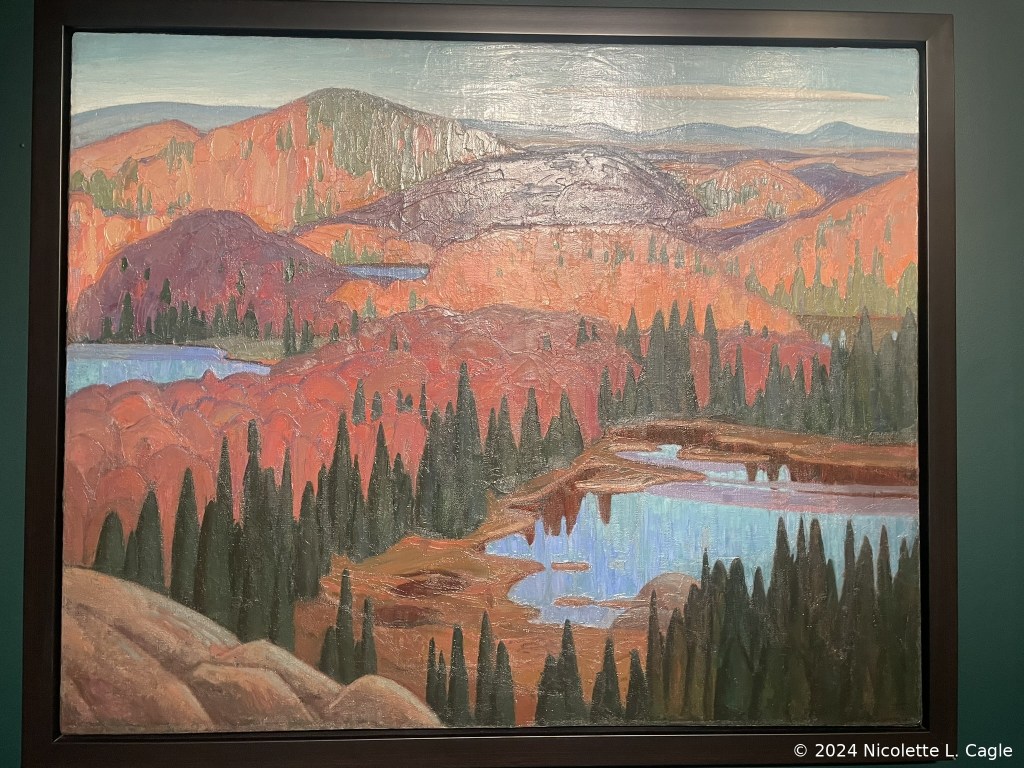
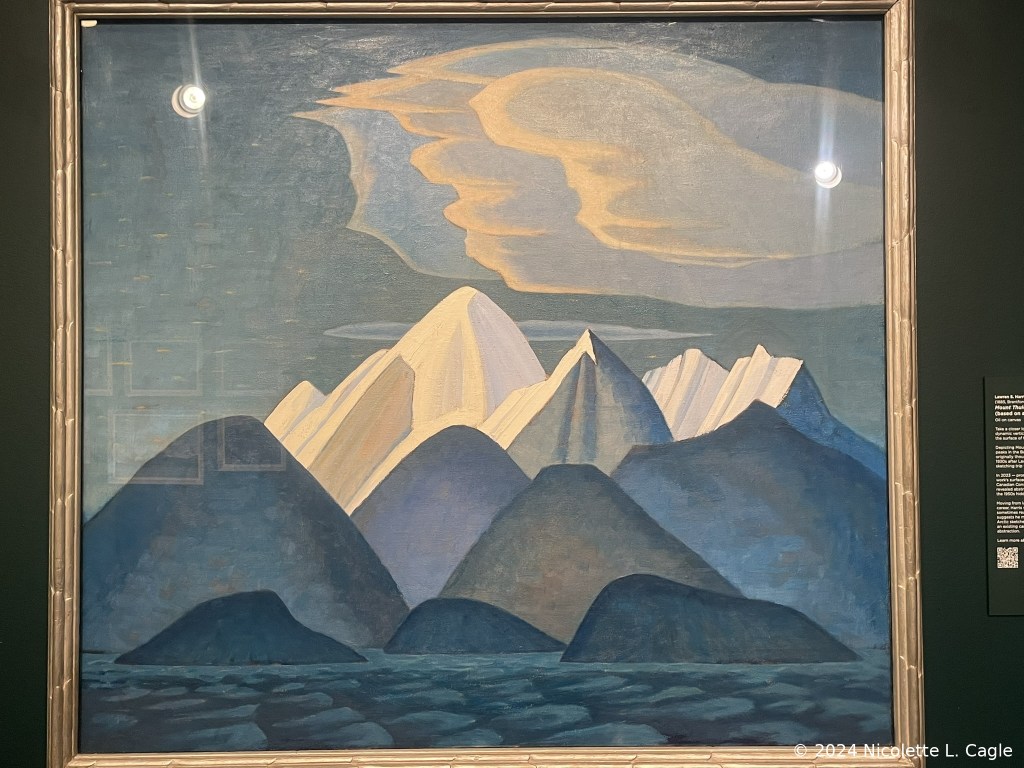
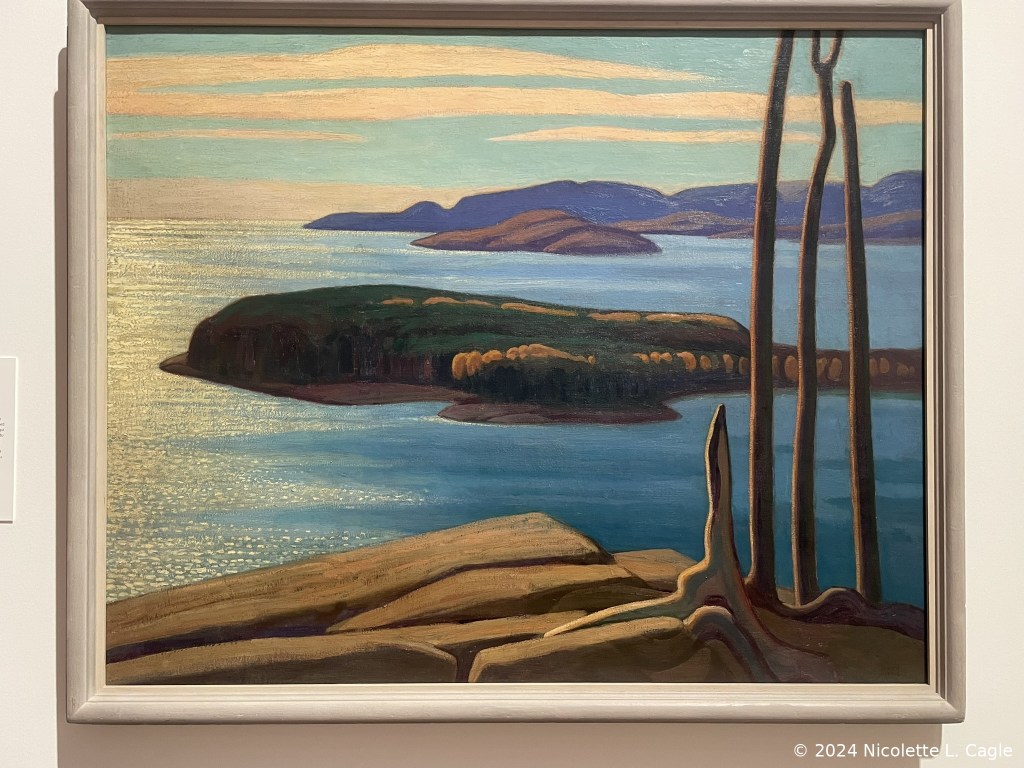
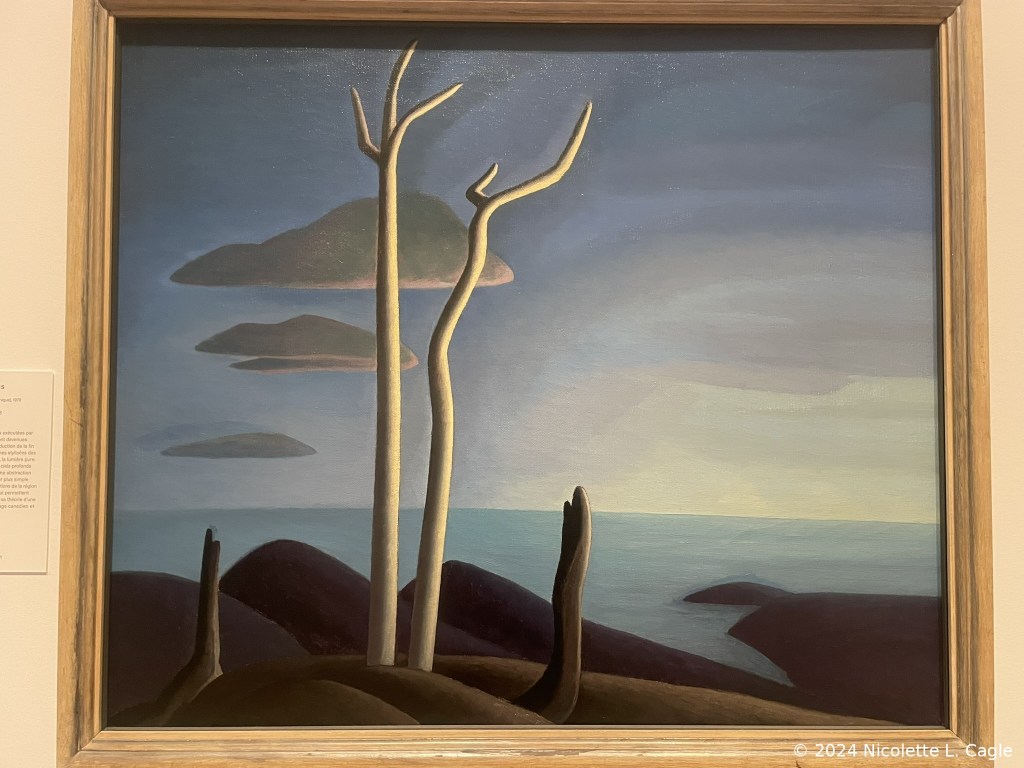
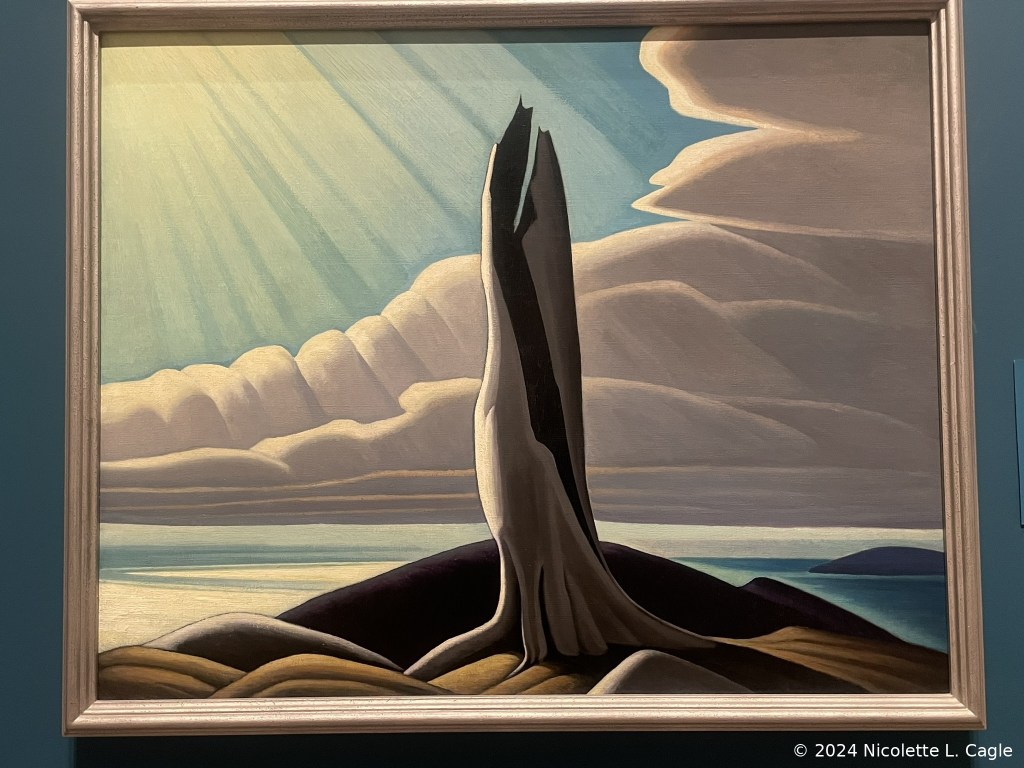
The gallery below shows the progression of Lawren Harris’s work as it became increasingly abstract. These photos were taken as the Art Gallery of Ontario.
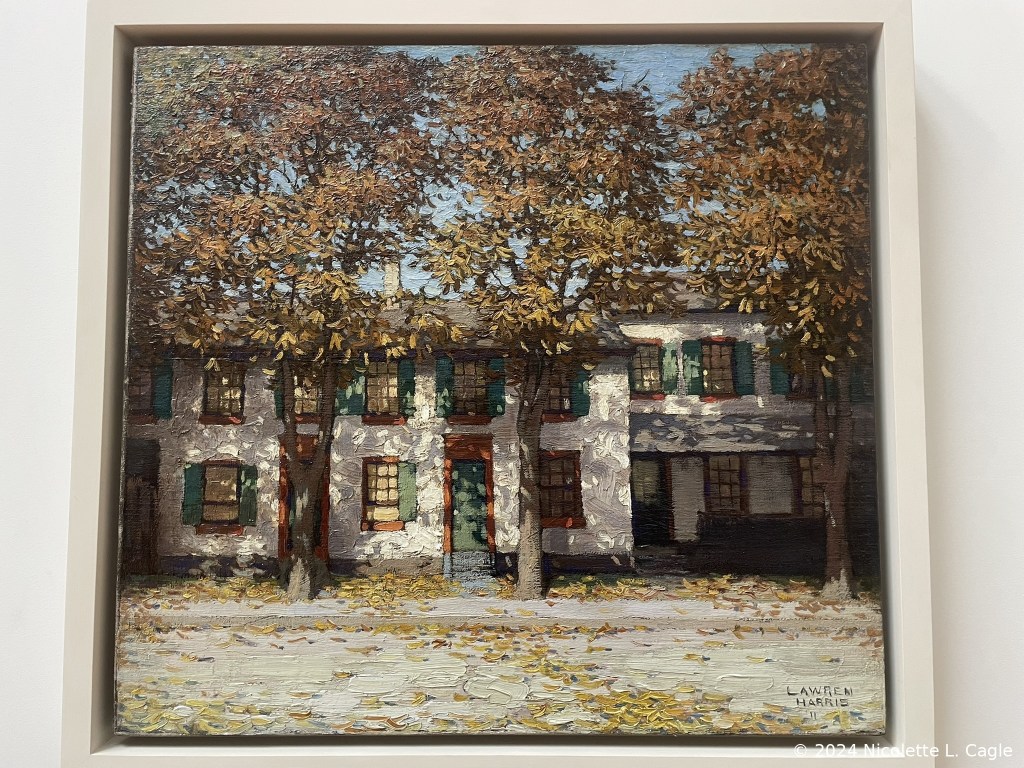
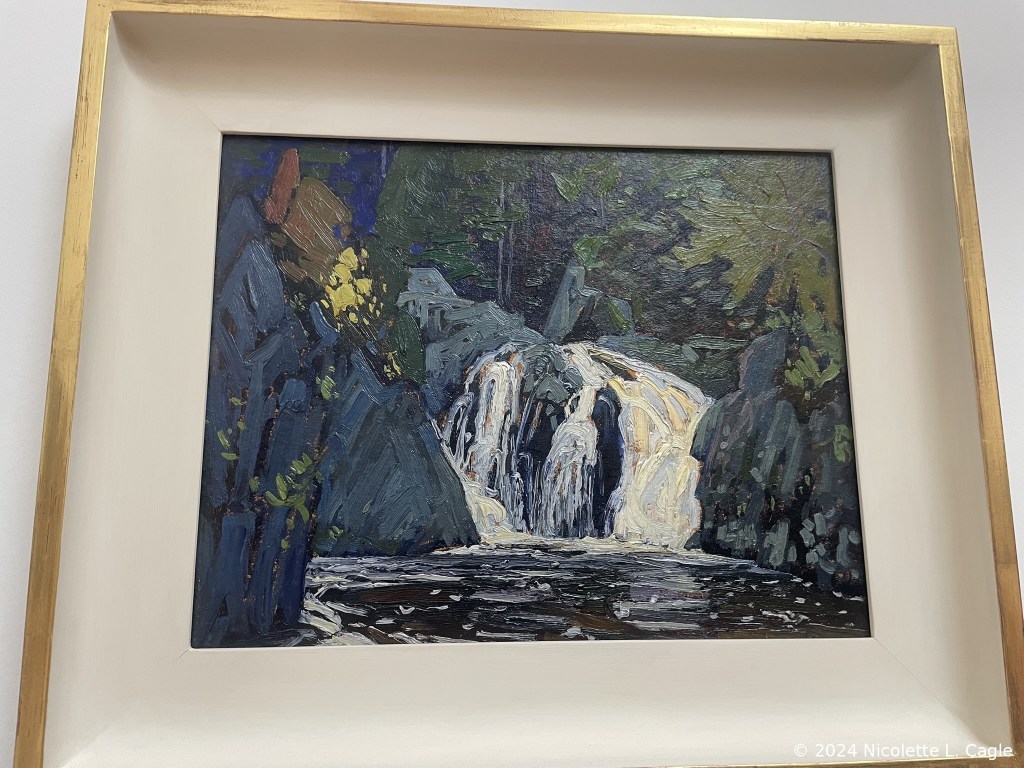
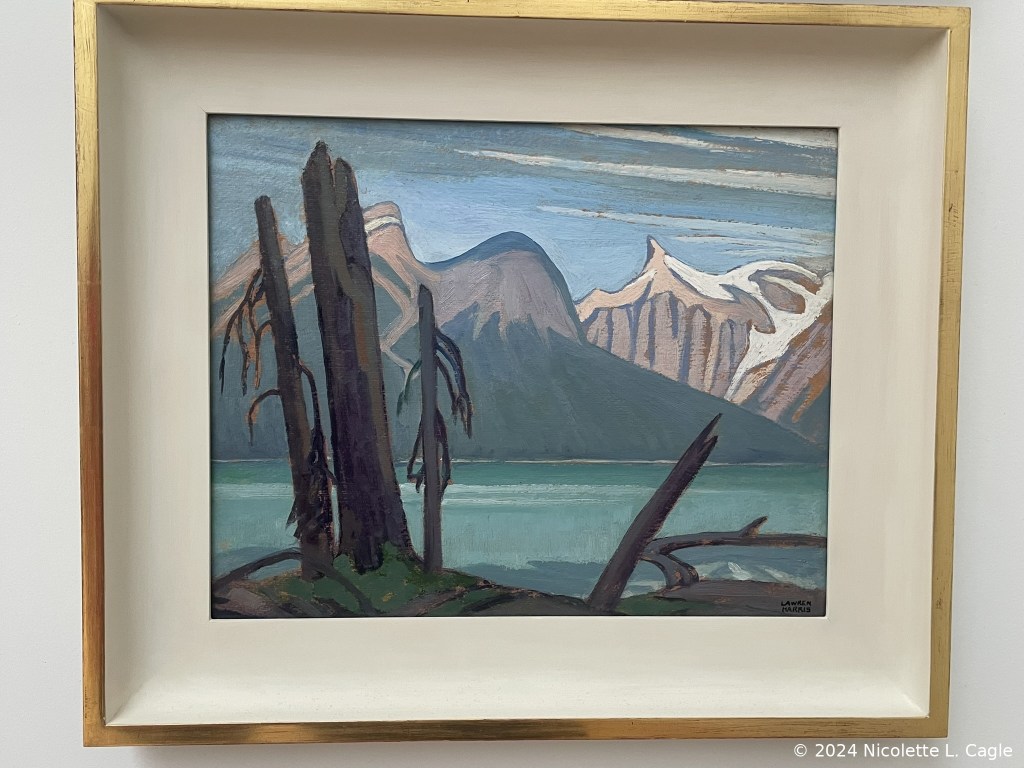
The Ontario Gallery of Art is home to hundreds of works by these artists, and it has a particularly strong collection of work by Lawren Harris (1885-1970) who became increasingly abstract, drawing inspiration from Lake Superior and other Canadian landscapes. Harris was also a Theosophist, an adherent to the mystical philosophical movement of Theosophy that sought universal truths, emphasized the unifying principles of religions and ancient wisdom, studied natural laws to understand truth, and believed in spiritual growth and progression through reincarnation.
The influence of Theosophy is evident in Harris’s depictions of the Canadian landscape. He saw the artist as a conduit for sharing profound spiritual responses to nature with viewers, and his abstract representations of nature corresponded with finding the essence and underlying natural laws of the natural world. Harris also used color and light symbolically, with blues particularly signifying spirituality and transcendence.
These conceptions and ideas will be familiar to those who have engaged with the writings of the American Transcendentalists, e.g., Ralph Waldo Emerson, Henry David Thoreau, or Margaret Fuller, active between the 1830s and 1960s, a century before Harris. In fact, Harris himself would go on to become a co-founder of the Transcendental Painting Group in the United States, a group of artists based in New Mexico that expressed their inner worlds and spirituality through abstract art. That movement, founded in 1938, included Raymond Jonson, Emily Bisstram, Agnes Pelton, Florence Miller Pierce, Horace Towner Pierce, and others. This movement did not necessarily use the landscape as a source of inspiration, and often used simple forms, such as spirals, circles, and geometric objects to represent birth, death, and other states of being with spiritual significance.
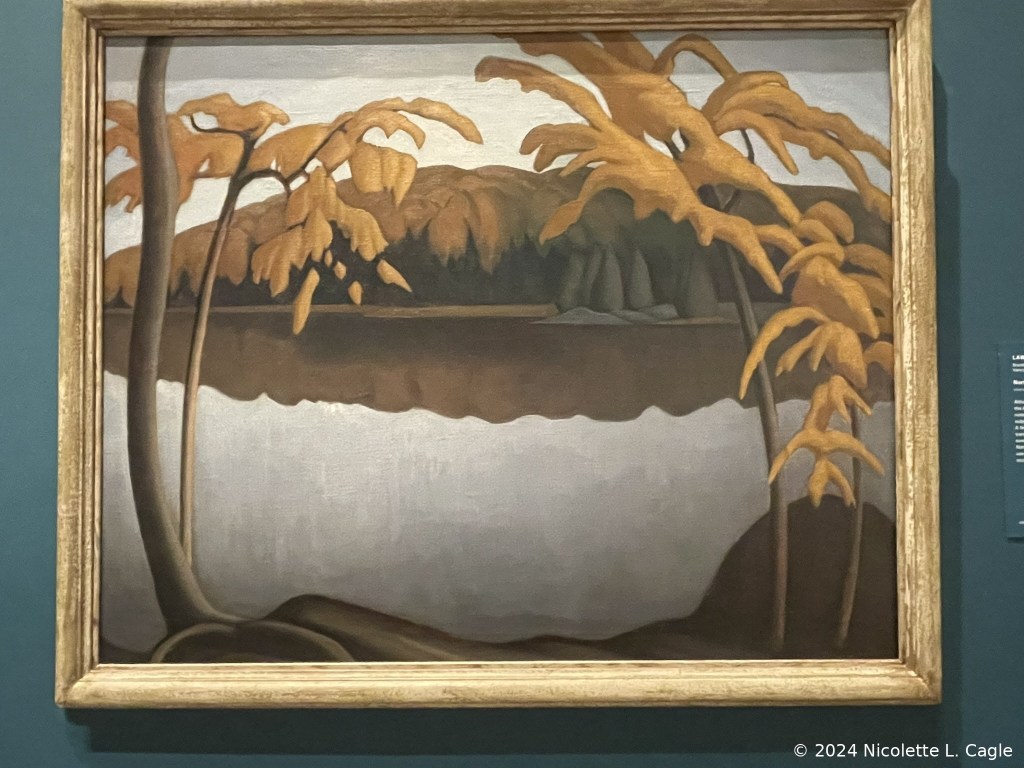
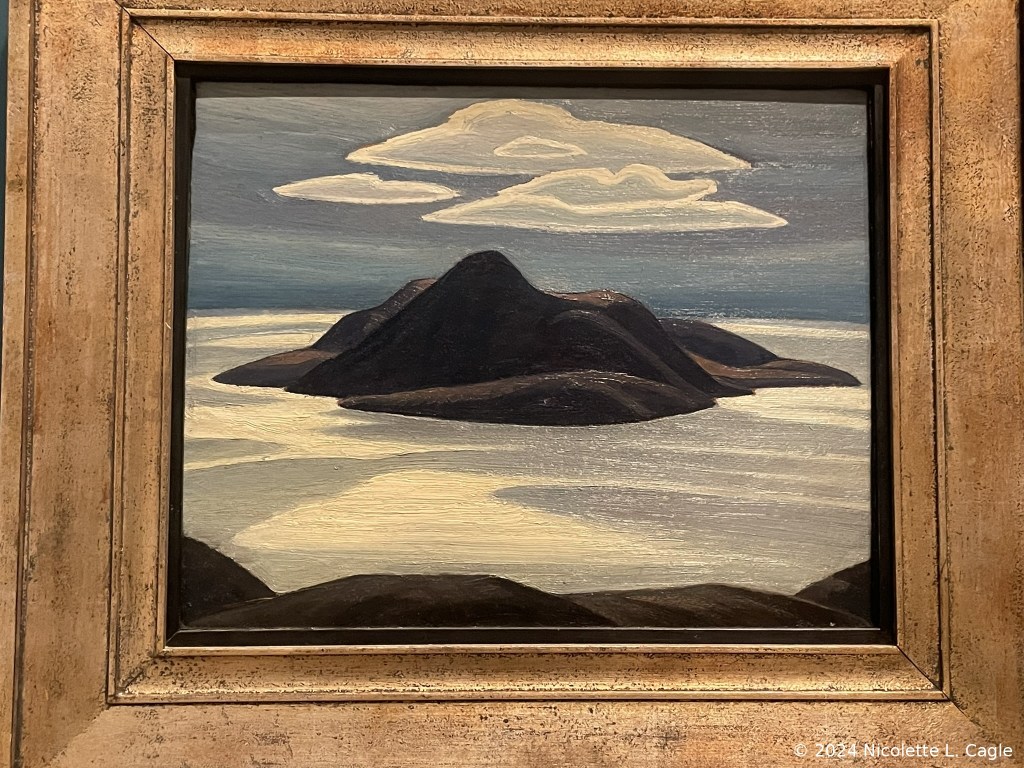
The gallery below represents photos I took of Lawren Harris’s work at two fabulous galleries in Ottawa: the National Gallery of Canada & the Ottawa Art Gallery. These works show Harris’s use of abstraction and light.
 Sense of Place