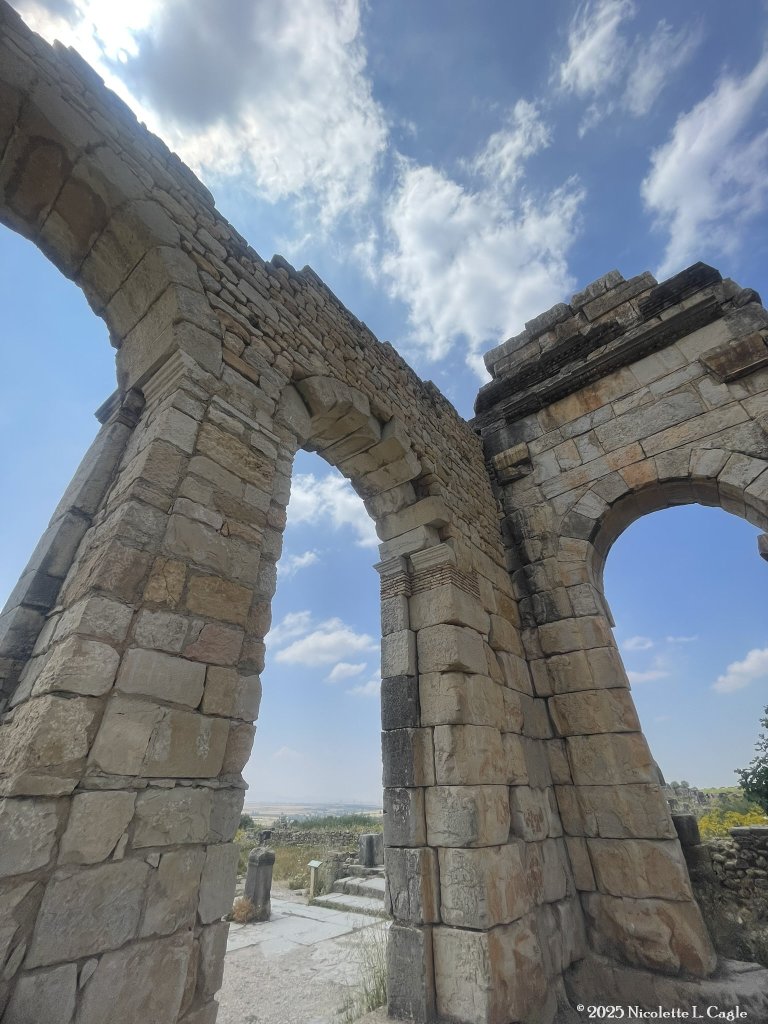
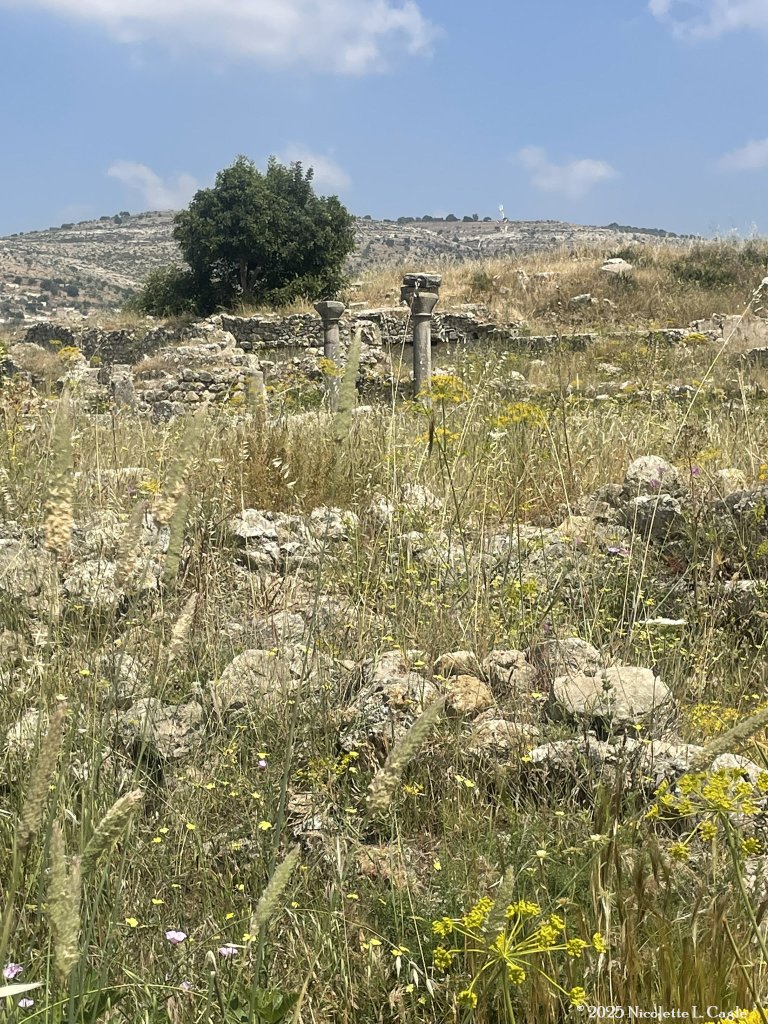
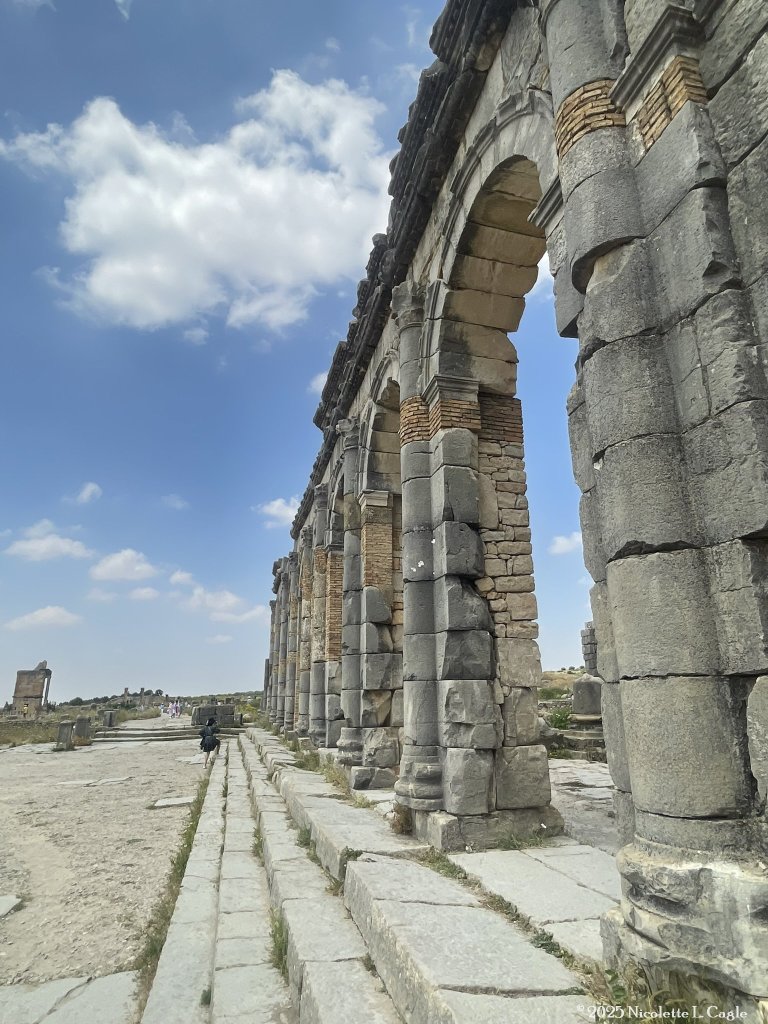
Situated among the fertile agriculture fields outside Moulay Idriss, one stumbles upon the ruins largely from the Roman 2nd and 3rd centuries, a place where olive-oil based wealth funded high-status homes and decorations. Once the home of Juba II, husband of Cleopatra’s daughter Cleopatra Selene II, 10,000+ Romans, and 20,000+ Moroccans, the region then as now, was known for its olive oil production: over 55 ancient olive oil presses have been unearthed in the vicinity.
Volubilis was a center of religious and cultural life. The principal Capitoline Temple, rebuilt in 218 AD, was dedicated to Jupiter, Juno & Minerva and included an altar for the ritual sacrifice of animals. The site also was home to a large Roman public bath complex, encompassing 2,300 square meters and including a caldarum,tepidarum, and frigidarum.
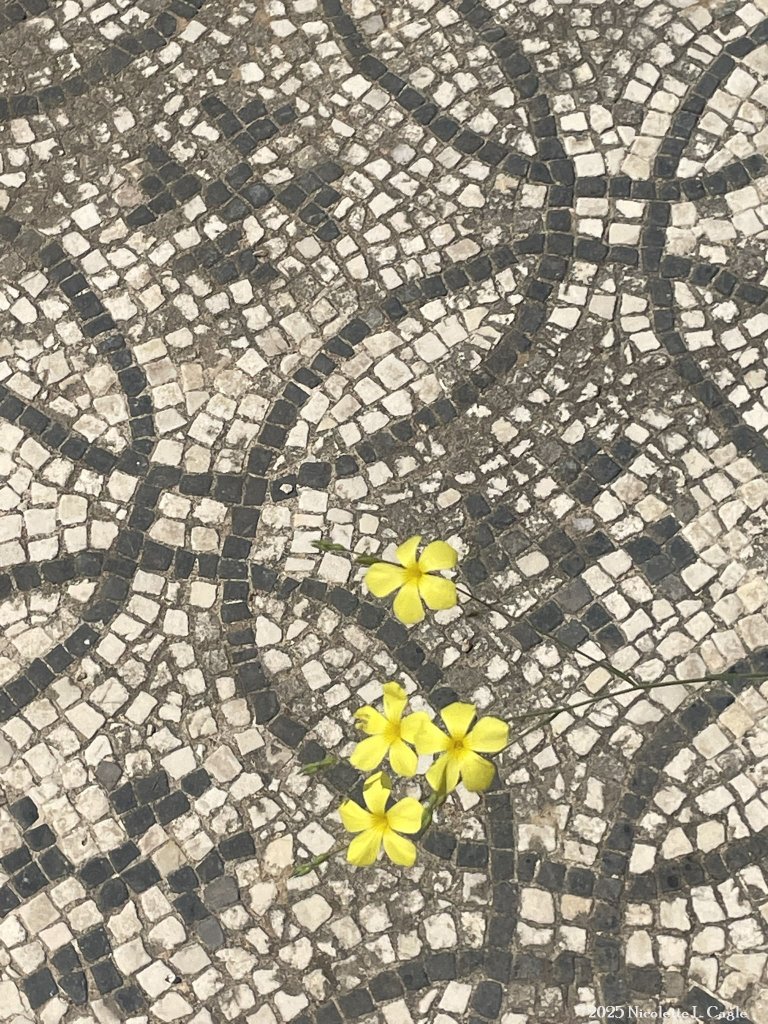
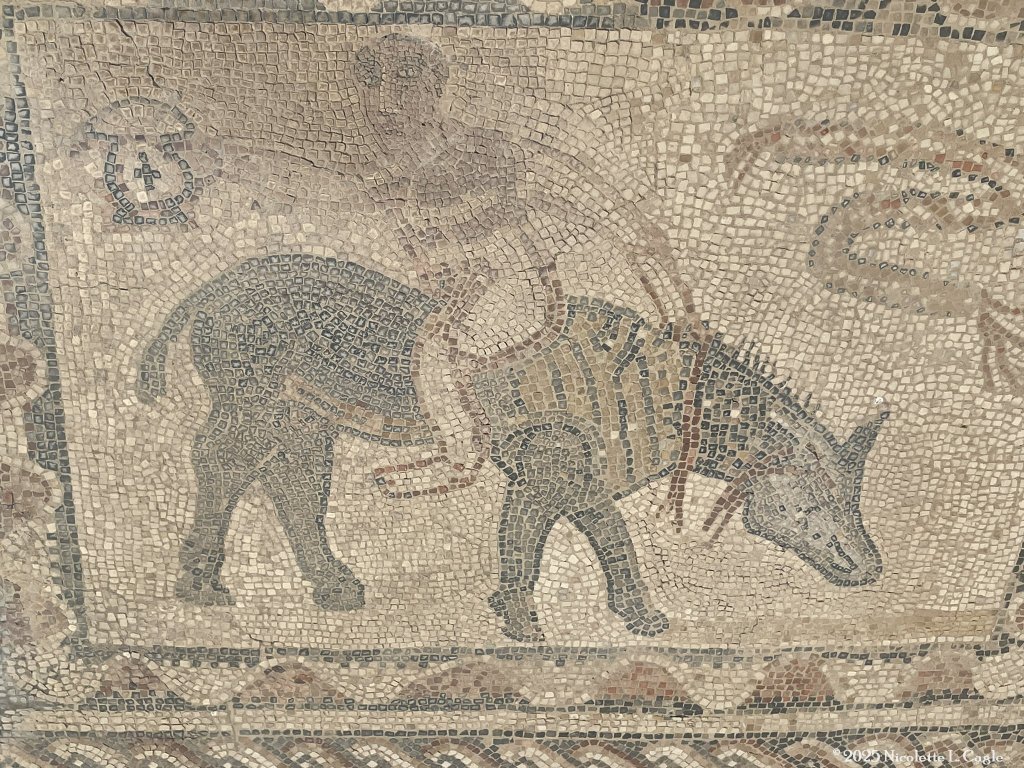
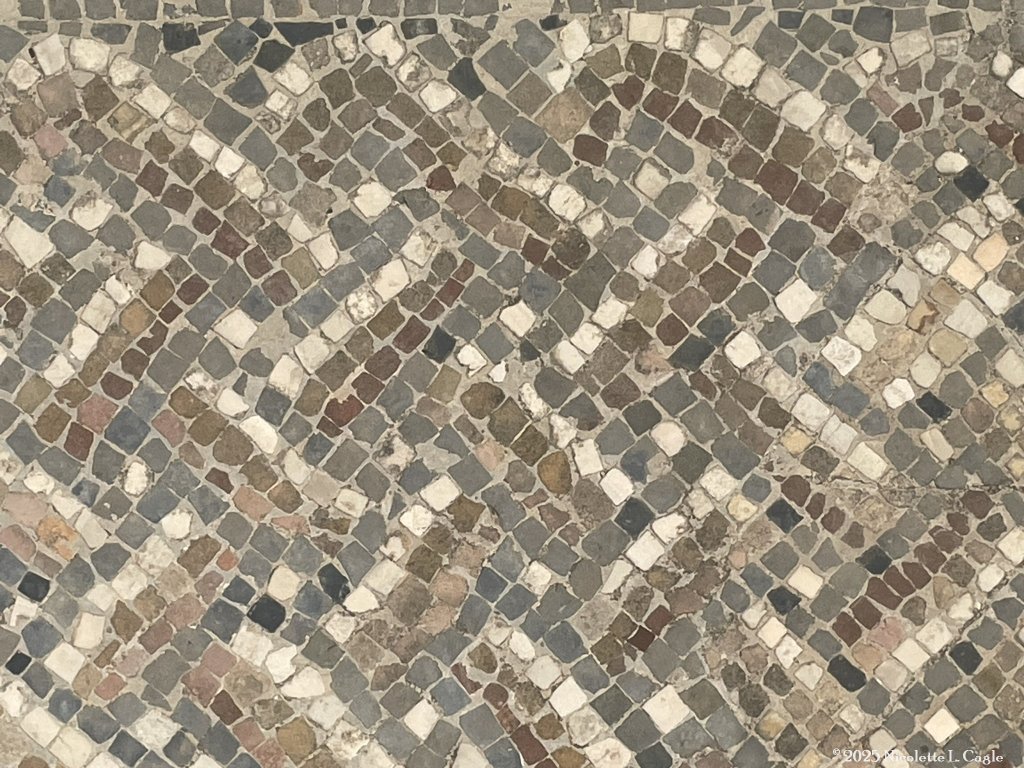
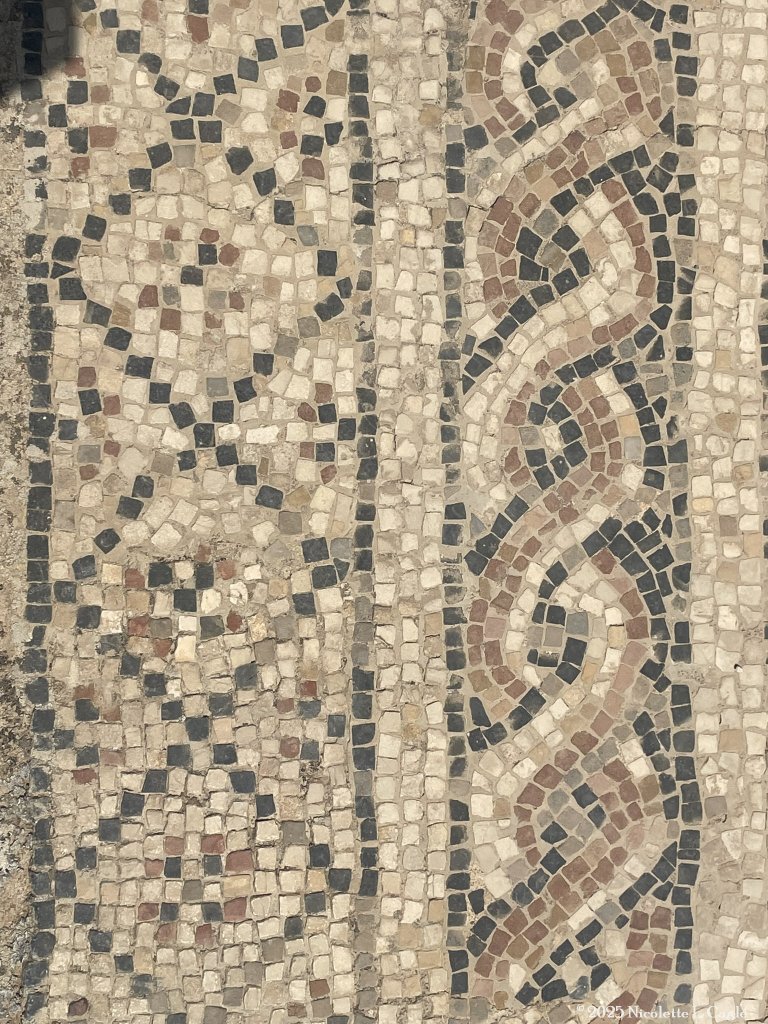
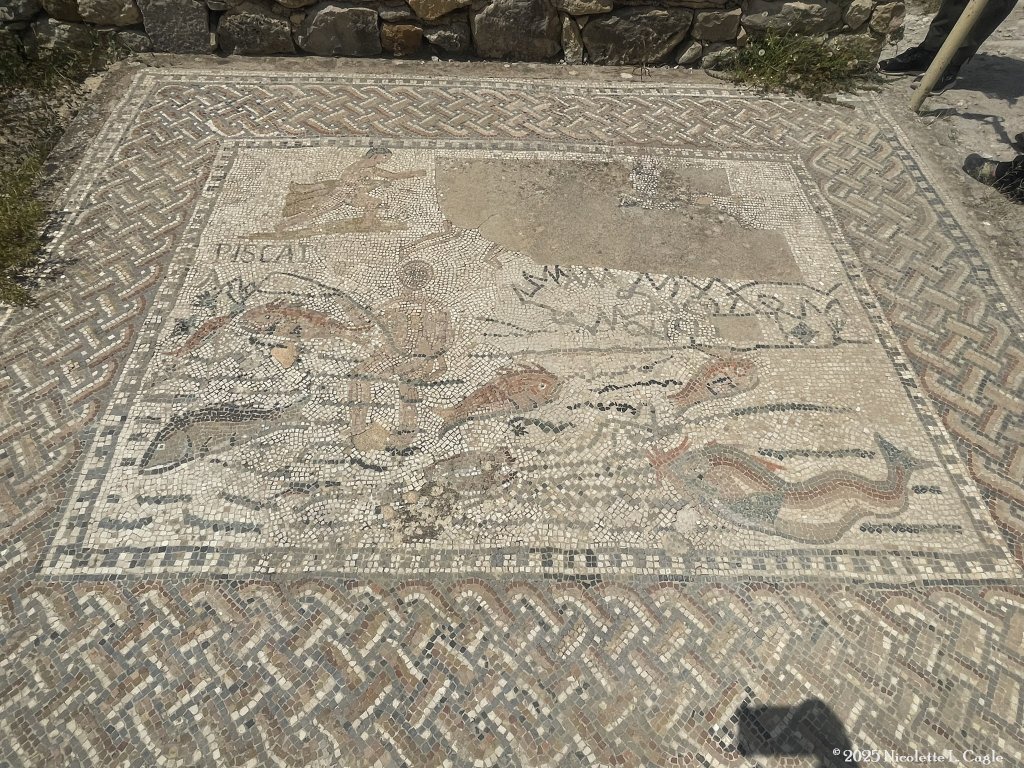
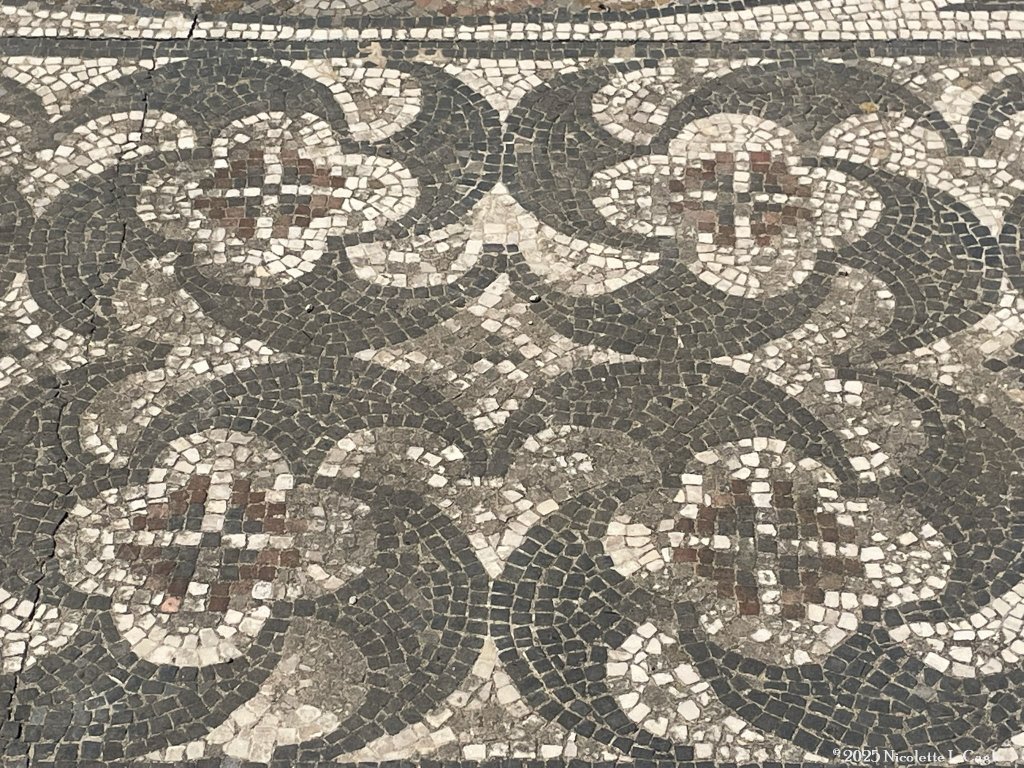
The site was also known for its fine mosaics, many of which stand in place. Many of the mosaics were on the floors of the courtyard homes (domus) of the wealthy, where guests could admire them. Many of them emphasize mythology and spectacle: Orpheus feeds an animal menagerie, Diana and Actaeon are surprised in a moment of transformation, Hercules performs his labours, and Bacchus embraces a life of wine and abundance. Many of these mosaics include beautiful geometric borders, featuring guilloche-style braids, meanders, and medallions.
 Sense of Place