Overview of the Sierra Norte. The Sierra Norte of Oaxaca is located about 40 miles north of Oaxaca de Juárez, in the eponymous state of Oaxaca, Mexico. The region extends across nearly 3,300 square miles, and is bordered by the regions of Papaloapam and Cañada to the North, and Valles Centrales, Sierra Sur, and Istmo to the south (from west to east). A small portion of the northeastern Sierra Norte borders the Mexican state of Veracruz.
The Sierra Norte itself is divided into three districts, Ixtlán, Villa Alta, and Mixe, and these districts encompass 68 separate municipalities. Many of these municipalities are autonomous campesino and Indigenous communities, under community tenure systems referred to as ejidos and comunidades respectively. Numerous Indigenous groups live within and manage communities in the Sierra Norte, including the Mixes, Chinatecs, Tlaxcalans, and Nahuas. The largest Indigenous group in the region are the Zapotecs, which refer to themselves as the Bëne Xon.
According to Dauner (2025), during Spanish colonial rule, Indigenous land was divided and redistributed. However, ejidos and comunidades — two forms of land tenure that emerged from the Mexican Revolution (1910-1920) — officially restored control of lands to campesino and Indigenous communities (Dauner 2026). Today, nearly 80% of the land in the state of Oaxaca is held in ejidos or comunidades, self-governed communities where decision-making is made via an Asamblea General that includes all registered community members and implementation is the responsibility of an elected body of officials, the Comisariado. Additional oversight is provided by the Consejo de Vigilancia.
The lands of the Sierra Norte encompass rugged relief and strong elevation gradients. The highest peak in the region towers over 12,000 feet tall, and much of the area is forested. Dauner (2025) and Chapela (2005) explain that despite the relative autonomy of these communities, in the mid-1900s over 8.4 million acres (3.4 million hectares) of forested land in this area was seized by the Mexican government and given to the Tuxtapec Paper Company (FAPATUX). In the mid-1980s, communities in the region regained control over this land.
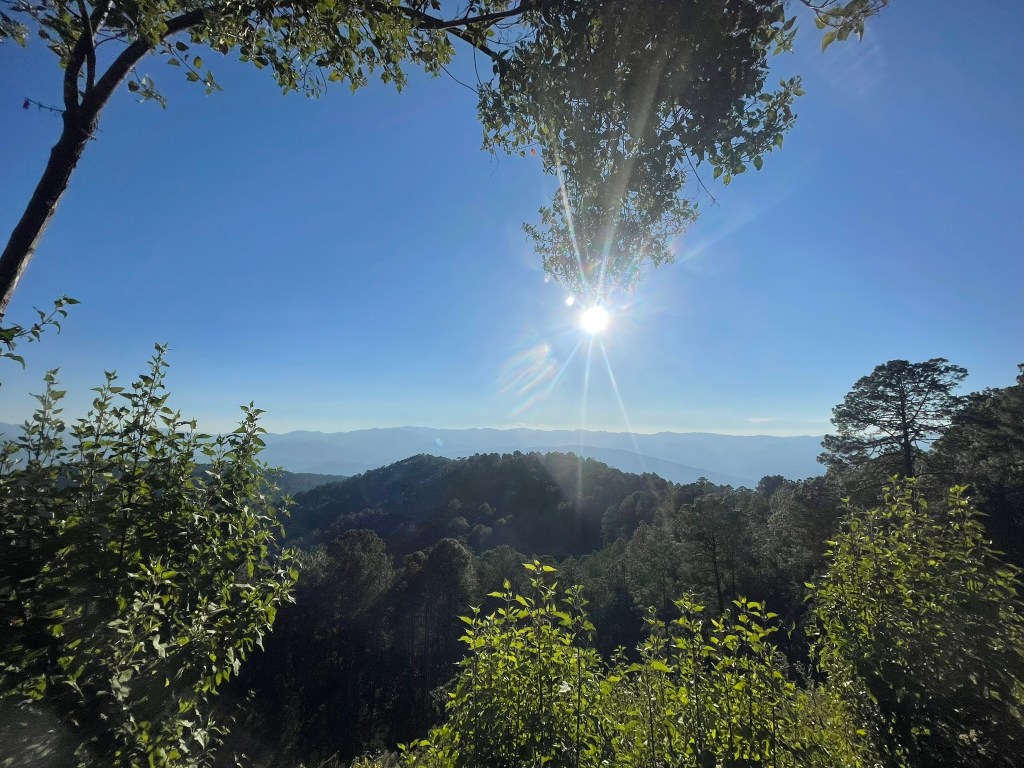
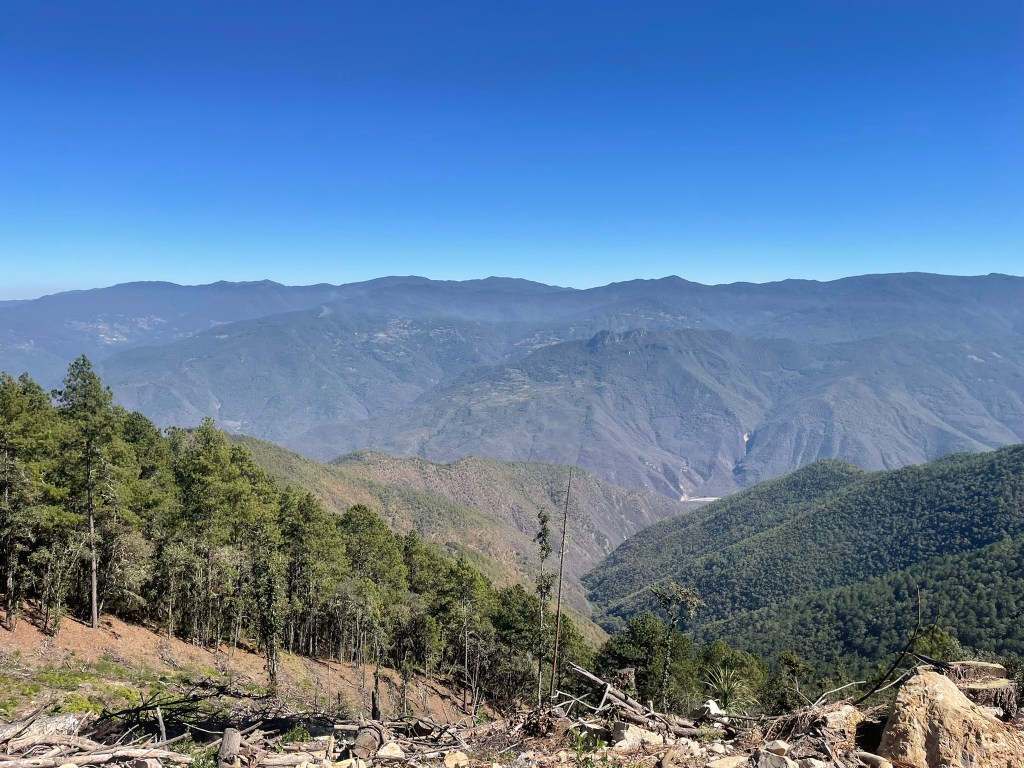
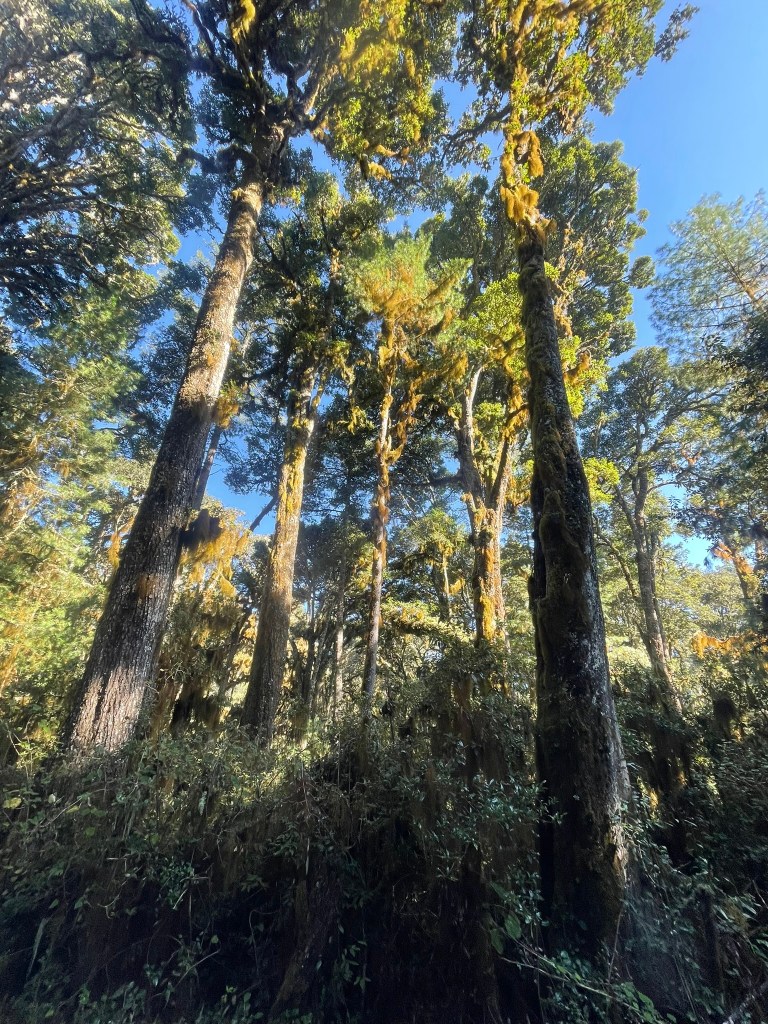
The Sierra Juárez. The sub-region known as the Sierra Juárez lies in west-central Sierra Norte, within the District of Ixtlán. This region includes high-elevation Zapotec communities (3,600 – 10,000 ft, 1,100 – 3,100 m), such as Abejones, Capulálpam de Mendez, and Santa María Jaltianguis. Geologically, the region is a complex of sedimentary, metamorphic and igneous bedrock. The oldest and deepest parts of the Sierra Juarez (i.e., the basement rock) is metamorphic rock, likely from the Carboniferous-Permian Period (358 – 252 mya), and include quartz laden schists and greenstone. Some areas of basement rock are covered by Jurassic-era red beds of siltstone, sandstone, as well as younger Cenozoic andesite bed (think: lava layers). Much of this is overlain by a zone that records deformation associated with mountain building, known in the region as the Aloápam Complex. This complex represents a mylonitic (taffy-like deformation) -cataclastic (crushed & ground) shear zone, where huge bands of rock have slid past each other for millenia.
Ecologically, the region is dominated by pine and oak forest that grade into high-altitude, mist-shrouded mesophytic or mountain cloud forest types. The region is known to have some of the best-conserved mountain cloud forests in Mexico. Dry, exposed sites tend to be dominated by oak forest and the coldest, wettest, highest elevation sites include Fir forests (AKA oyamel). The region is known for its high beta diversity, meaning there is rapid turnover of species as one moves across different sites over relatively short distances. According to CIIDIR-IPN, the District of Ixtlán alone contains 50% of the oak diversity of the state of Oaxaca (52 spp, 10% of the world’s oak species), including Quercus macdougallii, an endemic oak found nowhere beyond the Sierra Juarez. Sosa-Diaz et al. (2024) report that Mexico contains almost 40% of the world’s pine species, that Oaxaca has the highest vascular plant species richness of any state in Mexico, and that the montane forests are the most diverse. Moreover, they report that the region protects the highest number of endemic oak and pine species.
Common Tree Species in the Sierra Norte and Sierra Juarez, Estado de Oaxaca, Mexico. Using varying extents and data sources, I have compiled 3 lists of tree species in the Sierra Norte and Sierra Juarez regions of Oaxaca. The first source (Castellano-Bolanos et al 2010) emphasizes the pine oak forests of the Sierra Juarez, the second is focused on the pines only of the Sierra Norte with data kindly provided by Dr. J. Dr. J. René Valdez Lazalde On 23 Jan 2026; Colegio de Postgraduados, Mexico), and the third is from iNaturalist records pulled from the Sierra Juarez on January 23, 2026).
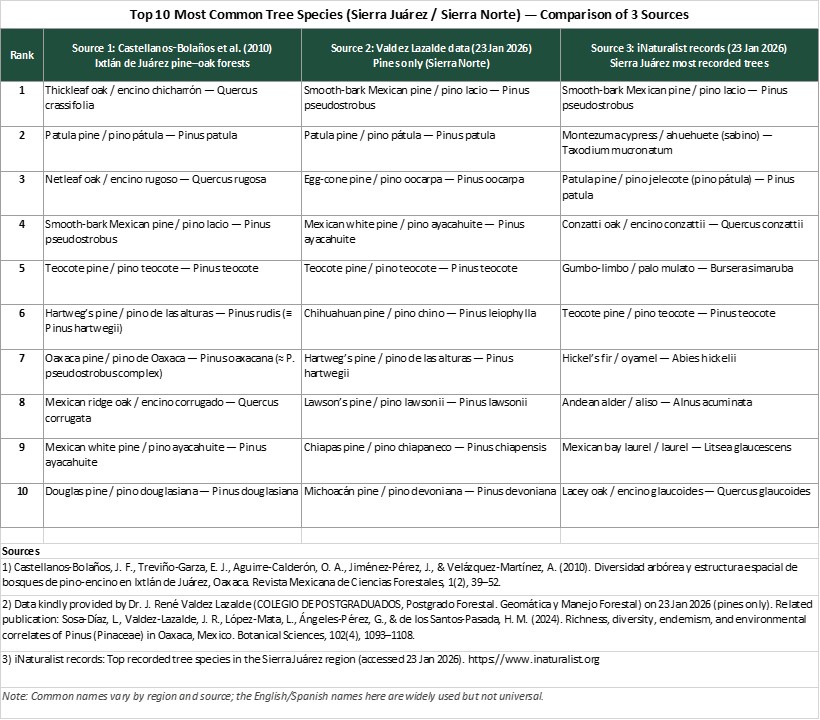
Identification & Natural History of 9 Common Tree Species.
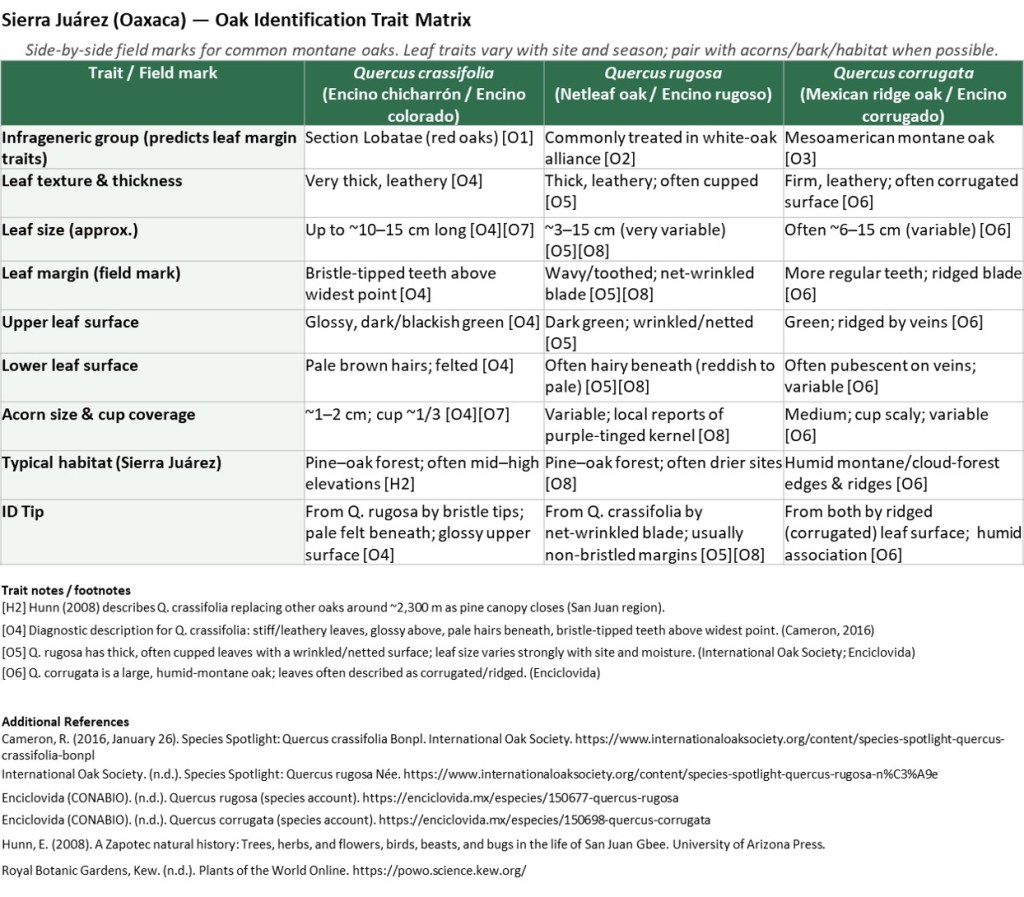
Note: species trait comparison charts are available at the end of the 9 common tree descriptions.
Encino chicharrón (Quercus crassifolia)
Quercus = Celtic for beautiful tree, crassus = English for solid, thick, coarse, folia = leaf
Identification: The leaves are typically 6-8“ long, thick and leather, they are dark green above, with a hairy, pale underside. They are known to emerge with a thick covering of red hairs. Q. crassifolia is in the “Lobatae” or red-oak subsection, and thus has bristle tipped leaves. The leaves are elongate and slightly wider at the tip, with 6-8(12) bristle-tipped teeth in the top third of the leaf. The acorns are small (1-2 cm) with a cupule that covers 1/3rd of the nut. The oak is relatively short statured, usually found to be 10-50 feet tall.
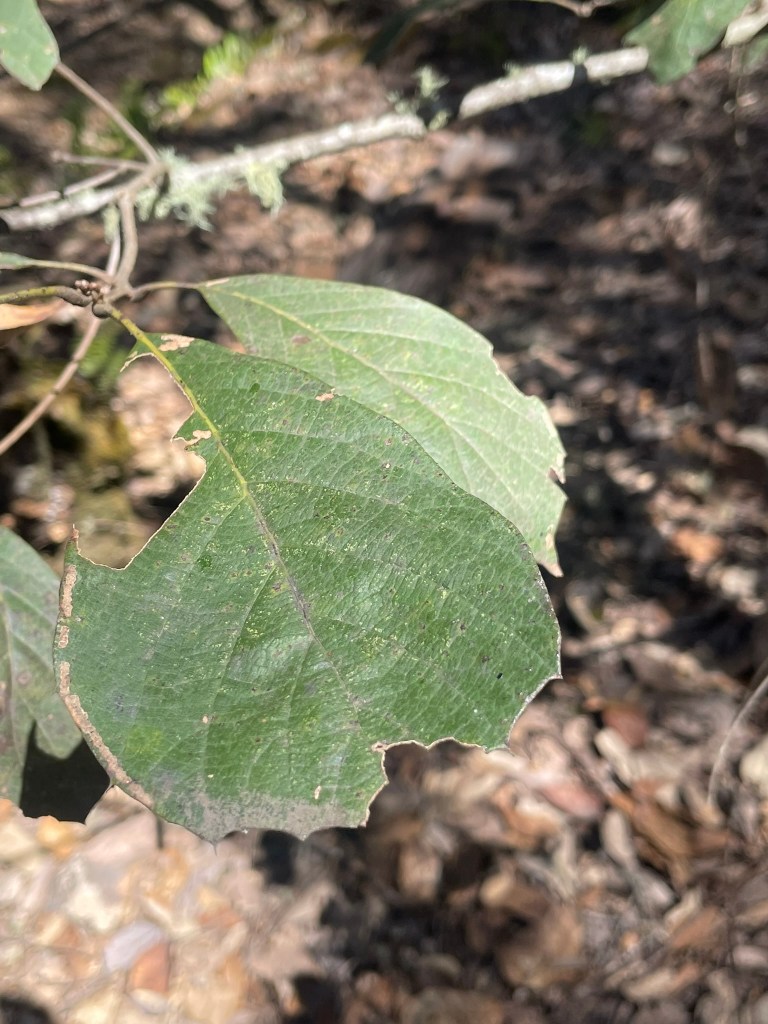
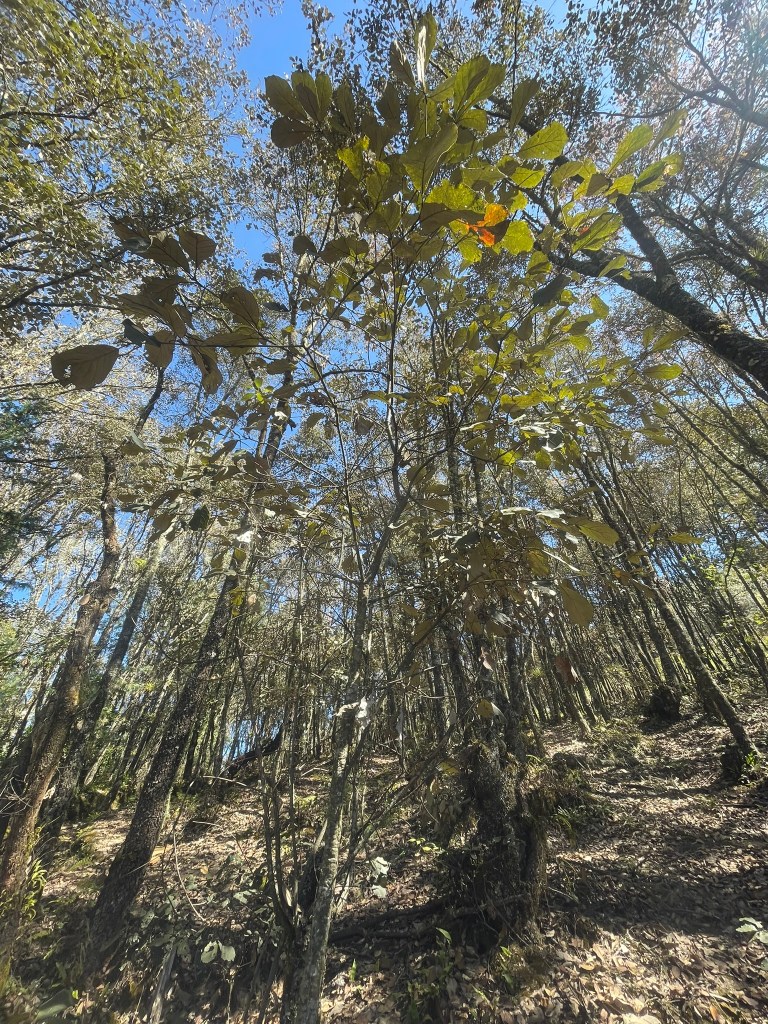
Eugene Hunn (2008, p75) writes of this species: “As the pine canopy closes in, at about 2,300 m, yag-zhog [Quercus conzattii] is replaced by yag-zhog-die, Quercus crassifolia…with quite similar large, oval, thick, cupped leaves, white felty beneath rather than rusty…”
Ecology: P. crassifolia is found in Mexico and Guatemala, typically in high elevation forests in Mexico (1,300 to 2,900 m) and at lower elevation in Guatemala. The species is known to hybridize with Q. crassipes in Mexico (Tovar-Sanches & Oyama 2004), and this in turn affects the community structure of endophagous (i.e., species that feed specifically on one plant) insects. There tends to be more diversity of endophagous insects in hybrid zones, supporting both the leaf mining insects that are typically more prevalent on Q. crassifolia and the gall forming insects that are more prevalent on Q. crassipes (Tovar-Sanches & Oyama 2006).
Socio-cultural Connections: According to Cameron (2016), this species was first collected and described in the western scientific tradition by Aime Bonpland, on his famous expedition to Latin America with Alexander von Humboldt. Its wood is commonly used for firewood and charcoal, and for making tool handles and posts for housing. The saplings are reported to be medicinal, given to women after giving birth, once the saplings are cooked, ground, and mixed with corn. The bark is also used as part of the leather tanning process (oak bark is tannin rich) and to alleviate gum inflammation. Valencia-Aviles and colleagues (2018) assessed the bark of several oak species (Q. crassifolia, Q. laurina, & Q. scytophylla) for the number of phenols, flavonoids, and other compounds with pharmaceutical use, and noted that Q. crassifolia had the highest level of phenolic compounds of the three species.
Pino Pátula (Pinus patula)
Pinus = pine (Latin), patula = spreading, open
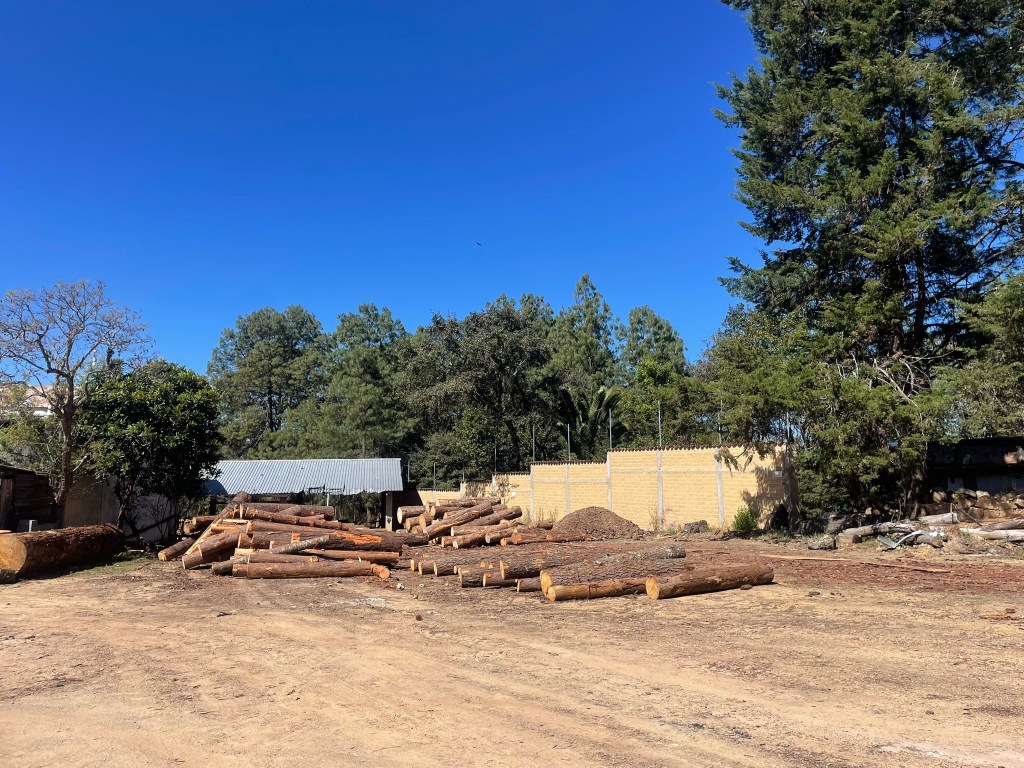
Identification: P. patula needles are 6-9” long and come in fascicles of 3(4-5), and they are long and dropping, giving the crown a soft appearance. The cones are not unlike P. taeda when opened, with an armed umbo, and are formed on curved stalks (i.e., peduncles). This tree stretches to nearly 100 ft. Freshly cut timber is pink in color and smells like aniseed. The bark of young trees tends to be thin and scaly, with a noticeable reddish hue
Ecology: P. patula is found at mid to high elevations (5,900-8,900 ft) and is native to Mexico, although today it is cultivated in Australia and New Zealand (where it is naturalized), South America, Africa, India and Papua New Guinea, and Hawaii (where it is an invasive plant). In Oaxaca, this species is a host for mistletoes (Arceuthobium spp).
Socio-cultural Connections: P. patula is a major timber species in Mexico, and as of 1991, over one million hectares have been planted in other regions of the world.
Netleaf Oak, Encino Negro, Encino Rugoso (Quercus rugosa)
Quercus = Celtic for beautiful tree, rugosa – wrinkly
Identification: The leaves of this oak are thick, often cupped, and textured with a netlike or wrinkly look. The leaves are sensitive to water conditions, and can be quite small (1.3”) or stretch up to 6 inches long, and are green on top with reddish hairs beneath. Similar to Q. crassifolia, the obovate toothed leaves emerge covered in red hairs on the upper surface. The bark is gray-brown, and flakes and exfoliates as it ages. Diagnostically, the flesh of acorns is purple hued.
Ecology: Q rugosa is found in Mexico, Guatemala and the Southeastern United States, often associated there with madrones. Martins and colleagues (2018) identified two genetic clusters of Q. rugosa along an east-west gradient in northern Mexico, in part driven by the seasonality of precipitation. The authors also predict that the northeast population of Q. rugosa is more likely to experience negative effects from Climate Change, being less adapted to higher seasonality in precipitation than western populations.
Socio-cultural Connections: According to Cameron (2018), the bark has been used to treat hemorrhages and toothaches, the leaves have been brewed as tea to alleviate muscle pain, and the acorns have been used to feed livestock and to make a coffee-like drink. The tree is also used locally for firewood and charcoal. Martins et al. (2018) propose agroforestry as a potential strategy to reduce climate-change vulnerability in Quercus rugosa.
Smooth-barked Mexican Pine, Pino Lacio, Chamite (Pinus pseudostrobus)
Pinus = pine (Latin), pseudostrobus = false white pine
Identification: True to its name, P. pseudostrobus has needles in fascicles of 5, as you might expect with false white pine, with stomatal lines on each needle face. The young bark is relatively smooth, compared to other pines. The cones are long (5-8 inches), with unarmed umbos, and white pine-like. This pine stretched up to 80 feet tall, with whorled branches. This can be differentiated from P. oaxacana with some difficulty. For example, the fascicle sheath of P. pseudostrobus is 12-15mm, while the fascicle sheath of P. oaxacana is 18-28 mm long. Moreover, the needles of P. oaxacana are a lighter, more yellowish green, and the cone scales on thicker and harder. Interestingly, one way to separate these species maybe be by analysis of their oleoresins. P. pseudostrobus’s oleoresin 80% α-pinene, which gives pines their crisp clean piney scent, while P. oaxacana’s oleoresin is only 37% α-pinene, and significant amounts of heptane and limonene (citrus/turpentine odor).
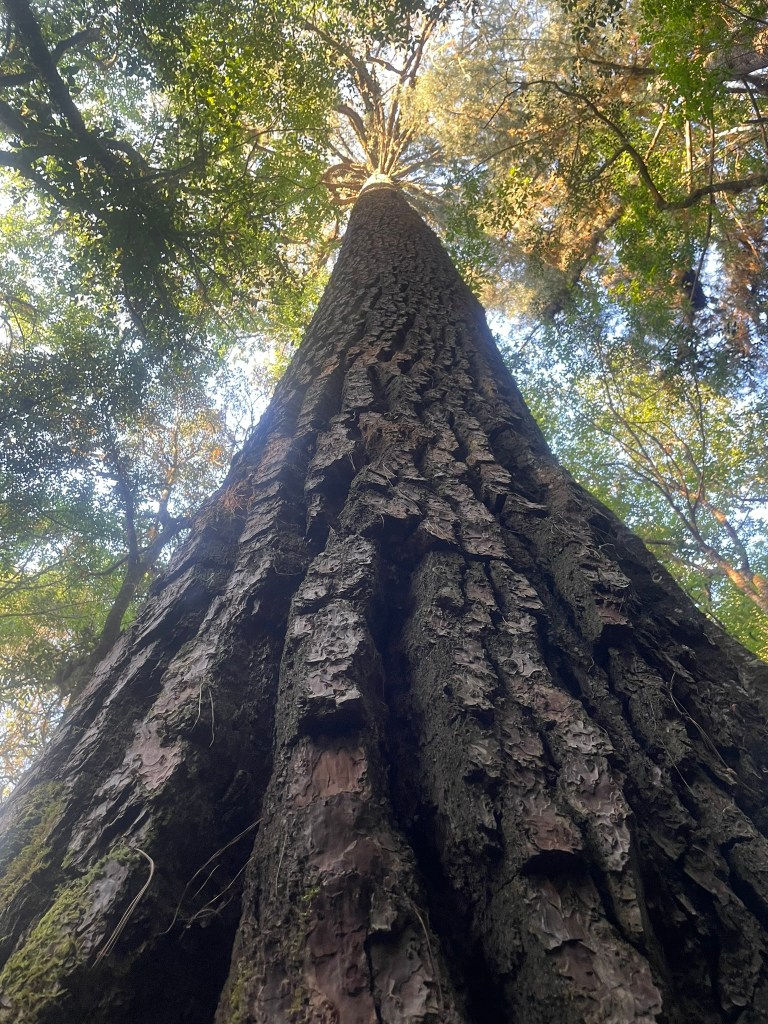
Ecology: P. pseudostrobus is distributed throughout Mexico and Central America, south into northern Nicaragua. It has been introduced elsewhere, including New Zealand. The taxon was once thought to include P. oaxacana, and it also hybridizes readily with P. montezumae. The species is known for occupying strict elevational bands, and does poorly at lower limits of its elevation range. In areas where it experiences frequent, low-severity fire, seedlings might have a “grass stage.” This species hosts dwarf mistletoes (Arceuthobium spp.) and recruitment is severely impacted by a fungus, Shaeropsis sapinea.
Socio-cultural Connections: This pine is among several that are taped for resin and contribute to the rosin and turpentine industries. It is also used as lumber.
Eugene Hunn (2008, p74) writes the following regarding P. pseudostrobus in the region: “The Oaxaca pine has fine, light green needles (fine in a bunch) that droop from the tips of the branches and large cones with distinctive projecting spines on the basal scales. It is the preferred species for harvest by timber companies and is often “shaved” of its lower branches for firewood.”
Aztec Pine, Teocote Pine, Pino Teocote (Pinus teocote)
Pinus = pine (Latin), teocote = resin rich wood (Nahuatl)
Identification: This pine is medium-large, stretching up to 80 feet tall. It’s bark is gray-brown, rough with fissures not unlike mid-age loblolly pines. Its needles are 4-6 inches in length, found in fascicles of 3, and lined with stomata on all sides. The cones are small (1.5-2.5 inches), and have a prickled umbo.
Ecology: P. teocote is endemic to Mexico, with a small population in Guatemala, and in Mexico, it is found at elevation bands of 4,900 to 9,800 feet. It is uncommon across the majority of its range. It is also a host for dwarf mistletoes. See below for mycorrhizal relationships.
Between San Augustin Gbee and San Lorenzo Gbee, Eugene Hunn (2008, p58) describes the habitat of Q. teocote as follows: “Our route continues east through rock pine (Pinus teocote) woods mixed with cup-leaved oaks (Quercus conzattii) on hillsides of shallow exfoliating granite soils alternating with grassy flats on to San Lorenzo Gbee.”
Socio-cultural Connections: This pine is among several that are taped for resin and contribute to the rosin and turpentine industries. In San Juan, P. teocote is also used for the wooden wedges (cuñas) that hold roof beams in place (Hunn 2008, p149). It is also used as lumber. Rodolfo Enrique Ángeles-Argáiz and colleagues (2024) have found that P. teocote can be inoculated with an edible mushroom and ectomycorrhizal fungus, Laccaria trichodermophora, that naturally co-occurs with P. teocote and is often associated with forest edges and younger plants. The researchers suggest that inoculation paired with reforestation efforts might protect Mexico’s pine forests, which represents 16% of its forest cover and is also threatened by climate change.
Hartweg’s Pine, Mexican Mountain Pine, Pino de Mexico, Pino de las Alturas (Pinus rudis/hartwegii)
Pinus = pine (Latin), rudis = rough (Latin)
Identification: This is a high elevation pine with stiff needles, 4 to 8 inches in length, in fascicles of 5(4). The bark tends to be thick and platy, especially in older trees. The unopened cones are very dark purple to black (i.e., the umbo is black), 2.5 to 5 inches long. It is closely related to P. montezumae, but P. montezumae has longer needles and brown cones, and it is found at lower elevations.
Ecology: P. rudis is associated with high elevation, upper montane environments in Mexico and Central America, particularly the high peaks of Honduras and El Salvador. Given that it’s often found near the tree line, this species has an ecologically important role to play in providing forest structure and keeping soil in place. Moreover, the species is not subject to the krumholtz effect (think: dwarfed and contorted by cold winds) like other pine species. The taxon is considered to be genetically diverse and phenotypically plastic, as its part of populations that have moved, merged, and mingled during glacial and interglacial periods. P. rudis is susceptible to the Round-headed Pine Beetle (Dendroctonus adjunctus) and is a host to dwarf mistletoe. Dwarf mistletoe infections, when severe and involving two or more mistletoe species (Arceuthobium globosum and A. vaginatum), seem to affect the DBH: height ratio of P. rudis, making them grow less tall (Queijeiro-Bolanos & Cano-Santana 2016)
Interestingly, Viveros-Viveros et al. (2007) research on seedling growth and susceptibility to frost damage suggests that while P. rudis has low susceptibility to frost damage, it’s low seedling survival rate make P. montezumae a better choice for reforestation, particularly at at Purépecha Plateau in Michoacán.
Socio-cultural Connections: This species has historically been used as a resin tree. Unlike other pine species in the region, P. rudis is suitable for dendrochronology and has shown the effects of volcanic eruption on tree growth.
Oaxaca Pine, Pino de Oaxaca (Pinus oaxacana)
Pinus = pine (Latin), oaxacana = of Oaxaca
Identification: The needles of P. oaxacana are a lighter, yellowish green, and the cone scales on thick and hard. It can be difficult to separate from P. pseudostrobus. One way to separate these species may be by analysis of their oleoresins. P. pseudostrobus’s oleoresin 80% α-pinene, which gives pines their crisp clean piney scent, while P. oaxacana’s oleoresin is only 37% α-pinene, and significant amounts of heptane and limonene (citrus/turpentine odor). See description of P. pseudostrobus above.
Ecology: P. oaxacana ranges from Mexico to El Salvador and Honduras, and is found at elevations of 5,000 to 10,500 feet.
Socio-cultural Connections: An important timber and resin tree, although not always recognized as a separate species from P. pseudostrobus.
Mexican Ridge Oak (Quercus corrugata)
Quercus = Celtic for beautiful tree, corrugata = wrinkled, corrugated
Identification: Its leaf surface is ridged. Compared to the other oaks presented, it’s leaves are narrower, and more regularly toothed along the edge.
Ecology: This is a large, mountain oak often found in more humid cloud forests (2,220 to 7,200 feet in elevation), particularly associated with ridges and found in the canopy, and ranges from Mexico to Panama. La Rocca (2012) found at least 33 species of fungus associated with Q. corrugata in Costa Rica. Fungal associates included Amanita falvoconia, Boletus auriporus andB. pulverulentus, Lactarius indigo and L. rufulus, as well as several Marasmius species. Suarez and Blanco (1991) noted large galls on Q. corrugata associated with two species of cynipid wasps, Callirhytis sp. and Synergus sp., and found that the galls were not associated with differences in tree height or DBH.
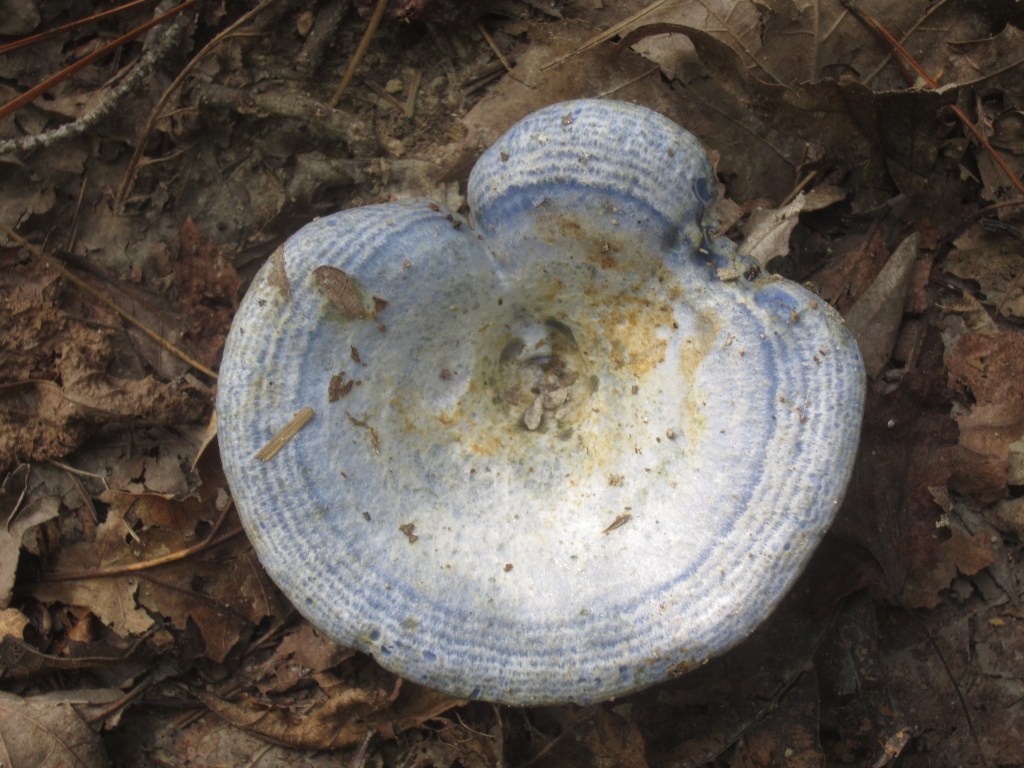
Socio-cultural Connections: Like most oaks in the region, it is used for firewood and charcoal.
Mexican White Pine, Pino Ayacahuite (Pinus ayacahuite)
Pinus = pine (Latin), ayacahuite = ayaucuáhuitl (Nahuatl)
Identification: Of the pines presented here, this one is the tallest, reaching about 150 feet and it can also be quite thick, reaching a DBH of nearly 80 inches. The bark can be variable, from tan-brown with narrow bocks and moderate fissures, to red brown with thick blocks and deep fishers. The bark tends to start smoother and become more divided and rectangular plated as it ages. This is a white pine with five needles (4-6 inches in length) per bundle and long slender cones, not dissimilar to Pinus strobus.
Ecology: P. ayacahuite is found from slightly north of Mexico city to southern Guatemala. It is a host to dwarf mistletoe (Arceuthobium guatemalense). Because this is an important forestry species in Mexico, researchers have modeled the effects of climate change on its germination and range. Pedrero-Lopez and others (2025) suggest that climate change will decrease P. ayacahuite’s distribution in Chiapas, Oaxaca, and Puebla by 15%-22% by 2090, although the species could move into other regions. The researchers also suggest that water availability will be a limiting factor for seedling establishment under climate change scenarios.
Socio-cultural Connections: This is an important conifer and valued for timber in higher elevation forests within its range. In San Juan, this species is preferred for structural members, including roof beams (Hunn 2008, p149). The species is also easy to work with for carpentry. Eugene Hunn (2008, p74) writes that: “Scattered Mexican white pines (P. ayacahuite) appear at 2,300 m and are somewhat more numerous above 2,800 m. They are distinctive with their long pendant cones clustered at the branch tips and fine short needles in fives…These alone among the local pines are distinguished nomenclaturally from the pine generic, yag-guier [in Zapotec]. Most often the white pine is called yag-gretad, a name derivative of Spanish grietada ‘creviced, fissured.’ However, Hermilo Silva, guardian of authentic Zapotec nomenclature, declared that the proper term is yag-la. The wood of this pine is prized by the people of San Juan for house beams and other construction projects.”
Trait Comparison

Why Mexico? Today, Mexico is a hot spot of oak diversity. Quercus originated in the Northern Hemisphere in the early Cenozoic, with a lot of diversification taking place during the upheavals of the Miocene. Mexico is thought to have such a high rate of diversification because of its topographic complexity (think geologic and edaphic heterogeneity) and steep climate gradient, as well as because species have had the opportunity to lose and regain contact with each other as the climate has shifted over the ages. One of the reasons the Sierra Juarez region has such high diversity is because it represents exactly the kind of heterogenous, mosaic-like qualities that promote diversification more generally. Oaks themselves have a wonderful habitat of hybridizing, helping maintain that genetic variation across shifting conditions.
Mexico is also a center of pine diversity. Pines have been around since the Early Cretaceous (think: 125 mya) and today there are about 115 species across the Northern Hemisphere. These pines are divided into the “hard pines” (typically 2-3 needles per fascicle) and “soft pines” (typically 5 needles per fascicle). Most of the pines presented here are “hard pines.” Like the oaks, pine lineage diversified during the Cenozoic, and modern pines have relatively young roots. Mexico itself accounts for 40% of the world’s pine species (about 46 spp), and this diversity is again at least partially a function of topographic and climate complexity. The Sierra Norte itself, has the greatest richness and endemism of Pinus in the state of Oaxaca, and research suggests that pine richness is negatively correlated with temperature and positively correlated with topography and edaphic variables, thus supporting the ideas that edaphic and climatic heterogeneity, in concert with elevation gradients and topographic variation, are drivers of Pine diversity.
As we think about the Sierra Juarez region in particular, it’s important to keep in mind the importance of the mountains themselves in species diversity creation and maintenance. The mountains are themselves drivers of richness, due to the gradients in temperature, moisture, and soils. They also serve to isolate populations, allow lineages to diverge and help other species persist. Large-scale climate oscillations then allow those populations to mix, re-isolate, re-mix, and re-isolate, fueling diversity.
Note: In terms of tree species, according to iNaturalist records (23 Jan 2026), the most commonly recorded tree species in the Sierra Juarez region, listed in order, include the following and showcase the sampling bias at play with crowd-sourced data:
- Smooth-bark Mexican Pine (Pinus pseudostrobus), Sosa-Diaz confirms this is the most common pine in the area
- Montezuma Cypress (Taxodium mucronatum)
- Jelecote Pine (Pinus patula)
- Quercus conzattii
- Gumbo Limbo (Bursera simaruba)
- Teocote Pine (Pinus teocote)
- Hickel’s Fir (Abies hickelii)
- Andean Alder (Alnus acuminata)
- Litsea glaucescens
- Lacey Oak (Querucs glaucoides)
- Quercus calophylla
- Tilia mexicana
- Shamel Ash (Fraxinus uhdei)
- Egg-cone Pine (Pinus oocarpa)
- Michoacan Pine (Pinus devoniana)
- Harweg’s Pine (Pinus hartwegii)
- Chihuahuan Pine (Pinus leiophylla)
- Quercus obtusata
- Mexican Red Oak (Quercus castanea)
- Quercus scytophylla
- Quercus paxtalensis
References
Aguilera Martinez, M. A., Cureño Surian, R., Zarate López, J., De La Calleja M, A., and López Gallardo, A. (1999). Carta Geologica-Minera Minatitlan Escala 1:250,000 Estados de Veracruz y Oaxaca. Consejo de Recursos Minerales. Secretaria de Economia, Mexico: Available at https://mapserver.sgm.gob.mx/InformesTecnicos/CartografiaWeb/T301999AUMM0001_01.PDF
Ángeles-Argáiz, R. E., Cruz-Gutiérrez, R., Medel-Ortiz, R., Pérez-Moreno, J., Velázquez-López, O. E., & Mata, G. (2024). Recognizing symbiotic compatibility between Laccaria trichodermophora and Pinus teocote. Symbiosis, 94, 151–164.
Barnes, G. (2009). The evolution and resilience of community-based land tenure in rural Mexico. Land Use Policy, 26(2), 393–400. https://doi.org/10.1016/j.landusepol.2008.05.007
Barrón, E., Averyanova, A., Kvaček, Z., Momohara, A., Pigg, K. B., Popova, S., Postigo-Mijarra, J. M., Tiffney, B. H., Utescher, T., & Zhou, Z.-K. (2017). The fossil history of Quercus. In E. Gil-Pelegrín, J. J. Peguero-Pina, & D. Sancho-Knapik (Eds.), Oaks physiological ecology: Exploring the functional diversity of genus Quercus L. (Tree Physiology, Vol. 7). Springer.
Birks, J. S., & Barnes, R. D. (1991). The genetic control of wood quality in Pinus patula (ODA Research Scheme R4616). Oxford Forestry Institute, University of Oxford.
Cameron, R. (26 Jan 2016). Species Spotlight: Quercus crassifolia Bonpl. International Oak Society. https://www.internationaloaksociety.org/content/species-spotlight-quercus-crassifolia-bonpl
Cameron, R. (2018, August 15). Species spotlight: Quercus rugosa Née. International Oak Society. https://www.internationaloaksociety.org/content/species-spotlight-quercus-rugosa-n%C3%A9e
Castellanos-Bolaños, J. F., Treviño-Garza, E. J., Aguirre-Calderón, O. A., Jiménez-Pérez, J., & Velázquez-Martínez, A. (2010). Diversidad arbórea y estructura espacial de bosques de pino-encino en Ixtlán de Juárez, Oaxaca. Revista Mexicana de Ciencias Forestales, 1(2), 39–52.
Chapela, F. (2005). Indigenous community forest management in the Sierra Juárez, Oaxaca. In D. B. Bray, L. Merino-Pérez, & D. Barry (Eds.), The community forests of Mexico: Managing for sustainable landscapes (pp. 91–110). University of Texas Press.
CONAGUA. (2024) Actualizacion de la disponibilidad media anual de agua en el acuifero Cuicatlan (2012) Estado de Oaxaca. Subdirrection General Tecnica Gerencia de Aguas Subterraneas. Conagua (Comision Nacional del Agua), Ciudad de Mexico. https://sigagis.conagua.gob.mx/gas1/Edos_Acuiferos_18/oaxaca/DR_2012.pdf
Dauner, L. (2025). Supporting Indigenous-Led Community Biodiversity Monitoring in the Sierra Norte of Oaxaca, Mexico. Masters Project, Nicholas School of the Environment, Duke University.
Earle, C. J. (n.d.). Pinus ayacahuite. The Gymnosperm Database. Retrieved January 23, 2026, from https://www.conifers.org/pi/Pinus_ayacahuite.php
Earle, C. J. (n.d.). Pinus hartwegii. The Gymnosperm Database. Retrieved January 23, 2026, from https://www.conifers.org/pi/Pinus_hartwegii.php
Earle, C. J. (n.d.). Pinus patula. The Gymnosperm Database. Retrieved January 23, 2026, from https://www.conifers.org/pi/Pinus_patula.php
Earle, C. J. (n.d.). Pinus pseudostrobus. The Gymnosperm Database. Retrieved January 23, 2026, from https://www.conifers.org/pi/Pinus_pseudostrobus.php
Earle, C. J. (n.d.). Pinus pseudostrobus complex. The Gymnosperm Database. Retrieved January 23, 2026, from https://www.conifers.org/pi/Pinus_pseudostrobus_complex.php#table
Earle, C. J. (n.d.). Pinus teocote. The Gymnosperm Database. Retrieved January 23, 2026, from https://www.conifers.org/pi/Pinus_teocote.php
Eckenwalder, J. E. (2009). Conifers of the world: The complete reference. Timber Press.
Farjon, A. (1996). Biodiversity of Pinus (Pinaceae) in Mexico: Speciation and palaeo-endemism. Botanical Journal of the Linnean Society, 121(4), 365–384.
Hipp, A. L., Manos, P. S., González-Rodríguez, A., Hahn, M., Kaproth, M. A., McVay, J. D., Valencia-A., S., Cavender-Bares, J., & Cannon, C. H. (2018). Sympatric parallel diversification of major oak clades in the Americas and the origins of Mexican species diversity. New Phytologist, 217(1), 439–452.
Hunn, E. S. (2008). A Zapotec natural history: Trees, herbs, and flowers, birds, beasts, and bugs in the life of San Juan Gbëë. University of Arizona Press.
Kremer, A., & Hipp, A. L. (2019). Oaks: An evolutionary success story. New Phytologist, 226(4), 987–1011.
La Rocca, Victoria, “Macro fungi species richness between two oak tree species (Quercus insignis and Quercus corrugata), August 2012″ (2012). Tropical Ecology and Conservation [Monteverde Institute]. 325.
Martins, K., Gugger, P. F., Llanderal-Mendoza, J., González-Rodríguez, A., Fitz-Gibbon, S. T., Zhao, J.-L., Rodríguez-Correa, H., Oyama, K., & Sork, V. L. (2018). Landscape genomics provides evidence of climate-associated genetic variation in Mexican populations of Quercus rugosa. Evolutionary Applications, 11(10), 1842–1858.
Rahbek, C., Borregaard, M. K., Colwell, R. K., Dalsgaard, B., Holt, B. G., Morueta-Holme, N., Nogues-Bravo, D., Whittaker, R. J., & Fjeldså, J. (2019). Building mountain biodiversity: Geological and evolutionary processes. Science, 365(6458), 1114–1119.
Rios Morales, M., and Ruiz Gonzalez, M. T. (9 Jun 2007). Pueblos indigenas de Mexico: Zapotecos/Bene Xon de la Sierra Norte de Oaxaca. Instituto Nacional Indigenista – Mexico. Available at: https://web.archive.org/web/20070609152555/http://cdi.gob.mx/ini/monografias/zapotecossn.html
Pacheco Aquino, G., Duran Medina, E. Valencia Avalos, S., and Gonzalez, E. M. (2020). Catalogo de encinos: Presentes en una porción de la Sierra Norte de Oaxaca. Instituto Politecnico Nacional CIIDIR- Oaxaca.
Pedrero-López, L. V., Sampayo-Maldonado, S., Nabor-Vazquez, M. Y., Sánchez-Coronado, M. E., Orozco-Segovia, A., Dávila Aranda, P., Cabrera-Santos, D., Rodríguez-Arévalo, I., Acosta-Rojas, D. C., & Flores-Ortíz, C. M. (2025). Effect of temperature on germination and distribution of Pinus ayacahuite Ehrenb. ex Schltdl. under climate change scenarios in Mexico. Forests, 16(12), 1833. https://doi.org/10.3390/f16121833
Queijeiro-Bolaños, M. E., & Cano-Santana, Z. (2016). Growth of Hartweg’s pine (Pinus hartwegii) parasitized by two dwarf mistletoe species (Arceuthobium spp.). Botanical Sciences, 94(1).
Rincón Gutiérrez, A. A. (2007). Estructura y composición florística de los bosques tropicales húmedos de montaña de Santa Cruz Tepetotutla, Oaxaca, México (Tesis de licenciatura, Facultad de Ciencias). Universidad Nacional Autónoma de México.
Saladin, B., Leslie, A. B., Wüest, R. O., Litsios, G., Conti, E., Salamin, N., & Zimmermann, N. E. (2017). Fossils matter: Improved estimates of divergence times in Pinus reveal older diversification. BMC Evolutionary Biology, 17(1), 95.
Sosa-Díaz, L., Valdez-Lazalde, J. R., Lopez-Mata, L., Angeles-Perez, G., de los Santos-Pasada, H. M. (2024). [Richness, diversity, endemism, and environmental correlates of Pinus (Pinaceae) in Oaxaca, Mexico]. Botanical Sciences, 102(4):1093-1108
Suárez, E., & Blanco, V. (1991). Stem galls of Quercus corrugata (Fagaceae) and its associated insects [Agallas del tallo de Quercus corrugata (Fagaceae) y sus insectos asociados]. Revista de Biología Tropical, 39(2), 307–308.
Tovar-Sánchez, E., & Oyama, K. (2004). Natural hybridization and hybrid zones between Quercus crassifolia and Quercus crassipes (Fagaceae) in Mexico: Morphological and molecular evidence. American Journal of Botany, 91(9), 1352–1363.
Tovar-Sánchez, E., & Oyama, K. (2006). Effect of hybridization of the Quercus crassifolia × Quercus crassipes complex on the community structure of endophagous insects. Oecologia, 147, 702–713.
Valencia-A., S. (2004). Diversidad del género Quercus (Fagaceae) en México. Boletín de la Sociedad Botánica de México, 75, 33–53.
Valencia-Avilés, E., García-Pérez, M. E., Garnica-Romo, M. G., Figueroa-Cárdenas, J. D. D., Meléndez-Herrera, E., Salgado-Garciglia, R., & Martínez-Flores, H. E. (2018). Antioxidant properties of polyphenolic extracts from Quercus laurina, Quercus crassifolia, and Quercus scytophylla bark. Antioxidants, 7(7), 81.
Viveros-Viveros, H., Sáenz-Romero, C., López-Upton, J., & Vargas-Hernández, J. J. (2007). Growth and frost damage variation among Pinus pseudostrobus, P. montezumae and P. hartwegii tested in Michoacán, México. Forest Ecology and Management, 253(1–3), 81–88.
 Sense of Place
Leave a comment