The café is quaint and quiet. Powder blue walls are lined with dark shelves, displaying white teacups painted with pale pink and lavender flowers, filled with eclectic books—Dune in Danish, The Moon Guide to Pacific Mexico, and a copy of Jean-Jacques Rousseau’s Émile,—or On Education in Spanish. There are only three small, wooden tables, pressed close to the walls, each with a clear view of pastries, cookies, and brownies. A Oaxacan chocolate con agua and a plate of fresh fruit at Cafeto y Baristas, is a fine way to start to soak the warm, rich culture of Oaxaca in only 5 hours.
From there, walk down Calle de La Constitución, pass the odd little hotel—Casa del los Frailes—bedecked with statues of monks and other Catholic paraphernalia; pop into an atolería that honors atole, a warm, traditional drink typically made from oats and sometimes wheat; and stare up at a distinguished two-toned quarried cantera verde and pinkish stone building topped with a rounded segmental pediment and inscribed with the words “Regimiento de Caballería.”
This building was constructed circa 1860 on part of the garden of the Dominican convent, which had held that parcel of land for 300 years. But the 1860s were a time of reformation in Mexico, and the building became a military compound housing barracks. Over the course of a century it served as an army garrison and the quarters of a cavalry regiment, hence the inscription on the building. In 1994 the army departed, and archaeological recovery and site restoration began. That same year, the Hemeroteca Pública de Oaxaca Néstor Sánchez Hernández (a newspaper and periodical library) moved into the space, and in 1998, the military yard behind it, once used for martial parades and drills, became the Jardín Etnobotánico.
The innovative Jardín Etnobotánico was designed by Francisco Toledo (1940-2019), a Mexican artist and activist known as “El Maestro,” along with Luis Zárata, and Alejandro de Árula. Guided tours are available once per day in English and no signage is available on site to describe the collection of over 1,000 species including cacti, agaves, cycads, and ponytail palms with a variety of uses as food, fiber, pigments, medicines, and spiritual aids. The garden is also a great place for urban birdwatching.
After this, poke your head into the nearby shops featuring works by local artists and artisans. Of particular note is a little place near the Jardín de Pañadito that sells handmade, hand-dyed wool rugs from Teotitlán de Valle, a Zapotec town renowned for its traditional weaving and dyeing practices.

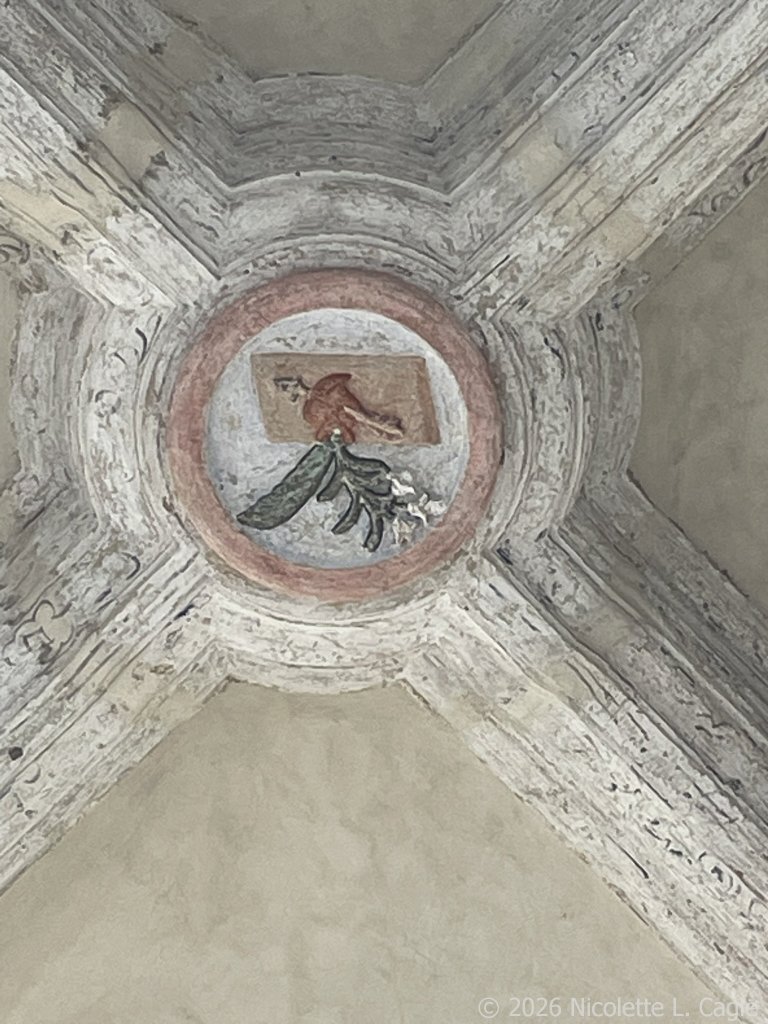
To get a sense of Oaxaca’s vast pre- and post-conquest history, visit the incredible Museo de las Culturas de Oaxaca, housed in the former Dominican monastery. Between the ticket counter and the museum entrance, visitors walk through a bright, airy Dominican cloister, the central open garth of which includes a floor mosaic of round stones surrounding a stone fountain. The enclosing two-story arcaded ambulatories feature remnants of tranquil blue paint on the columns and decorative bosses at the intersection of the vaulted ribs of the ceiling, each different and naturalistic, including a lovely one of a sprouting acorn.
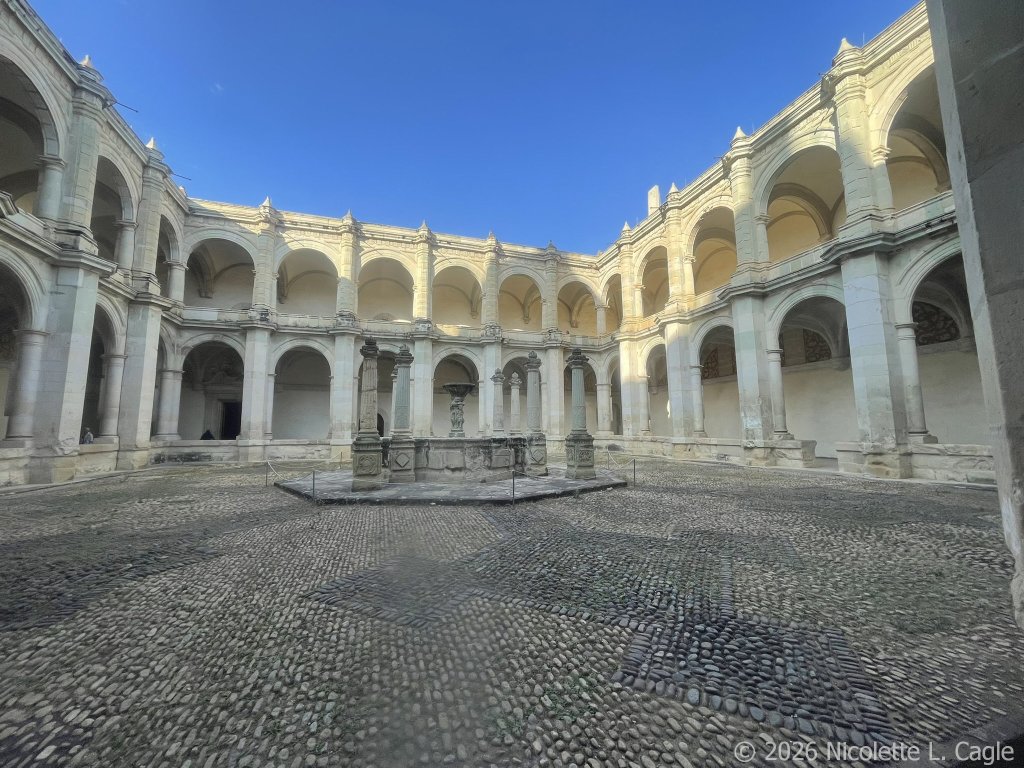
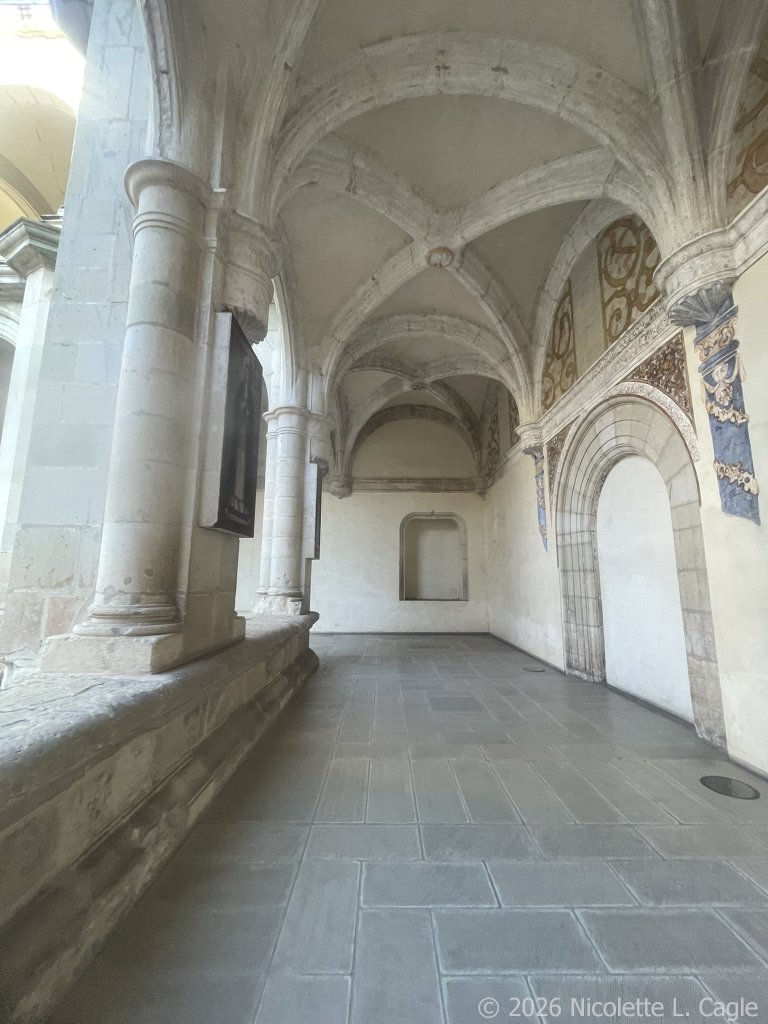
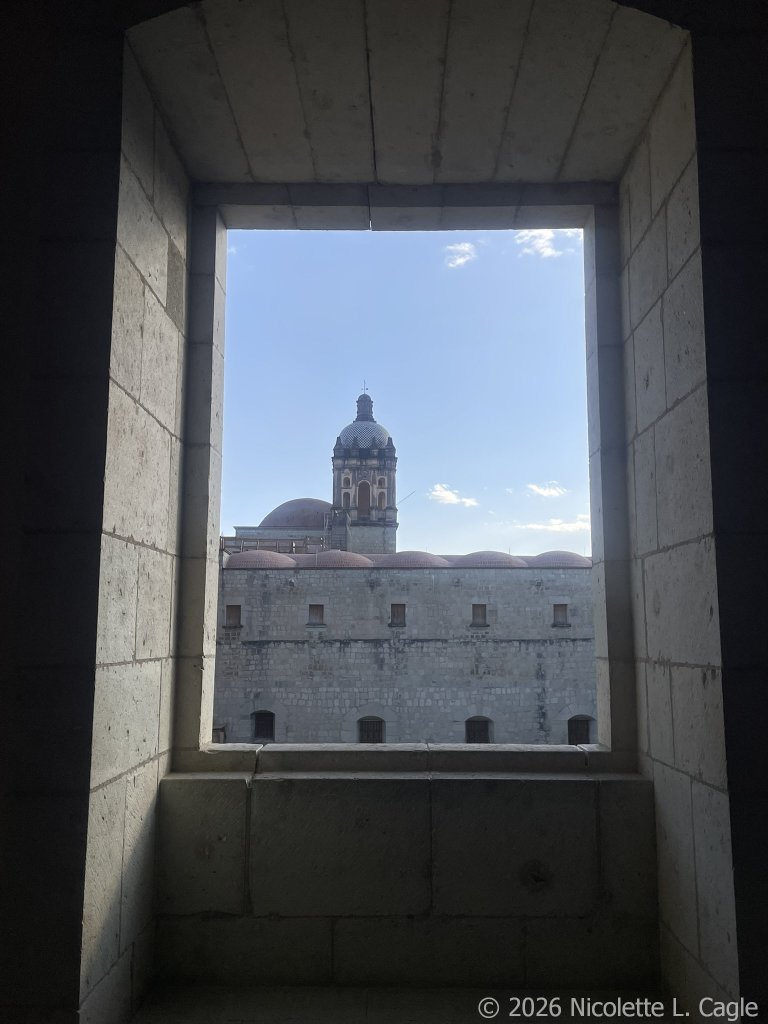
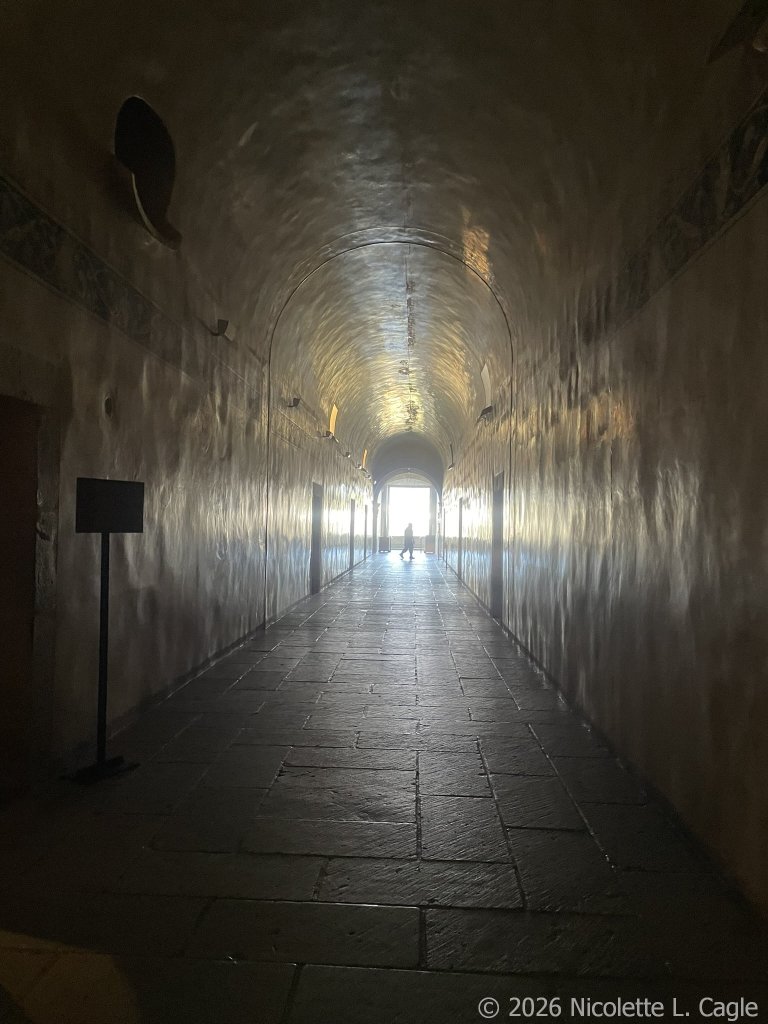
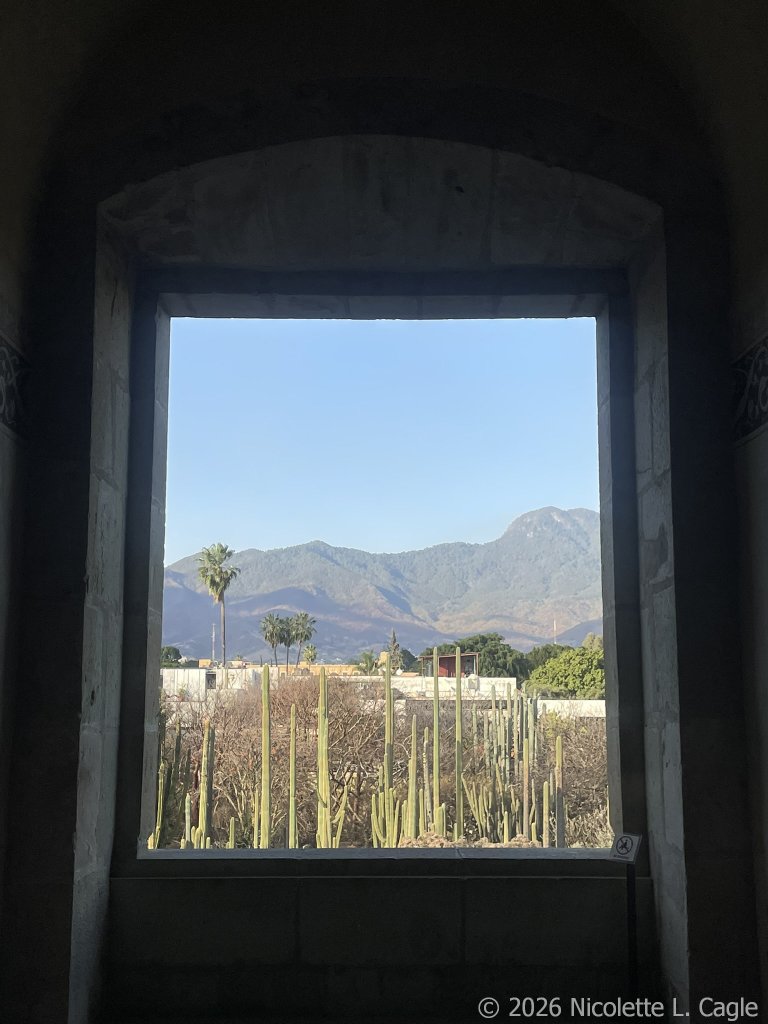
After passing through the cloister, you’ll discover the museum’s proper entrance, which leads up a wide stairway to long hallways terminating in picture windows that frame the vistas of Oaxaca: The ethnobotanical garden, the mountains, streets lined with buildings in bold blue, pink, and yellow hues. Along the long hallways are a dozen doorways, each leading to a collection with a particular focus.
One room includes the well-known Skull with Turquoise, a piece from c. 1250-1521 found in the Tomb 7 of nearby Monte Albán, a Mixtec site. The piece is as beautiful as it is eerie, a human skull with a straight, well-preserved row of bottom teeth, shell disks with holes in the center covering the eye sockets, patchworked with small bits and larger chunks of turquoise held in place with a glue made from copal resin and amaranth seeds. Tomb 7 itself has a complex history, it was constructed by the Zapotecs as a tomb chamber in the Late Classic Era (600-850 CE), and then reused by post-Classic Mixtecs as part of burial and spiritual practices.
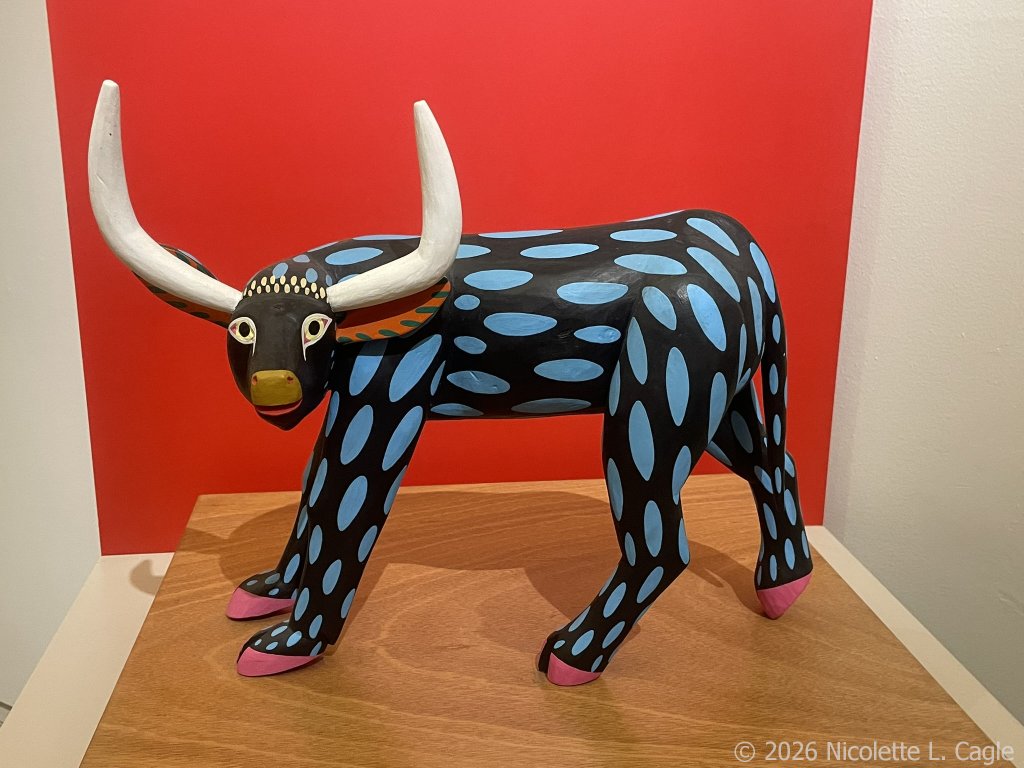
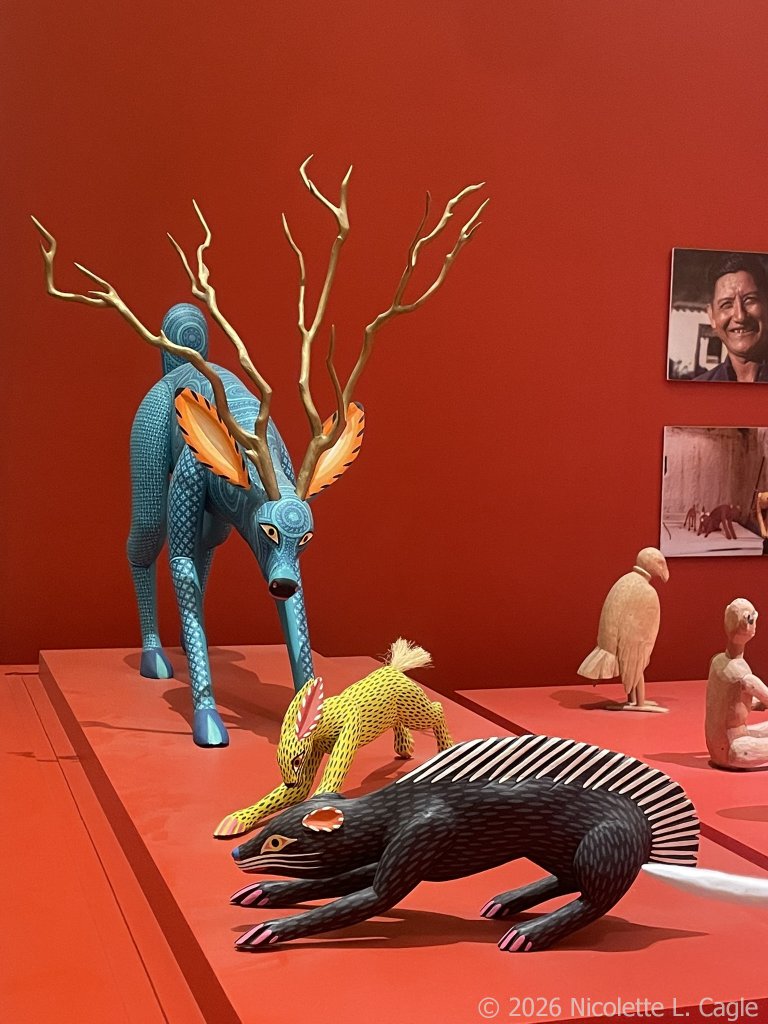
The rooms continue to lead visitors through history, touching upon the foodways of the Spanish colonizers and the importance of cocchineal shells for dye, the life of Oaxaca’s own Benito Juárez, a Zapotec and Mexico’s first Indigenous president who led the republican government in defeating the French-backed Emperor Maximilian (c. 1864-1867) and modern art. On display now are Manuel Jiménez’s whimsical, colorful carved sculptures. Jiménez was a self-taught sculptor and painter, and also a shepherd late in life, who was born in San Antonio Arrazola, southwest of Monte Albán in 1919. Monte Albán was an important inspiration for Jiménez: He was the custodian of the site in the 1950s when a great deal of excavation and discovery was happening on the site. Jiménez’s work is known globally, with major exhibitions being held across the US by the late 1980s and early 1990s, and that work articulates a particularly Oaxacan visual form.
The Museo de la Culturas de Oaxaca is intense, a condensed compilation of the human condition and its trials and tribulation, joys and successes. It represents colonization and epidemics, the layering upon and near annihilation of peoples and cultures, showcasing fights for democracy and resurgences of art, exploring shifts and changes in world views until the modern era. It is awful and awe-inspiring, terrifying and fantastic, and all of this history is housed in a building that itself laid a different culture upon someone else’s land and has itself been repurposed for contemporary purposes.
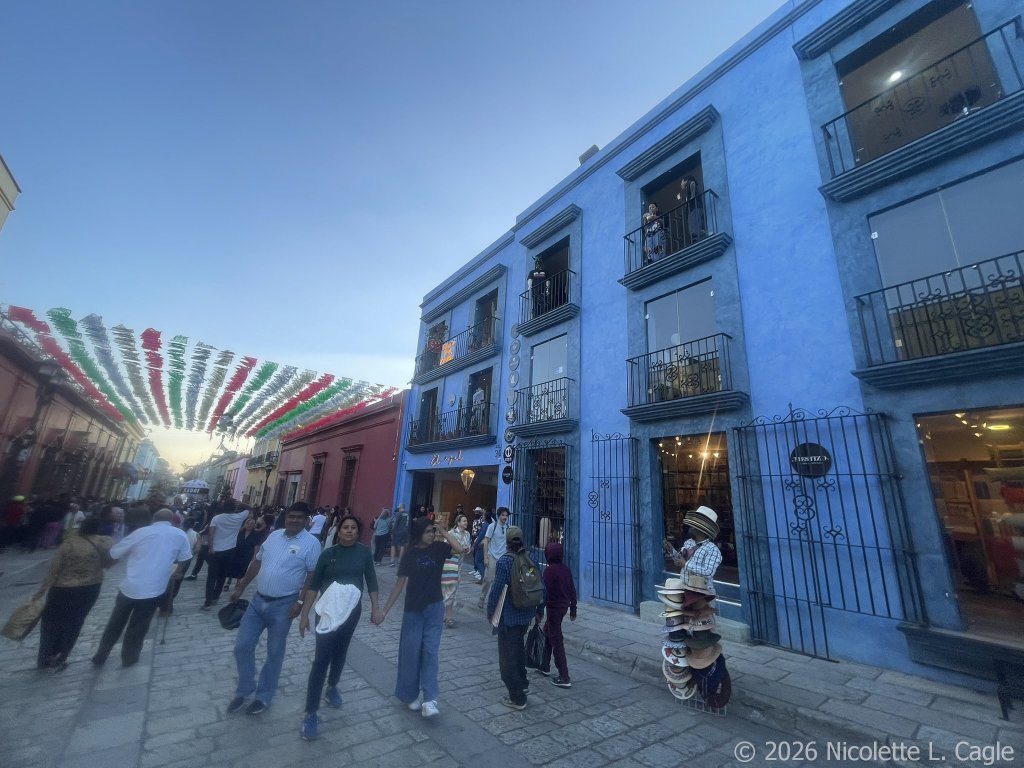
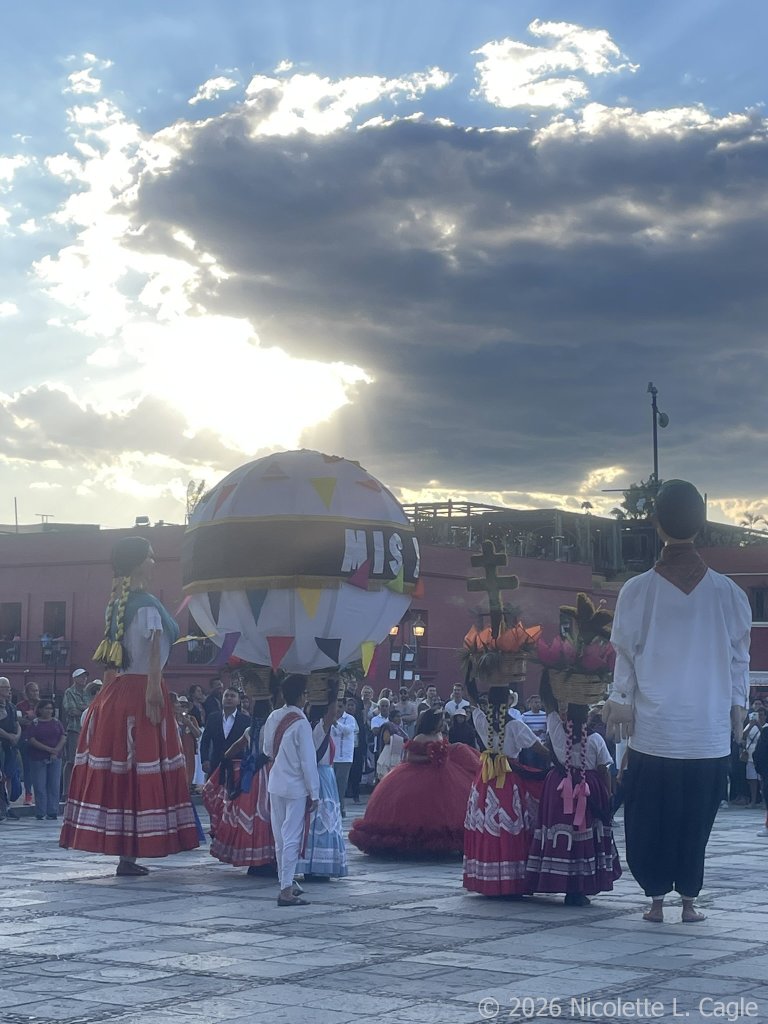
After this visit, you might walk out the old Dominican gate to see the square filled with musicians playing passionately, dancers turning, holding tight to poles supporting huge balloon caricatures of people, and at the center of it all, a young woman, 15 now, celebrating her quinceañera in a blood-red dress with a skirt of tremendous girth layered with ruffles and leaving a train trailing behind, her family and friends dressed in sleek, fashionable clothes, a 70+-year-old woman rocking a slim fitting dress and 4-inch heels. Soon the vibrant crowd moves off the square and parades down the stone-paved street. As the parade progresses, two women kick off their heels and switch shoes, a vendor passes out mezcal paletas (alcoholic popsicles), and the band plays on. The parade proceeds, flanked by bright buildings as the sun sets, the shifting light turning the mountains that surround the city into dusky silhouettes.
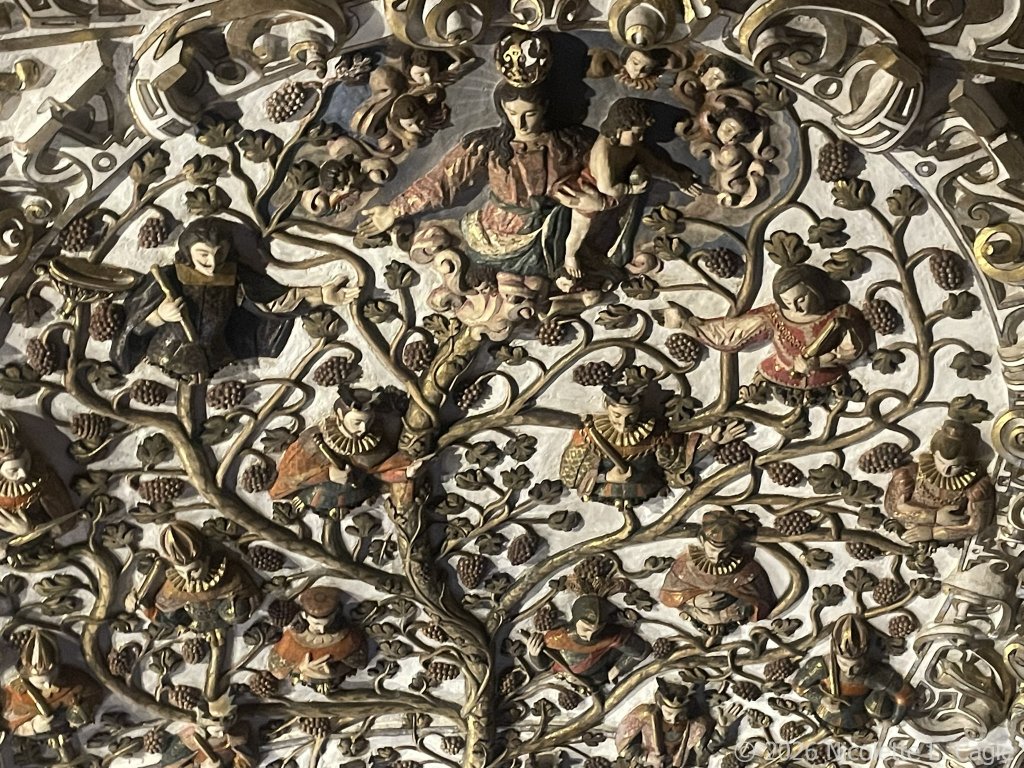
You may need a break from the crowd, the energy, and the noise, and you can take one by entering the 16th century Catholic church of Santo Domingo. The ceiling of the narthex, found before walking into the pew-lined vestibule, is overwhelming, with hundreds of carved faces looking down on you, faces carved in wood, painted in gold and other pigments, work done by Indigenous craftsmen hundreds of years ago. Walk beyond the narthex, and the ceiling lifts and the gold takes over, leading your eye to the chancel, juxtaposing the stolen gold against the bloody Jesus on the Cross.
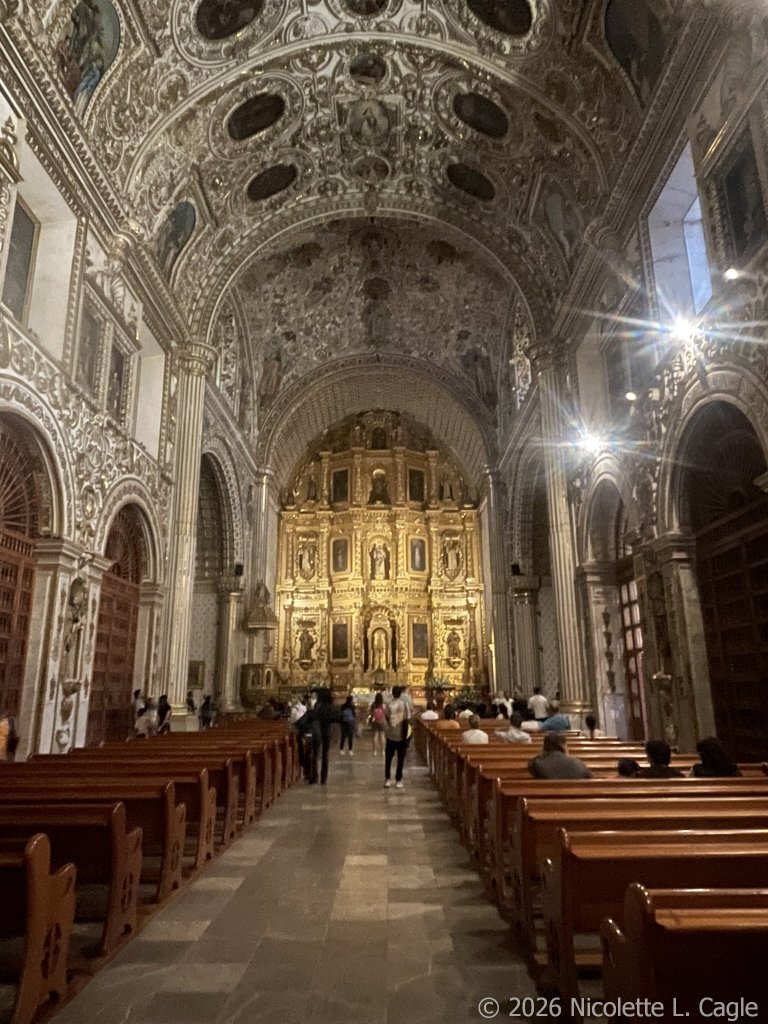
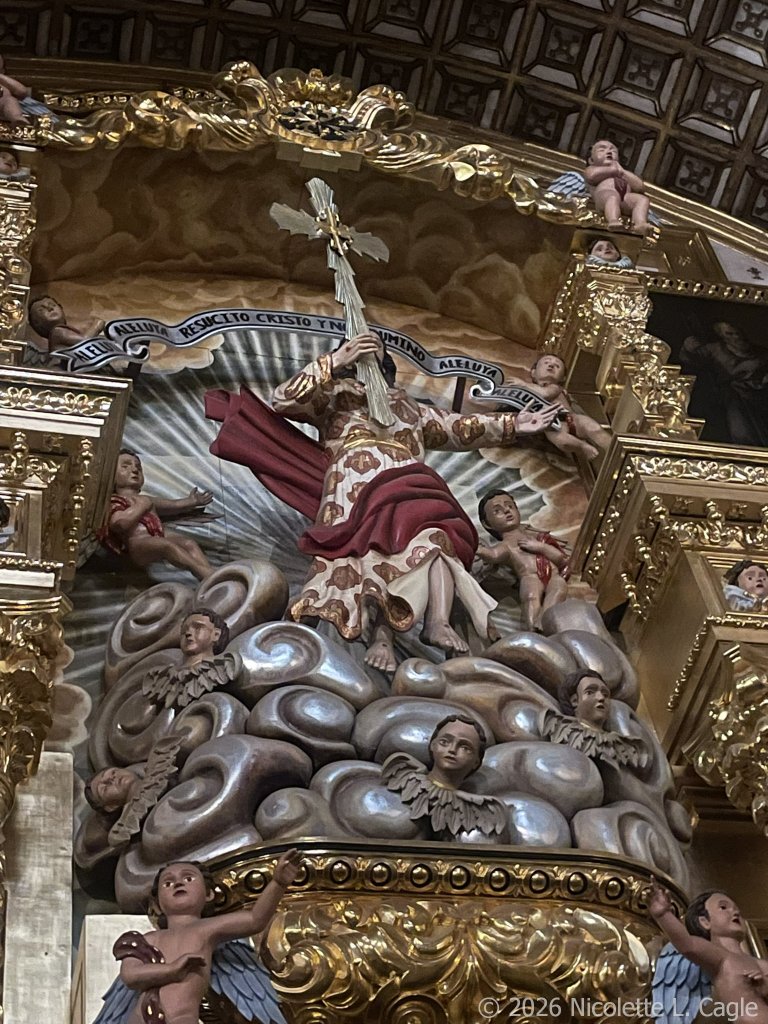
Everything becomes incomprehensible: A church that says a rich man getting into heaven is like a camel walking through the eye of a needle simultaneously covering itself in gold? Advocating for Jesus’s non-violent, turn-the-other-cheek approach while forcing its way onto another continent, funding and riding the conquistadors’ coat-tails? How did any of this happen? How did we go from Jesus preaching love and peace, martyred on a cross, to cruelty, slavery, conquest, exclusion, rejection, and hate? At this point, you can go into the quiet sanctuary at the front of the church, sit on a hard wooden bench in front of an icon and pray for love and light, for safety, health, happiness, and freedom from suffering for all. Or you can turn to gluttony.
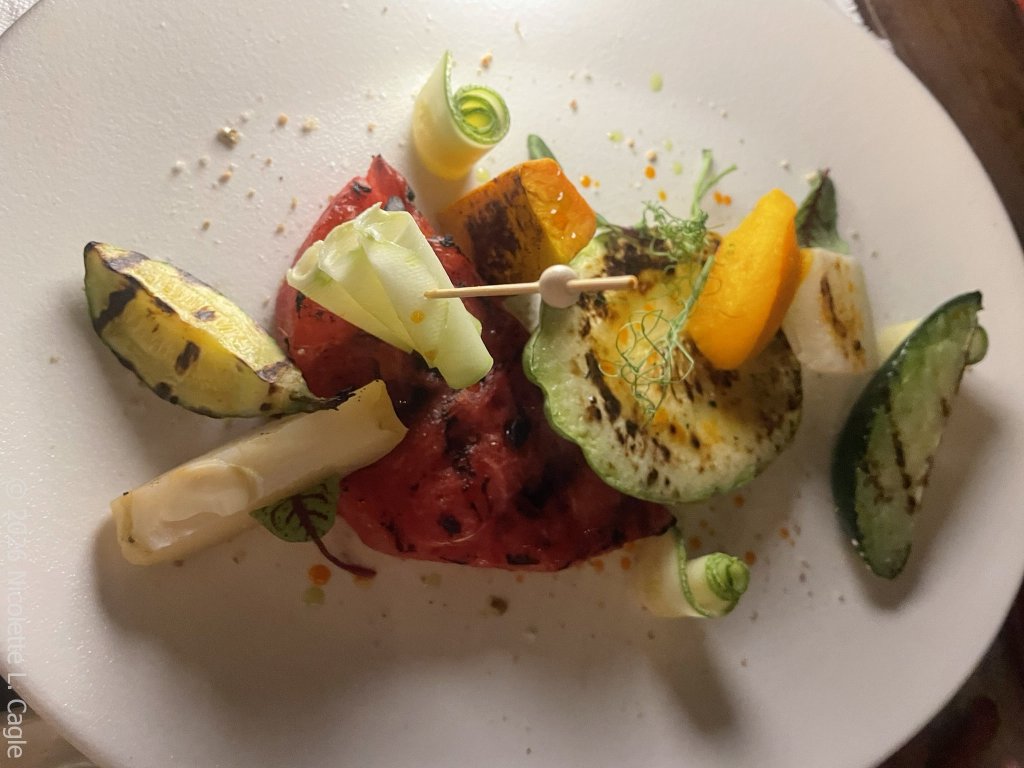
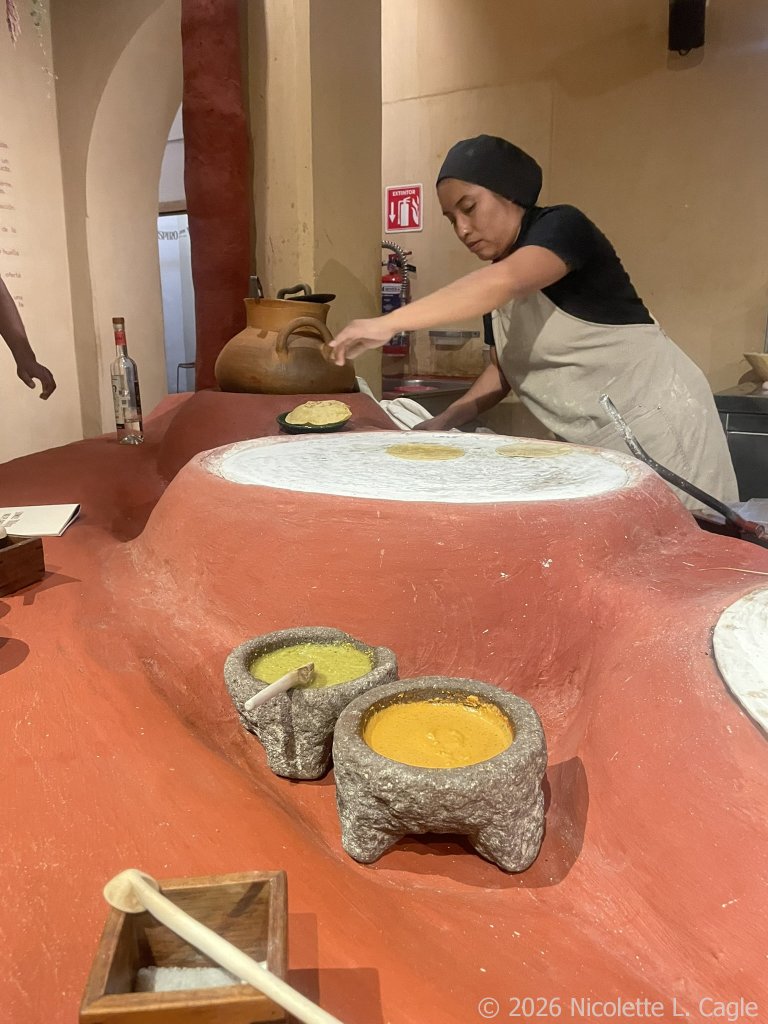
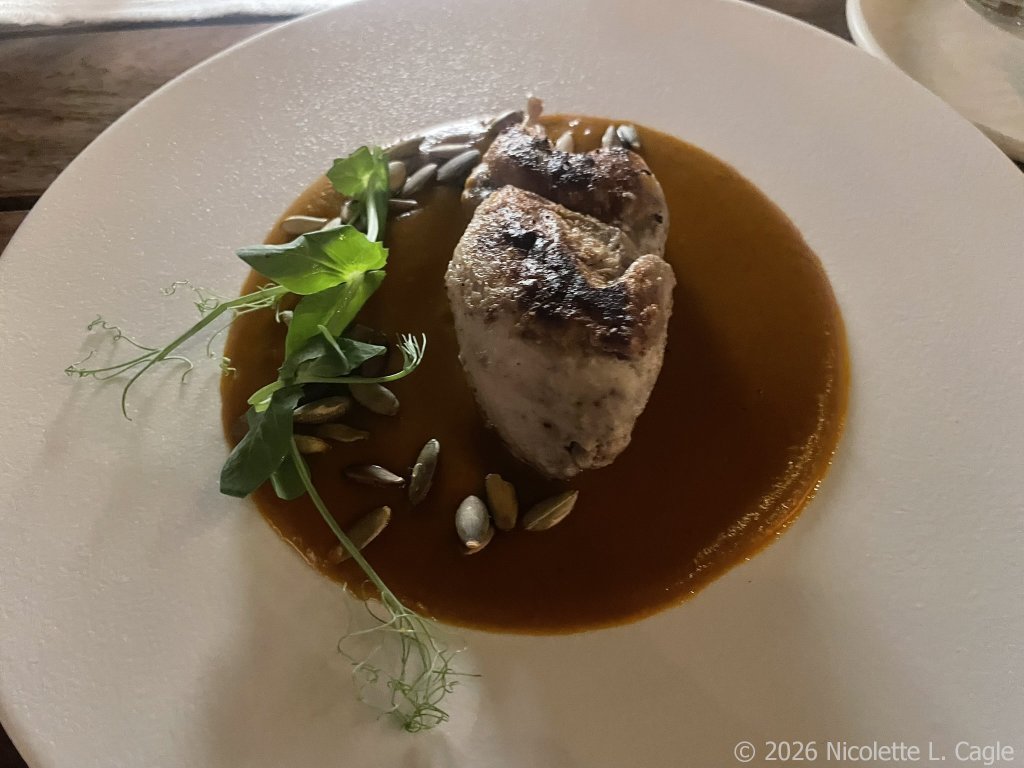
And gluttony is certainly possible in Oaxaca. For an introspective and high-minded approach to gluttony, visit Chef Olga Cabrera’s Tierra del Sol restaurant, which blends ancestral and Indigenous fare into creative, thoughtful meals and fusions: Tortillas, yellow and blue, hot off the comal, sprinkled with salt, slathered with salsas of ground insects and smoky chiles; mezcals made from agave species so full of frothy saponins that the cooking builds up intense pressure and sometimes causes explosions; pumpkin mole, white mole made with white chocolate, chile pasilla mole tasting like barbeque sauce; and desserts of minty ice cream in a bed of criollo and forastero chocolate or berries slathered in chocolate mousse. When the bill comes, a staff member will display a placard acknowledging the growers of your meal, honoring the important process of getting food from the table, mixing gluttony with gratitude.
 Sense of Place
Leave a comment