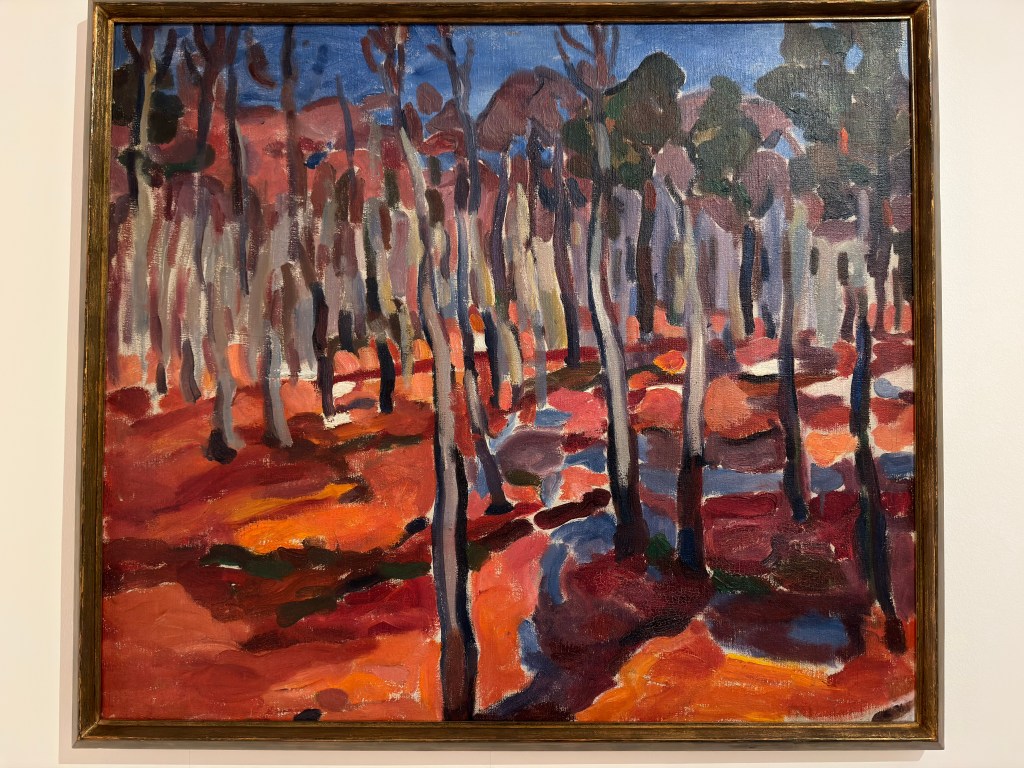
In the last few posts, I introduced this Central Europe tree series by reflecting on why trees are such a powerful way into sense of place, then by sketching the mountain forests of Central Europe, and most recently by looking more closely at Sycamore Maple, one of the broad-leaved companions of rich upland slopes and ravines. If Sycamore Maple often marks pockets of moisture and richness, European Beech (Fagus sylvatica) helps define the larger atmosphere of many Central European uplands. Its smooth gray bark, deep shade, and quiet understory give many mountain and foothill forests their mood (see Czech artist Jindřich Prucha’s c1912 painting below) as much as their structure.
EUROPEAN BEECH (English), buk lesní (forest beech, Czech), buk lesný (forest beech, Slovak), bükk (beech, Hungarian), Hêtre commun (French)
Fagus sylvatica, fagus = beech (Latin), sylvatica = of the forests
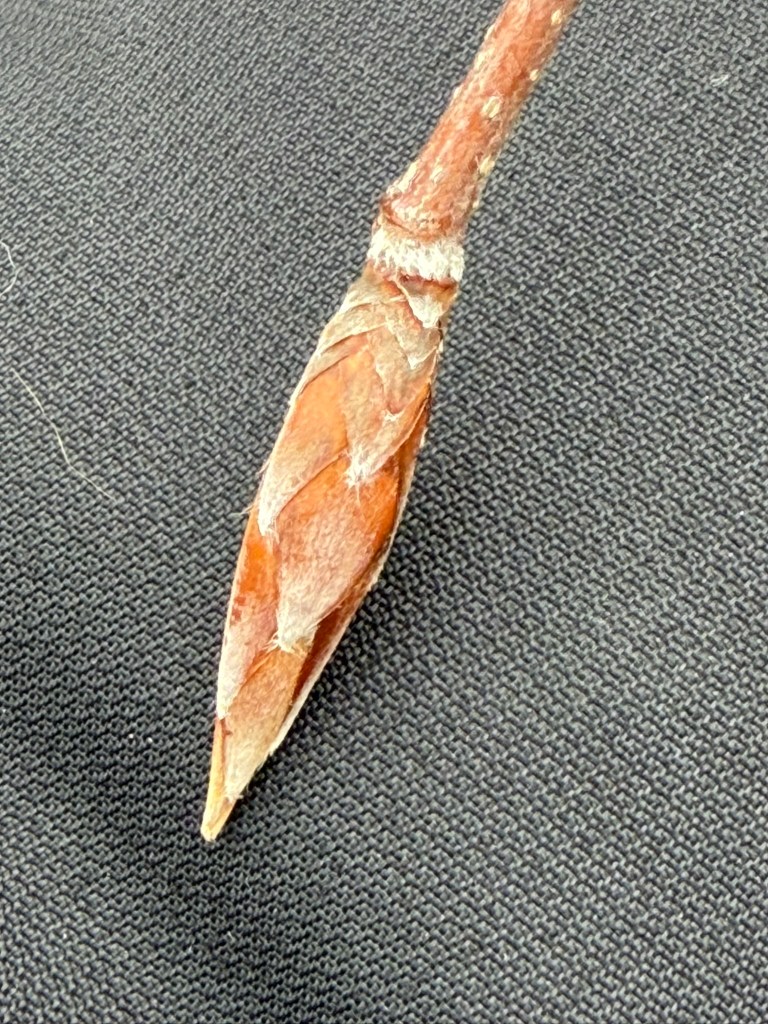
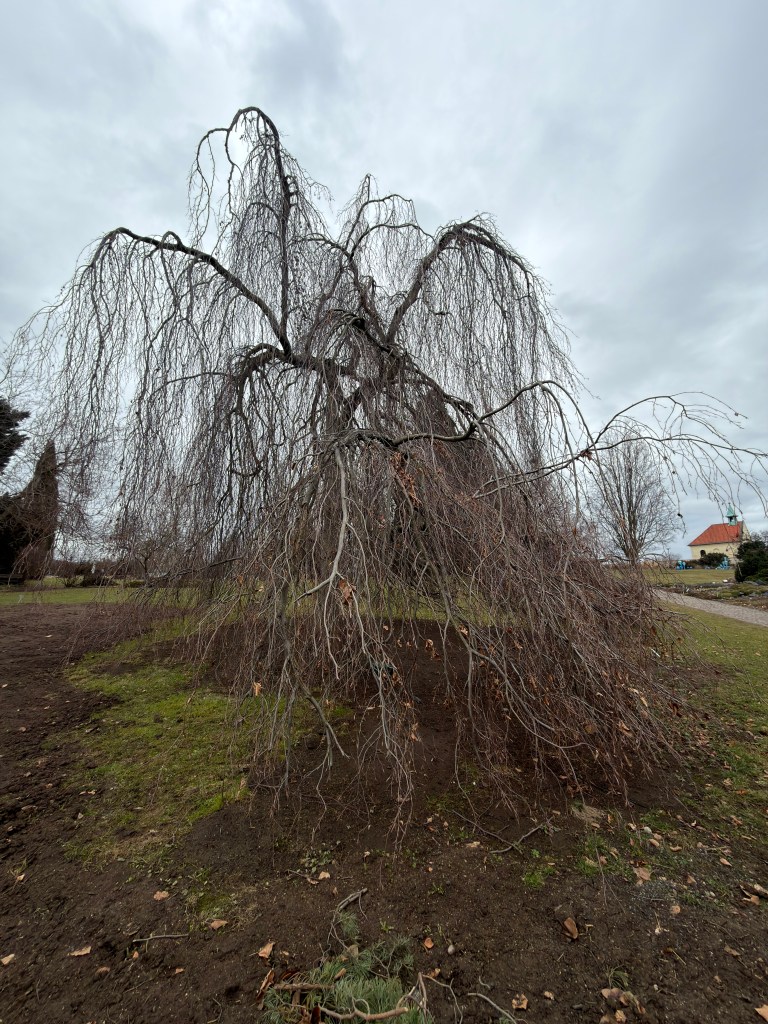
Identification: The glossy green leaves of European beech are oval-elliptic, with a gently wavy margin. In winter, the leaves of young trees are often marcescent, remaining on the branches in a coppery-tan state rather than dropping cleanly in autumn. The twigs are known for their many-scaled, long, slender, pointed cigar buds, which lengthen and loosen as leaf-out nears. The bark is smooth and silvery gray, though older trees can develop shallow fissures. The fruits are triangular nuts housed in spiny cupules, or husks. European beech can reach 40–45 m in height and 6 m in circumference, live 300 to 500 years, and form a broad, domed crown when grown in the open.
Ecological Information: Beeches are shade-tolerant trees that can create atmospheric, dark forests with sparse ground vegetation. In Hungary, European Beech is associated with beech forests and rocky slope forests, and it is considered drought-sensitive, mesophilous, and capable of occurring from hilly to high montane zones (Bartha 1999). According to Brosse (1987), beeches can grow up to 1,800 m in elevation in the Pyrenees and are associated with la futaie, or high forest.
They also have strong ectomycorrhizal relationships with fungi such as Russula, Lactarius, and Boletus. The mast of beeches, that irregular but often abundant production of nuts, is ecologically important for rodents, wild boar, and birds in Central Europe. In France, Brosse notes, beeches make up about 10% of all trees.
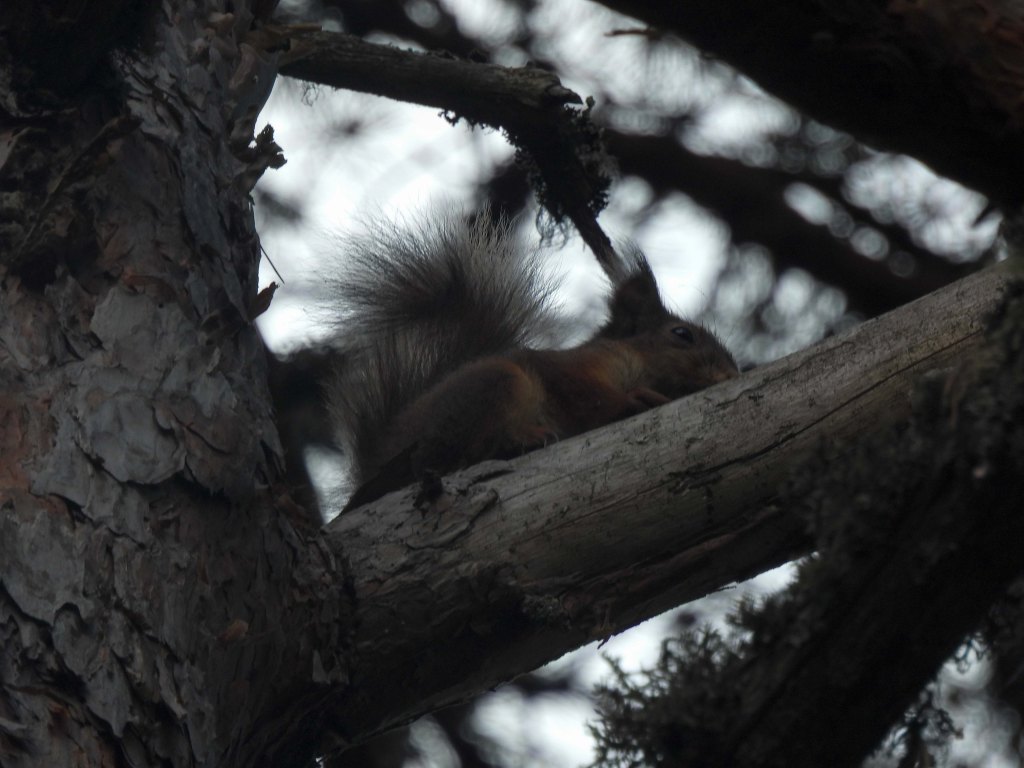
Beech also sits within a larger story of animals and forests across Europe. In England, the introduced Eastern Gray Squirrel (Sciurus carolinensis) has become a known pest of young beech trees, stripping bark and outcompeting the native Eurasian Red Squirrel (Sciurus vulgaris) while also transmitting squirrelpox (Johnson & More 2004). Gray squirrels are now established in England, Wales, Scotland, Ireland, and Italy. So far, however, they have not become part of Central Europe’s forest story, where the Eurasian Red Squirrel remains the only native tree squirrel. There, red squirrels scatter-hoard beech nuts, and the nuts left unrecovered help disperse the tree.
Sociocultural Information: European beech has long been used for firewood, charcoal, and timber in Central Europe. In ancient times, beeches were considered sacred in Europe and were associated with Jupiter, as in the Jupiter Fagutalis Temple (Brosse 1987). The tree’s color forms have also acquired symbolic meanings; Brosse notes, for example, that the purple-leaved variety has been associated with recrimination.
Beech nuts are known to be astringent and have been used both as food and for making cooking oil. The bark has been used as a tonic, at times in ways compared to quinine, while tar from the tree has been used as a disinfectant (Brosse 1987).
Beech is at once a practical timber tree, an ecological architect of upland forests, and a species surrounded by long cultural memory. Walking into a mature beech forest is to feel not only the effect of shade, but the presence of a tree that has shaped both human life and ecological communities for centuries.
In the posts to come, I’ll continue moving through the characteristic trees of Central Europe’s mountain and foothill forests — among them Norway Spruce, European Larch, Silver Fir, oak, hornbeam, and linden. Each reveals something a little different about the region’s landscapes: cold, shade, disturbance, mast, moisture, memory, and the many ways trees help define place.
References
Bartha D. 1999. Magyarország fa- és cserjefajai. Budapest (Hungary): Mezőgazda Publishing House.
Brosse J. 1987. Les arbres de France: Histoire et légendes. Paris (France): Plon.
Johnson O, More D. 2004. Tree guide. London (UK): Collins.
 Sense of Place
Leave a comment