In the last two posts, I introduced this new Central Europe tree series by looking first at why trees are such a powerful way into sense of place, and then at the mountain forests of Central Europe, where geology, elevation, snow, and disturbance sort species across the landscape. Among the characteristic trees of these uplands is Sycamore Maple (Acer pseudoplatanus), a species that often grows not in the darkest conifer stands, but in ravines, on rich slopes, and in other moist, nutrient-rich mountain microsites. It is one of the trees that helps soften and diversify the upland forest, adding broad leaves, shelter for wildlife, and a different texture to the mountain woods.
SYCAMORE MAPLE (English), javor klen (klen maple, Czech), javor horský (mountain maple, Slovak), hegyi juhar (mountain maple, Hungarian), Érable sycomore (French)
Acer pseudoplatanus, acer = maple (Latin), pseudoplatanus = false plane tree
Identification: As the specific epithet pseudoplatanus suggests, the leaves resemble those of plane trees in being broad and five-lobed. The underside of the leaf is often pale, and the petiole exudes a milky sap. The bark starts pinkish and smooth, then becomes flaky and scaly in older trees, developing a patchwork mien. The flowers are greenish-yellow, and the seeds are paired samaras, the “helicopters” so familiar to many of us. A key identifying feature is that the buds are green. The tree is fast-growing, reaching 30–40 m in height within about 60 years, and forms a broad, domed crown with a wide canopy, measured in the Jura at as much as 60 square meters.
Other native maple species occur in the Czech uplands and the Western Carpathians, including Norway Maple (Acer platanoides), which ranges from foothill deciduous forests into montane mixed stands; field maple (Acer campestre), more typical of warm foothills and low uplands; and Tatar Maple (Acer tataricum), associated with warmer, drier hills in the Czech Republic and Slovakia. Compared with Sycamore Maple, Norway Maple lacks the more regular serration along the leaf margins, field maple has more rounded lobes, and Tatar Maple has oval rather than five-lobed leaves. The buds differ as well: Norway Maple has red-brown buds, field maple has gray, hairy buds, and Tatar maple buds are red-brown to black-brown.
Ecological Information: Sycamore Maple is common in ravines, on rich slopes, and in park settings, thriving in nutrient-rich, moist microsites and reaching up to about 1,500 m in elevation. It is also a cavity-forming tree, valuable to wildlife, and in humid upland sites it provides habitat for epiphytes and mosses. It can be long-lived, surviving up to 500 years, and it supports many insects, making it useful in sustaining bird populations (Johnson & More 2004).
In mountain landscapes, Sycamore Maple often marks places of relative richness: a moist depression in the slope, a ravine, a patch of deeper soil, a slightly more sheltered corner of the upland forest. It is one of the species that shows how varied mountain woods truly are.
Sociocultural Information: The timber of Sycamore Maple has long been valued for furniture, veneer, and musical instruments. Today it is also widely planted as a shade and street tree. In one charming French tradition, children used the paired samaras as toy pince-nez glasses.
According to Knab (2020), this species is associated with Janosik, the famous robber of the Tatra Mountains, and with young women who were believed in some traditions to turn into Sycamore Maples. In some places it was forbidden to cut these trees down because they were thought to embody the spirits of young women, an idea preserved in the lyrics of a Polish folk song: “Under the shade of a sycamore a maiden waits; her love will come along this road.”
Sycamore Maple was also used to protect against spells and witchcraft, and old herbals suggested that a tea of boiled leaves could treat toothaches. There is, however, some confusion in the English common name. In Poland, the sycamore (Platanus sp.) is not native, though it is now used in urban plantings, while Acer pseudoplatanus carries the common name Sycamore Maple in English.
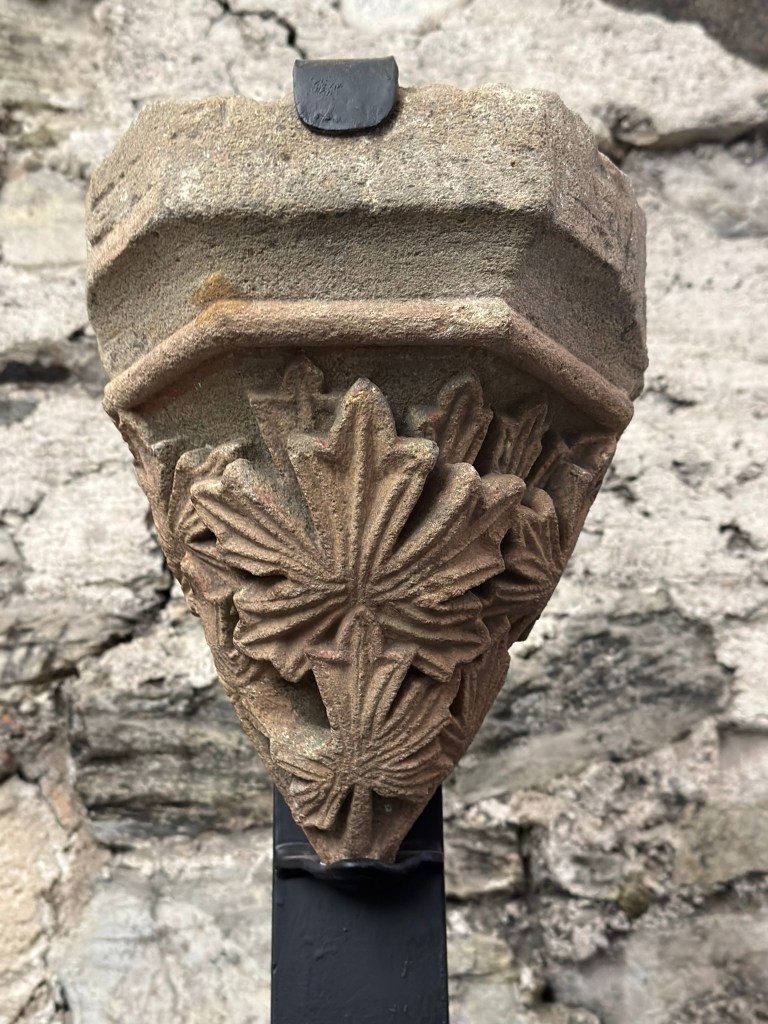
Sycamore maple is thus both practical and storied: a useful timber tree, a companion of rich upland woods, and a species that has gathered around itself folklore, beauty, and protection.
As this series continues, I’ll turn next to some of the other trees that shape Central Europe’s uplands and lowlands — among them European Beech, Norway Spruce, European Larch, Silver Fir, Oak, Hornbeam, and Linden. Each carries its own ecological and cultural story, and each offers another way of learning how trees help define a region’s character.
References
Johnson O, More D. 2004. Tree guide. London (UK): Collins.
Knab SH. 2020. Polish herbs, flowers, and folk medicine. New York (NY): Hippocrene Books.
 Sense of Place