In the last few posts, I’ve been moving through the trees that help define the mountain forests of Central Europe. I began with the larger upland landscape, then turned to species such as Sycamore Maple, European Beech, and Silver Fir, each of which helps shape the structure and feel of these forests in different ways. Norway Spruce (Picea abies) is one of the most important of all. In the colder and higher parts of Central Europe, it can dominate entire forest stands. It is one of the trees most responsible for the dark, conifer-rich atmosphere of many mountain slopes, but it also carries a more complicated story — one that includes both natural mountain ecology and the long history of forestry and planting in the region.
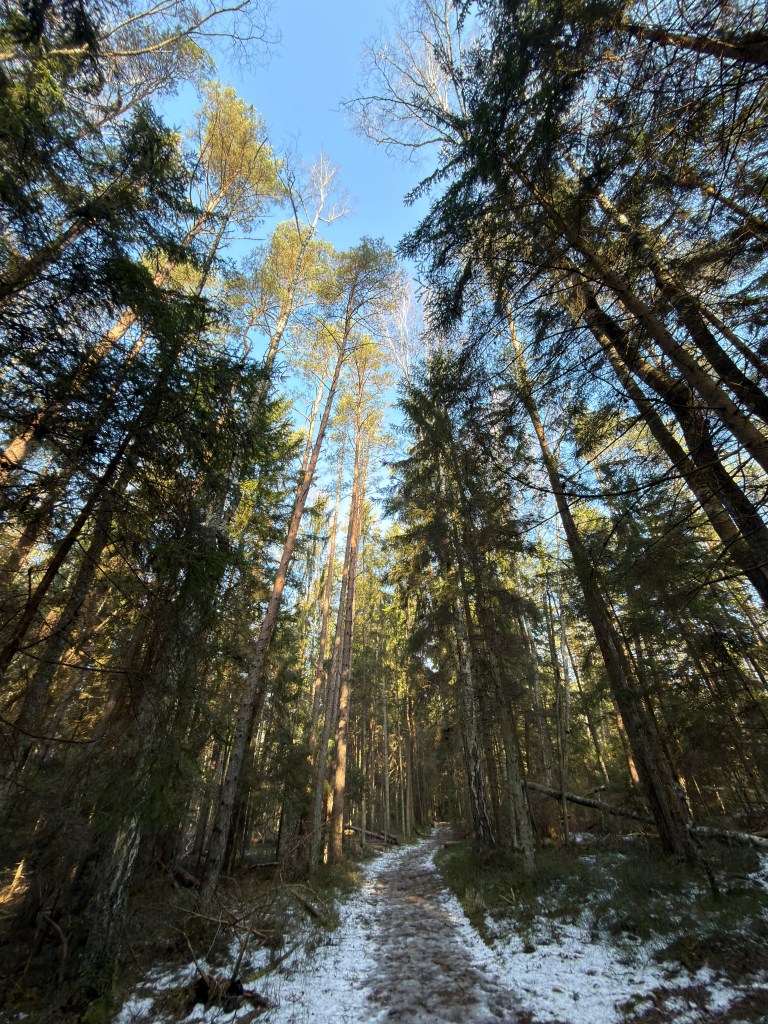
NORWAY SPRUCE (English), smrk ztepilý (slender/lofty spruce, Czech), smrek obyčajný (common spruce, Slovak), lucfenyő (spruce, Hungarian), Épicéa commun (French)
Picea abies, picea = pitch/resin (Latin); abies = fir (Latin)
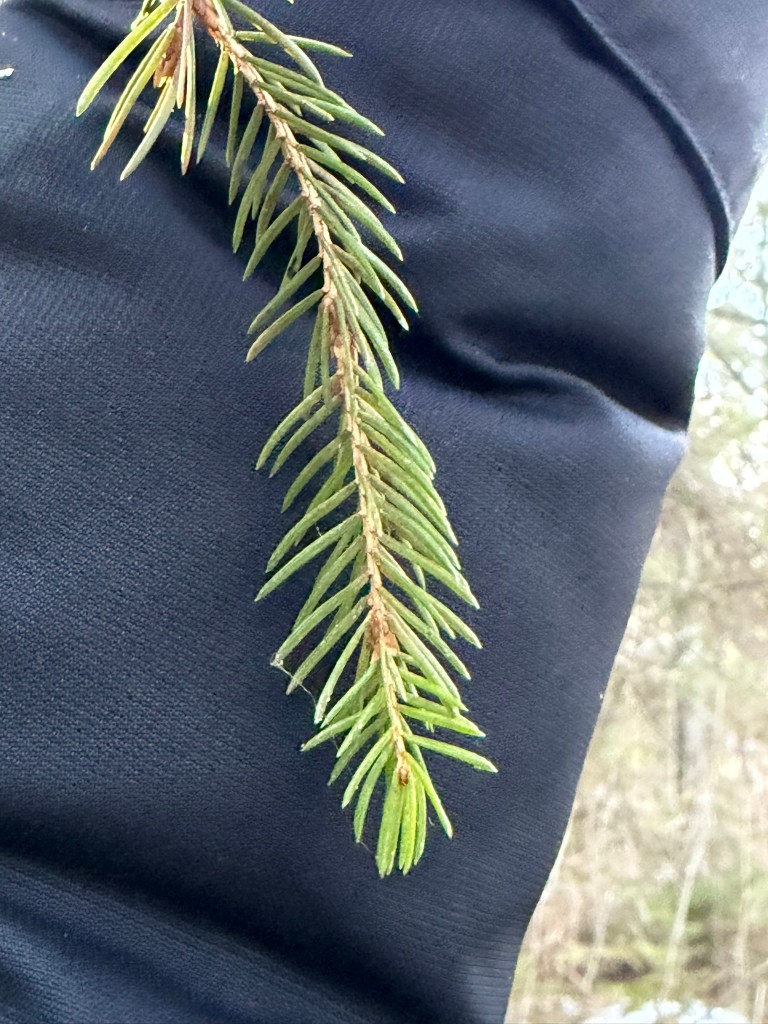
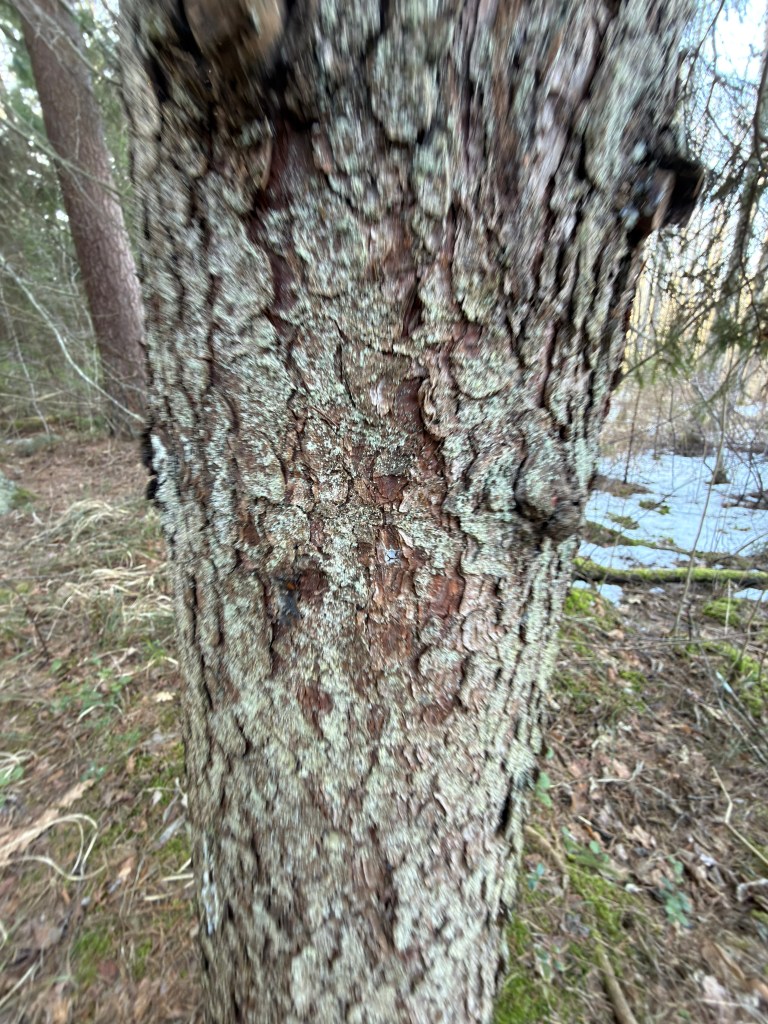
Identification: The Norway spruce has sharp, four-angled single needles that sit on peg-like bases, making the twig feel rough even when the needles have been removed. The bark is scaly, reddish-brown to gray-brown. The long female cones hang from the tree and fall to the ground intact. Jacques Brosse describes the branches as hanging like draperie, which feels exactly right for this species. The crown is often quite narrow, and the tree can reach 70 m in height, particularly in the Carpathians.
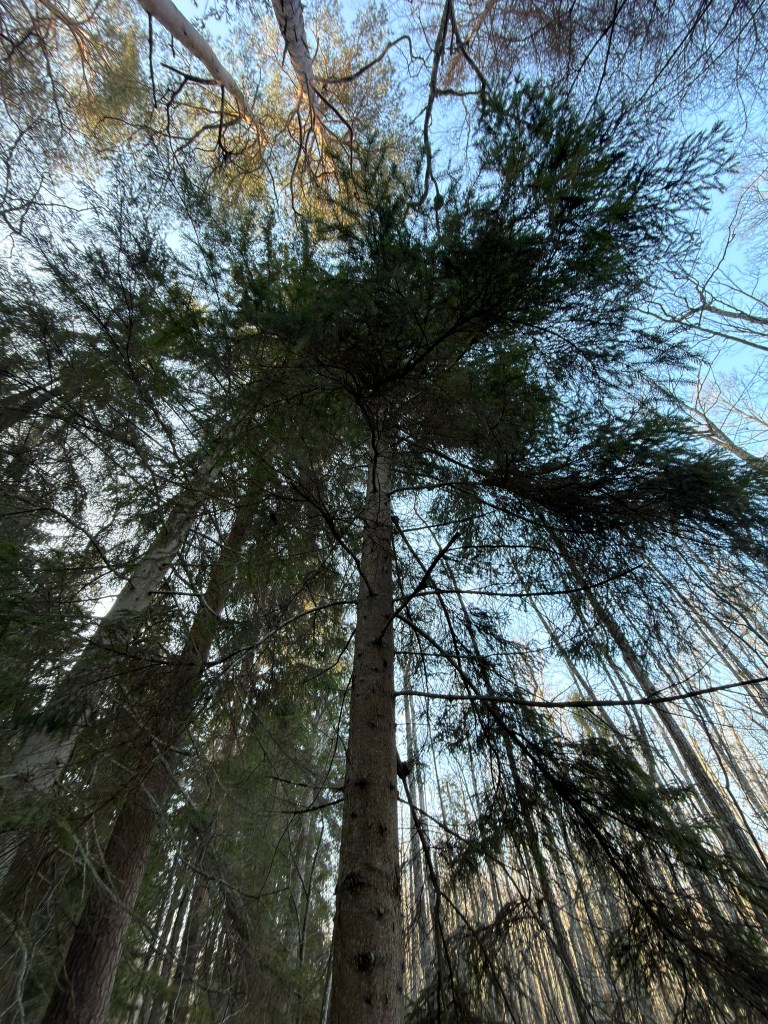
Ecological Information: Norway spruce is a dominant tree in the boreal and subalpine zones of the Carpathians, and in Central European mountains it is the tallest native woody plant, reaching up to 70 m. In colder montane settings, it is one of the defining canopy trees, especially in upper-elevation forests where conditions become too harsh for many broad-leaved species.
Its litter is dense and resinous, creating distinctive soil conditions and supporting a particular suite of fungi and insects. Norway spruce can also be remarkably long-lived, surviving 500 to 700 years.
At the same time, Norway spruce tells a more complicated ecological story than some of its upland companions. In Hungary, it is not native and often performs poorly in warm sites, where it may die in large numbers, though it has been widely planted (Bartha 1999). More broadly across Central Europe, intensive logging and planting helped transform many mixed mountain forests into spruce-dominated stands, especially in parts of the Sudetes and other uplands. In its natural cold mountain range, spruce is a foundational species. Outside that range, its story is often as much about forestry history as about native forest ecology.
Sociocultural Information: The resin and young needles of Norway spruce have long been used in Europe as salves and inhalants for respiratory diseases. Economically, it is one of Europe’s most important trees, widely used for timber and pulp. Spruce forests also entered the visual culture of the region. Otakar Marvánek’s Spruce Forest (around 1920), in the Prague National Gallery, suggests how familiar and evocative these dark conifer stands are in Central Europe. The painting appears to depict a planted or managed stand, and its vertical repetition and shadowed interior are fitting for a tree whose history is tied not only to mountain ecology, but also to forestry, timber production, and the reshaping of upland landscapes.
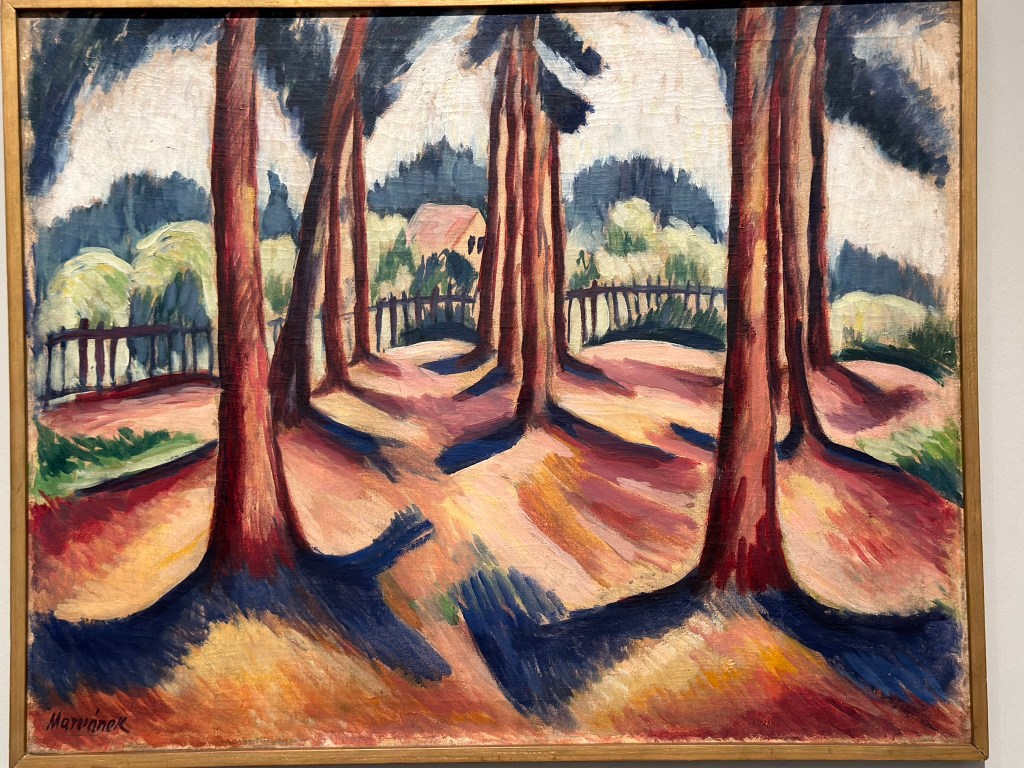
This practical importance helps explain why spruce has become so familiar across the region, even in places where it is not fully at home. Norway Spruce is both a native mountain giant and a cultural forestry tree, a species that can represent wild upland forest in one context and plantation history in another.
To learn Norway Spruce is thus to learn something about both mountains and management: about the cold, high forests where it naturally belongs, and the human decisions that have spread it far beyond them.
In the posts to come, I’ll continue with other trees that shape Central Europe’s mountain and foothill forests, including European Larch, oak, hornbeam, and linden. Each adds another layer to the story of how forests are structured, used, remembered, and lived with across the region.
References
Bartha D. 1999. Magyarország fa- és cserjefajai. Budapest (Hungary): Mezőgazda Publishing House.
Brosse J. 1987. Les arbres de France: Histoire et légendes. Paris (France): Plon.
 Sense of Place
Leave a comment