In the last several posts, I’ve been moving through the trees that help define the mountain forests of Central Europe. I began with the broader upland landscape, then turned to species such as Sycamore Maple, European Beech, Silver Fir, and Norway Spruce, each of which helps shape these forests in a different way. European larch (Larix decidua) stands out among them immediately. Surrounded by evergreen conifers, it does something unusual: it lets go. In autumn, its needles turn and fall, making it the region’s only native deciduous conifer.
EUROPEAN LARCH (English), modřín opadavý (deciduous larch, Czech), smrekovec opadavý (deciduous larch, Slovak), európai vörösfenyő (European red-pine / larch, Hungarian), Mélèze d’Europe (French)
Larix decidua, larix = larch, decidua = falling or deciduous, due to deciduous leaves (Latin)
Identification: European larch is the only native deciduous conifer in Central Europe. Its needles occur in bundles on short shoots, or brachyblasts, rather than singly along the twig. The bark is thick and fissured, and the small, egg-shaped cones often remain on the tree for several years. The female cones are carmine red, while the male cones are sulfur-yellow (Prague Botanical Garden signs, “European Larch”). Unlike the evergreen conifers around it, European larch sheds its needles in autumn, which makes it one of the most distinctive trees in the mountain forest.
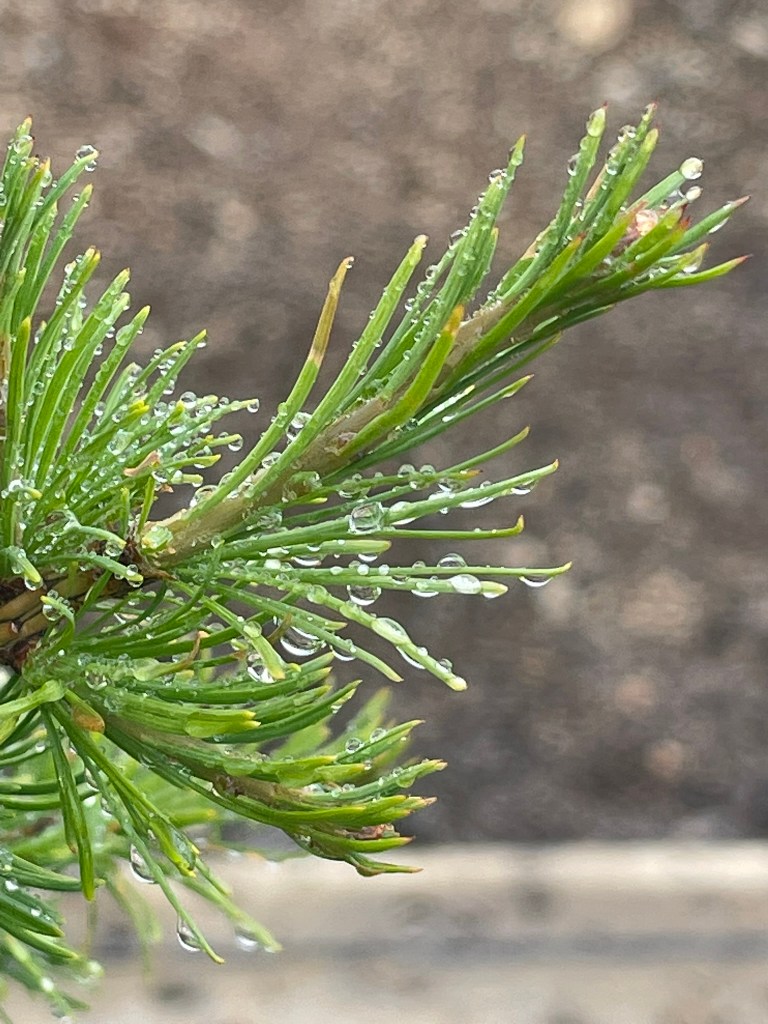
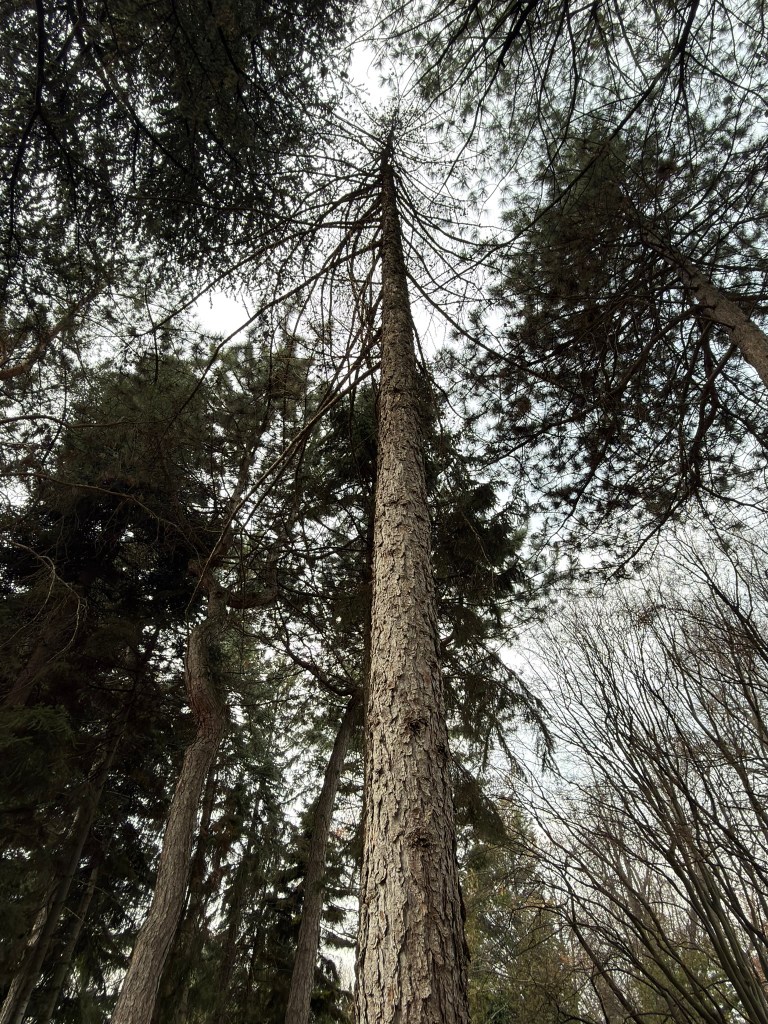
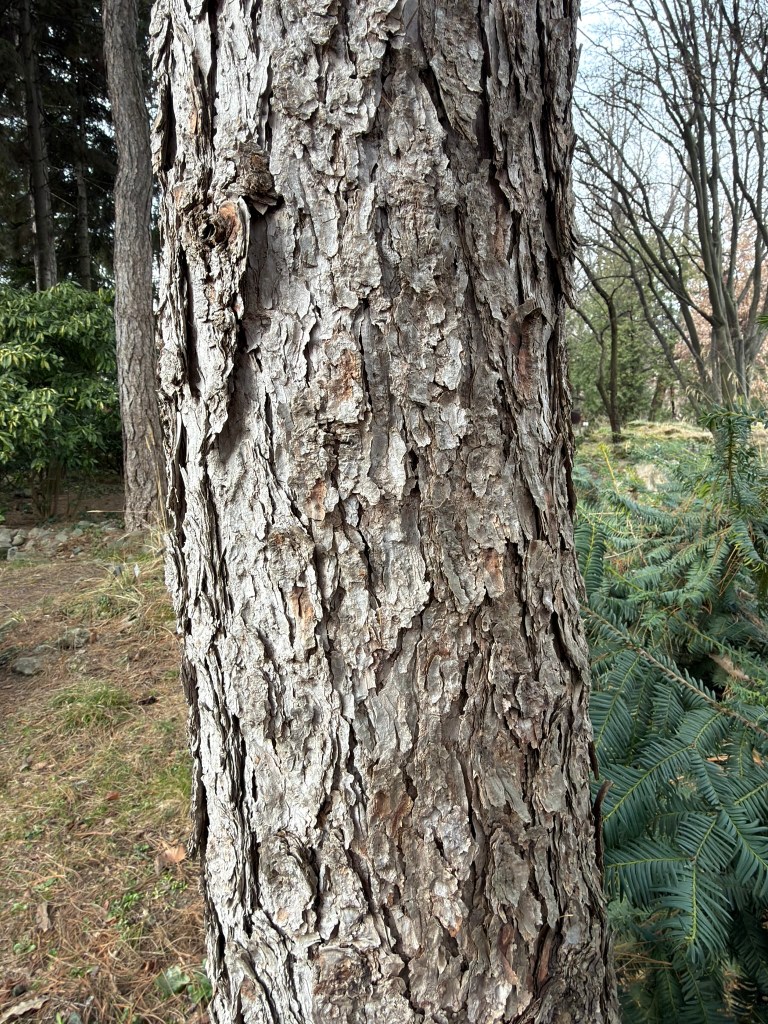
Ecological Information: In Central Europe, larch is native to mountain systems including the Alps and Carpathians and naturally occupies open, scattered mountain forest. In the Czech lands, it was originally native mainly east of the Hrubý Jeseník Mountains, while elsewhere it was widely planted as a production timber tree (Prague Botanical Garden signs, “European Larch”). It is a light-demanding tree of montane forests and open mountain woods.
Ecologically, larch often feels like a tree of openness and exposure, less a tree of deep interior shade than of mountain light. It occupies a somewhat different niche from darker, denser conifers such as spruce and fir, and its seasonal needle drop changes not only its own appearance but the visual texture of the forest around it.
Sociocultural Information: Larch wood is hard and durable and was traditionally used for cooperage, wheel-making, and construction. Its resin was also highly valued and historically sold as Venetian turpentine (Prague Botanical Garden signs, “European Larch”).
Like many mountain trees, Larch belongs both to the ecological story of Central Europe’s uplands and to the practical history of the region. It is a tree of exposed slopes and working landscapes, of structure and durability, and of a mountain forest that changes with the seasons.
In the posts to come, I’ll shift systems and explore trees that shape Central Europe’s lowlands and foothill forests, including oak, hornbeam, and linden. Together, these species reveal different facets of the region’s landscapes, such as moisture and drought, shade and openness, utility and symbolism, and they help show how trees give places their particular character.
References
Prague Botanical Garden signs. n.d. “European Larch” and related interpretive signs. Viewed on site February 2026.
 Sense of Place
Leave a comment