LITTLE-LEAF LINDEN/Small-leaved Lime (English), lípa srdčitá (heart-shaped linden, Czech), lipa malolistá (small-leaved linden, Slovak), kislevelű hárs (small-leaved linden, Hungarian), Tilleul à petites feuilles (French)
Tilia cordata, tilia = linden/lime (Latin); cordata = heart-shaped (Latin)
In the last several posts, I’ve been moving through the characteristic trees of Central Europe’s Broadleaf Forests, beginning with Pedunculate Oak, Sessile Oak, and European Hornbeam. Here, I turn to a tree that provides a different kind of presence in those forests: Little-leaf Linden (Tilia cordata). While the oaks and hornbeam define forest structure across soils and moisture regimes, Little-leaf Linden brings another layer of meaning, tied to ecology, as well as to to pollinators, medicine, poetry, symbolism, and domestic life. It is a tree of shade and fragrance, woodland edges and village memory, and one of the most culturally resonant broadleaf trees in Central Europe.
In Central Europe, “Linden” often refers to more than one ecologically important species. Little-leaf Linden is joined by Broad-leaved Linden (Tilia platyphyllos) in hilly and montane forests, especially on rocky slopes, and by Silver Linden (Tilia tomentosa) in warmer Pannonian-influenced regions.
Little-leaf Linden is characteristic of oak-hornbeam forests and rocky slope forests, while Broad-leaved Linden is associated especially with hilly and montane rocky forests; Silver Linden is frequent in warmer forests south of the Balaton line (i.e., south of Lake Balaton in Western Hungary) and also tolerates urban conditions well, being planted in anthropogenic landscapes including in the Baroque garden of Bratislava Castle in Slovakia.
Identification: The Little-leaf Linden can reach 40 m tall and has a heart-shaped leaf with an asymmetrical base. It also has small tufts of rust-colored hairs on the vein axils, think armpits, on the underside of the leaf. The flowers are fragrant, and the nutlets are clustered on strap-like bracts that act as a parachute. The bark is gray, becoming ridged with age. In open conditions, the tree can develop a broad crown and may live around 250 years.
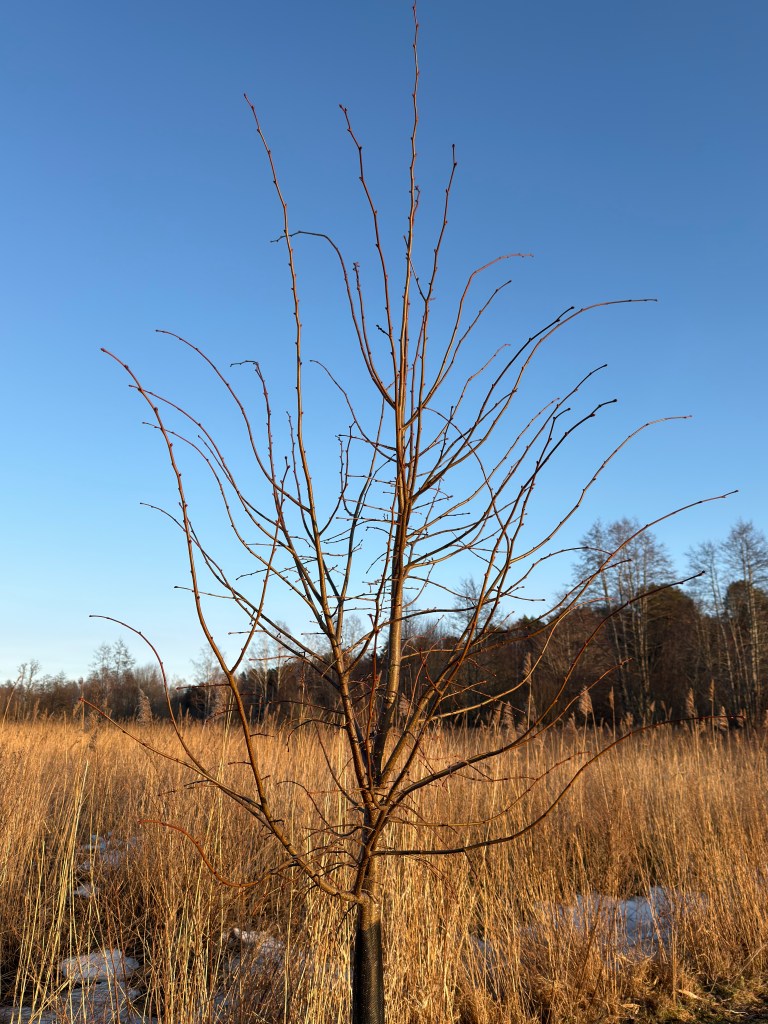
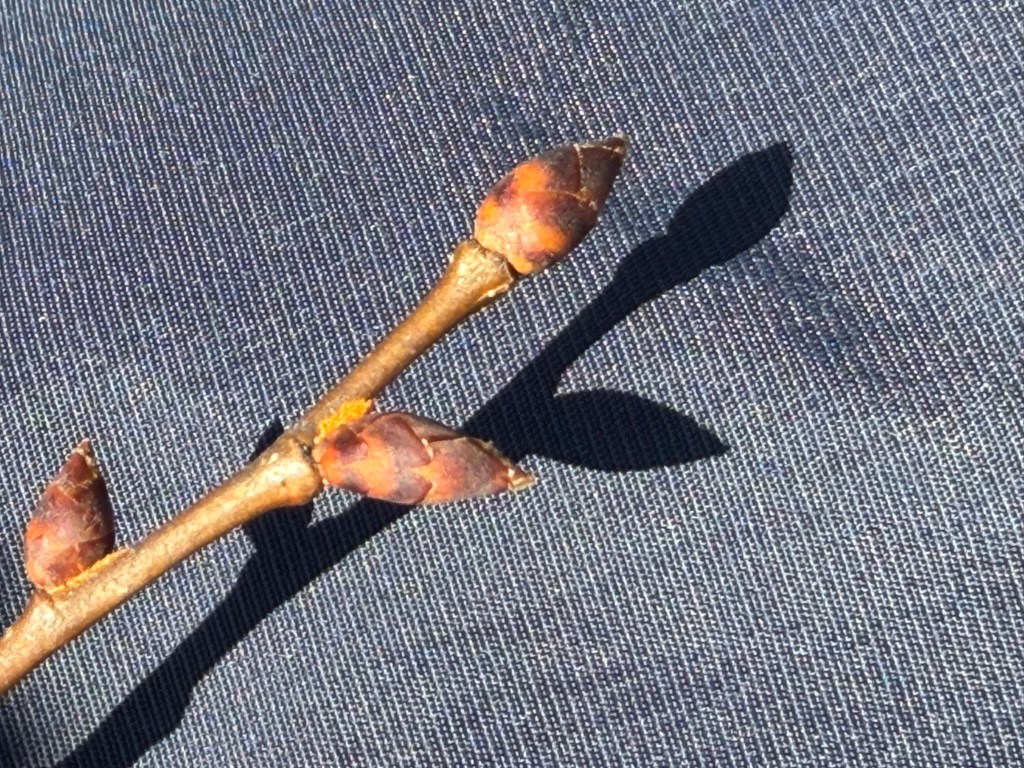
Ecological Information: This tree is associated with oak-hornbeam forests, rocky slope forests, and, more rarely, beech forests and oak woods. It is also an important tree of Central Europe’s broadleaf forests. Little-leaf Linden is especially important for pollinators and is closely tied to honey production, which is why it is sometimes called a “bee tree.” It also tolerates cities and parks well.
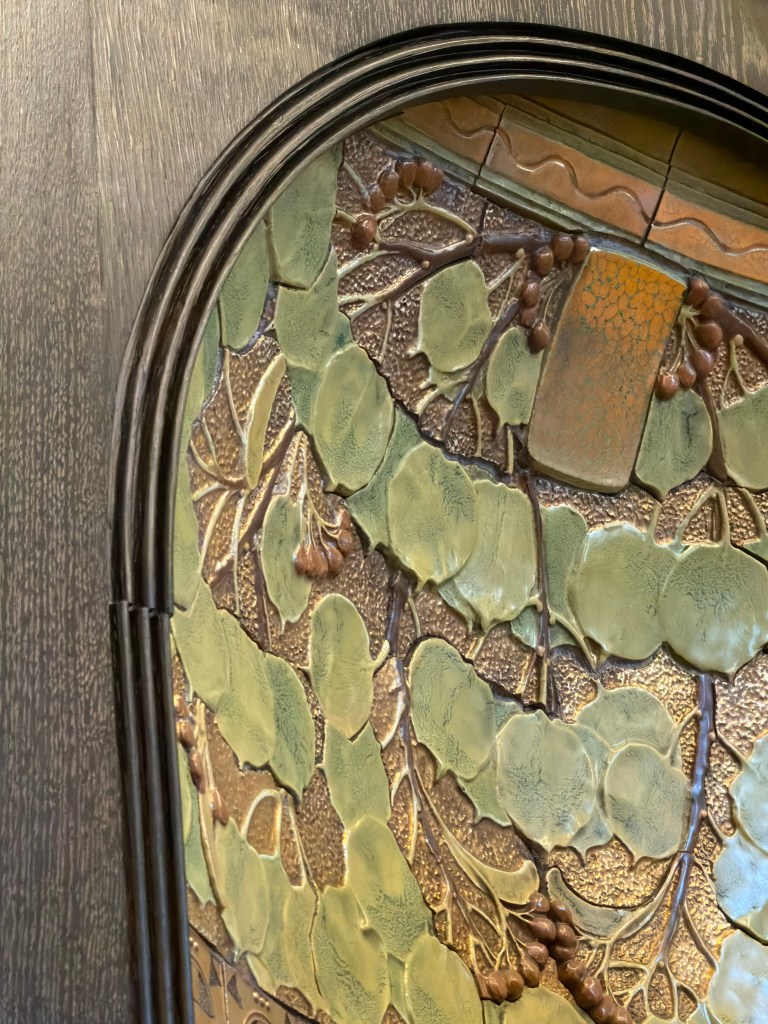
Sociocultural Information: Little-leaf Linden is of significant cultural value in Central Europe, recognized as a national symbol in the Czech Republic and Slovakia and used medicinally and materially. In Czech cultural material, the Linden is explicitly framed as a national tree, and the Linden twig became part of the state emblem of the Czech Republic on January 1, 1993 (Bartha, 1999; Hrušková et al., 2017). That symbolic status also appears in Czech decorative art and architecture. In the Riegr Room of Prague’s Municipal House, linden motifs appear in the ornament, including heart-shaped leaves and drooping floral bracts that echo the form of the tree itself. Their presence there suggests how deeply the Linden had entered Czech visual culture, not only as a forest tree, but as an emblem of national identity, beauty, and belonging.

Besides being valued as a honey-producing tree, the flowers are used in a calming, sedative tea that is also taken for colds and was considered mildly hypnotic by the ancient Greeks (Brosse, 1987). The ancient Greeks also associated the Linden with Philyra. According to the myth, the nymph Philyra had an affair with Cronus, who left her while she gave birth to their son, Chiron. Overwhelmed and grief-stricken, she begged to be transformed, and Zeus turned her into a Linden.
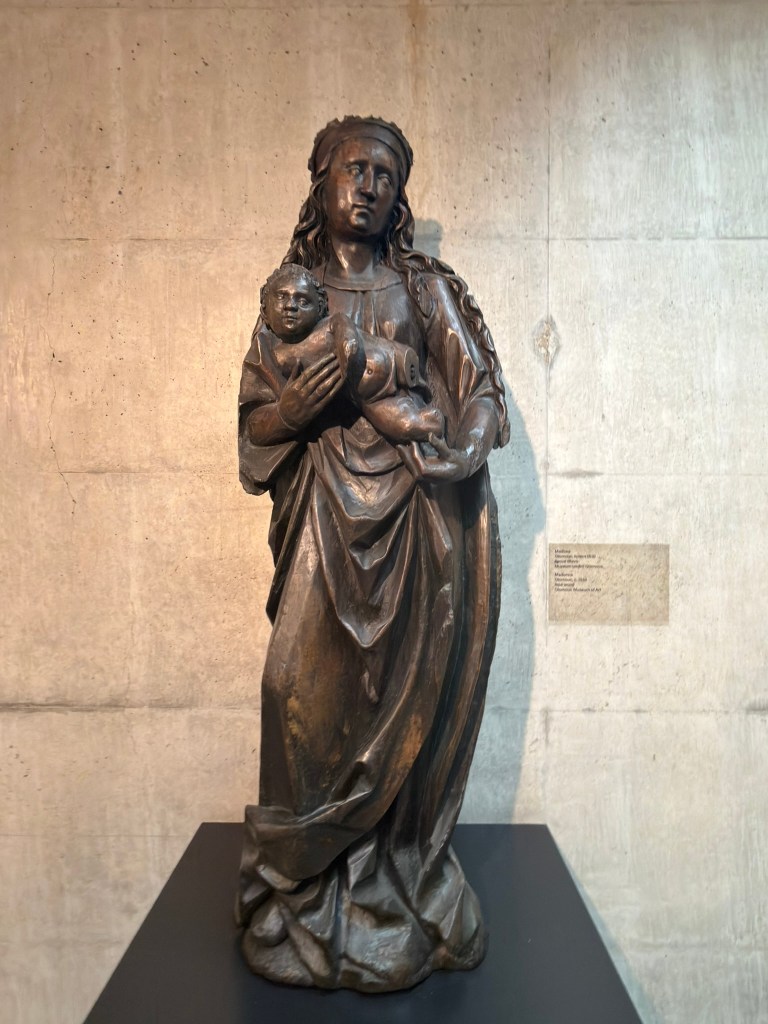
The leaves were used to soothe headaches, eyes, and skin, and also as cattle forage. The soft, even grain of the wood has made it useful for carving and artisanal woodworking. That workability also appears in sacred art. At the Archdiocesan Museum in Olomouc, both a polychromed relief of The Death of the Virgin Mary, dated shortly after 1480 and originally from the Church of St. Moritz, and a Madonna sculpture from around 1510 are identified as being made of linden wood. These objects help show why linden was so valued by woodcarvers: it is fine-grained, workable, and capable of holding detail, making it well suited to devotional sculpture and relief carving. Adding to this utility, the inner bark was used in Poland to make baskets, hats, and even chodaki (traditional Polish clogs) when other materials were lacking. The bark of young trees, around 20–30 years old, has also been used as a fiber similar to flax or hemp (Brosse, 1987). Little-leaf Linden also tolerates coppicing.

In the 1700s, Missa, a French physician from the Faculty of Paris, is supposed to have experimented with creating a chocolate-like food using multiple parts of Little-leaf Linden. In particular, “Linden chocolate” used roasted linden seeds as a mocha-like base and blended them with dried linden flowers, sugar, and fat to create something more chocolate-like (Bergo, 2023).
According to Knab (2020), Little-leaf Linden has been a sacred plant in Poland since ancient times, used to protect against bad spirits and to mark sacred spots where offerings were made to the gods. It also served as a council tree, beneath which leaders conducted war councils and issued judgments. Linden trees were also planted when a child was born.
In more recent times, the Linden tree has been evoked by Adam Mickiewicz in Pan Tadeusz, where it serves as part of the national and pastoral symbolism of Poland. Knab (2020) also notes that Little-leaf Linden was associated with Poland’s renowned sixteenth-century poet Jan Kochanowski, who is said to have written beneath a linden and once wrote, from the perspective of the tree itself: “And I, with my quiet rustling can easily induce sweet dreams.”
That association between Linden, shade, bees, birds, and rest is captured in poetry. Kochanowski’s poem “Na lipę” (“The Linden Tree”) celebrates the benefits of the tree, and includes ecological observations, including birds such as European Starlings and larks that use its canopy:
Na lipę

Gościu, siądź pod mym liściem, a odpoczni sobie!
Nie dójdzie cię tu słońce, przyrzekam ja tobie,
Choć się nawysszej wzbije, a proste promienie
Ściągną pod swoje drzewa rozstrzelane cienie.
Tu zawżdy chłodne wiatry z pola zawiewają,
Tu słowicy, tu szpacy wdzięcznie narzekają.
Z mego wonnego kwiatu pracowite pszczoły
Biorą miód, który potym szlachci pańskie stoły.
A ja swym cichym szeptem sprawić umiem snadnie,
Że człowiekowi łacno słodki sen przypadnie.
Jabłek wprawdzie nie rodzę, lecz mię pan tak kładzie
Jako szczep napłodniejszy w hesperyskim sadzie.

The Linden Tree

Traveller, come! Enter under my leaves for a rest
where the Sun will not reach you. Come and I promise the best:
Even with sun at the highest, shooting down on the meadows
brilliant rays, diffuse them I shall to the softest of shadows.

Here, right under my crown, wafts gently and cooling a breeze;
here the starlings and larks all abound and argue with ease;
here the hard-working bees extract from my sweet-smelling flower
honey that graces the finest of tables at family hour.

And, without effort, with whispers that come from my deep
I shall be singing all visitors sweetly to sleep.
Though in Hesperides Garden none of the apples I bear,
as the most giving of trees my Lord has planted me there.
(translation by William Auld, available at: https://www.babelmatrix.org/works/pl/Kochanowski%2C_Jan-1530/Na_lip%C4%99/en/5257-The_Linden_Tree)
The symbolic use of the linden isn’t limited to Poland. Slovenian folk songs also invoke the Linden as part of national identity, as do Czech songs and poetry. In particular, Jan Neruda uses the oak and linden trees as yin-yang foils, representing masculinity and femininity in Žena with the verses: “Brahmin statný muž je, žena matka zdatná, vedlé statečného dubu lípa statná” (in English: “The brahmin is a strong man, the woman a capable mother, next to the brave oak a strong linden”).
In the posts to come, I’ll shift from the lowland and foothill Broadleaf Forests to another major Central European forest world: the Floodplain Forest. There, I’ll explore species shaped by water, alluvium, and disturbance, including trees such as Black Alder and Black Poplar, whose ecologies are closely tied to rivers and wet ground.
References
Auld, W. (Trans.). (n.d.). The Linden Tree [Translation of Jan Kochanowski’s “Na lipę”]. BabelMatrix. https://www.babelmatrix.org/works/pl/Kochanowski%2C_Jan-1530/Na_lip%C4%99/en/5257-The_Linden_Tree
Bartha, D. (1999). Magyarország fa- és cserjefajai. Mezőgazda Publishing House.
Bergo, A. (2023, July 29). Linden chocolate. Forager | Chef. https://foragerchef.com/linden-chocolate/
Brosse, J. (1987). Les arbres de France: Histoire et légendes. Plon.
Hrušková, M., Větvička, V., & kolektiv autorů. (2017). Život se stromy. Dokořán.
Knab, S. H. (2020). Polish herbs, flowers, and folk medicine. Hippocrene Books.
 Sense of Place
Leave a comment