In the last several posts, I’ve been moving through the major forest types of Central Europe, from mountain forests shaped by Spruce, Fir, Beech, and Larch to the Broadleaf Forests of the lowlands and foothills, where Oaks, Hornbeam, and Linden help define the landscape. Here, I turn to another forest world altogether: the Riparian and Floodplain Forests of the Danube, Morava, Tisza, and their tributaries. These forests are shaped more by water, sediment, and disturbance than by slope and bedrock. They are dynamic, shifting systems, and some of the most ecologically productive and restoration-important forests in the region.
The riparian zones and floodplains of the Danube, Morava, and Tisza Rivers and their tributaries represent an important habitat type in Central Europe. These systems tend to be dynamic, as banks shift, reedbeds form and recede, and microtopography changes over time. The soils are young and layered, made up of gravel, sand, silt, and clay deposited by rivers and floods. Ecologically, disturbance is part of the system, with pulses of nutrients arriving in sediments left behind by floodwaters. Along the Danube especially, these forests are important restoration sites and biodiversity hotspots.
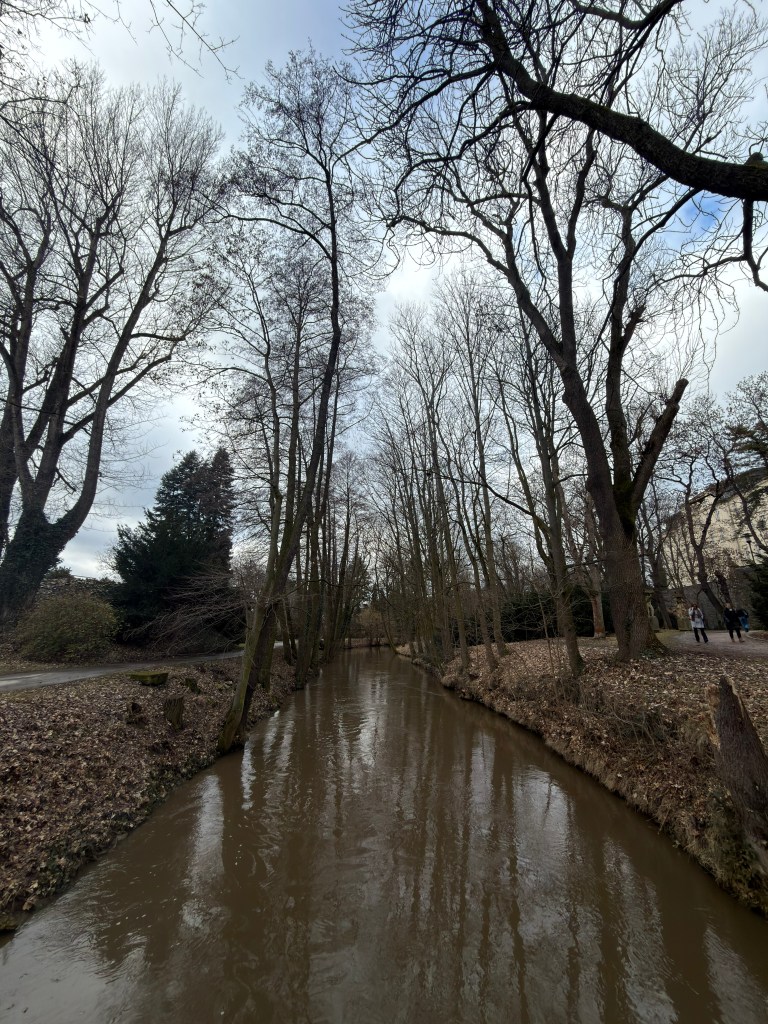
These floodplain systems also grade into hardwood gallery forests. In Hungary, Pedunculate Oak occurs commonly in alluvial and lowland regions and can extend into valley bottoms, while Narrow-leaved Ash (also known as Pannonian Ash, Fraxinus angustifolia subsp. pannonica) is frequent in hardwood gallery forests and ash-oak woods of lowland regions, especially in the Kisalföld (Bartha, 1999).
The trees of these floodplains cope with movement and change: Water rises and falls; sediment is deposited and resculpted; and bars and banks form as old channels disappear. Here trees are both rooted in place and in an ongoing conversation with rivers and streams.
Key trees of this habitat include Black Alder (Alnus glutinosa) and Black Poplar (Populus nigra), both of which will be described in future posts. Other woody plants found in these habitats include White Willow (Salix alba) and Common Hop (Humulus lupulus).
Taken together, these floodplain forests reveal another dimension of Central Europe’s tree world: one shaped by current, silt, and inundation. They are forests of edges and sediment pulses, where disturbance is critical to the system. Floodplain forests help us see rivers not just as conveyors of water or habitat for fish and turtles, but as creators of terrestrial habitat too.
In the posts to come, I’ll look more closely at two species that help define this forested river world, trees whose ecologies are deeply tied to flood pulses and the changing margins of rivers: Black Alder and Black Poplar.
References
Bartha, D. (1999). Magyarország fa- és cserjefajai. Mezőgazda Publishing House.
 Sense of Place
Leave a comment